
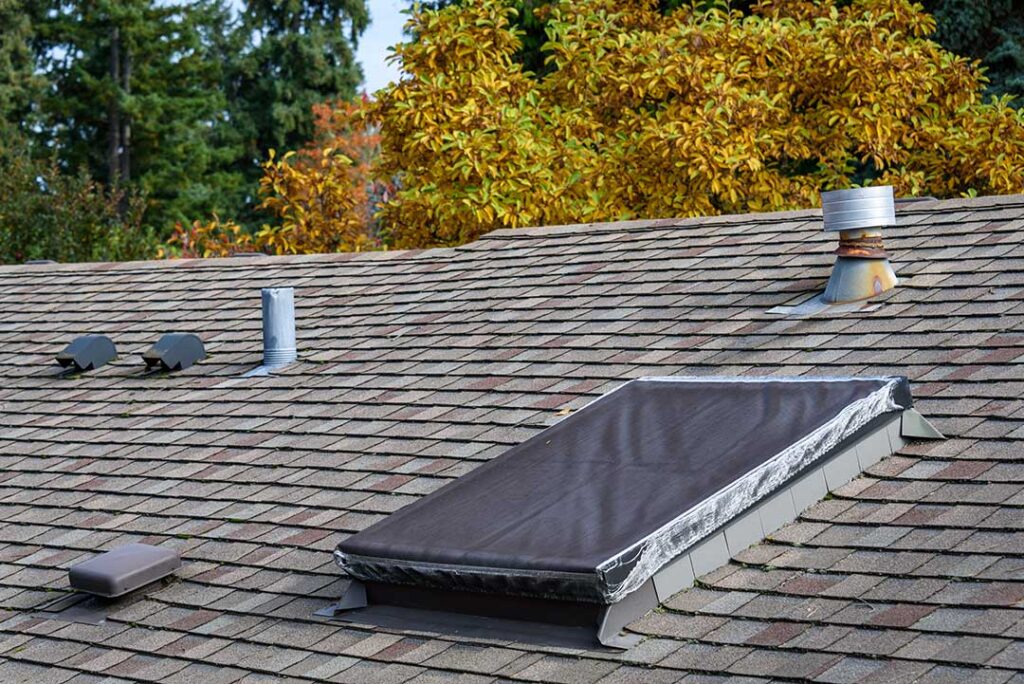
A roof cricket is a small, raised structure built on a roof to redirect water around an obstruction, most often a chimney. It works like a miniature ridge or wedge, dividing runoff so water does not collect against the uphill side of the obstruction.
For homes in Greene, NY, roof crickets can be especially useful because roofs must handle rain, snow, ice, and repeated freeze-thaw cycles. A properly designed cricket helps keep water moving toward the roof drainage system instead of allowing it to sit where leaks are more likely to develop.
What does a roof cricket do?
A roof cricket changes the way water flows across a sloped roof. Without one, water traveling down the roof may run directly into the uphill side of a chimney or another raised structure. The obstruction interrupts the normal drainage path, creating an area where water, leaves, ice, and snow can accumulate.
The cricket creates a sloped, peaked surface behind the obstruction. Water is divided and directed around both sides, where it can continue toward gutters, eaves, valleys, or other planned drainage routes.
A cricket may help:
- Reduce standing water behind a chimney
- Limit snow and ice buildup at the uphill side of an obstruction
- Move leaves and roof debris away from vulnerable areas
- Reduce stress on flashing and roof joints
- Lower the chance of water entering through roof penetrations
A cricket does not replace flashing or proper roof drainage. It works together with those systems.
Where are roof crickets commonly installed?
Roof crickets are most commonly found behind chimneys, particularly on roofs with moderate or steep slopes. They may also be used behind large skylights, rooftop equipment, dormers, and other wide structures that interrupt the roof surface.
The need for a cricket depends on several factors:
- The width of the chimney or obstruction
- The roof slope
- The shape and complexity of the roof
- The amount of snow and rainfall the roof receives
- The way water is expected to drain around the structure
- Local building requirements and accepted construction practices
A narrow obstruction on a simple roof may not require the same design as a wide masonry chimney on a roof with several intersecting slopes. Roof geometry matters more than appearance alone.
Why are chimneys especially vulnerable?
Chimneys create several conditions that can make roof leaks more likely. They interrupt the roof plane, contain joints between masonry and roofing materials, and often have flashing installed along their lower, uphill side.
That uphill area, sometimes called the back side of the chimney, receives runoff from the roof above. If the chimney is wide enough or the roof layout is poorly suited to drainage, water can collect there. In winter, snow may remain packed against the chimney, and melting followed by refreezing can place additional pressure on flashing and nearby roofing materials.
A cricket helps by raising and redirecting the roof surface behind the chimney. Instead of allowing water and snow to press against one broad, relatively flat area, it creates a more controlled path around the obstruction.
How is a roof cricket built?
A roof cricket usually has a wood-framed or structurally supported shape covered with roofing materials that match or integrate with the surrounding roof. Its upper ridge runs toward the obstruction, while its sloped sides direct water toward the left and right.
The cricket must be integrated with several parts of the roof:
- The roof deck or supporting framing
- Underlayment beneath the shingles or other roof covering
- Step flashing along the sides of the chimney
- Counterflashing set into or attached to the masonry
- The roof covering around the cricket
- Gutters or drainage paths below
The exact dimensions depend on the obstruction and roof design. A cricket that is too small may not redirect water effectively. A poorly framed or poorly flashed cricket can create additional seams where leaks develop.
Is a roof cricket the same as flashing?
No. A cricket and flashing perform different jobs.
A cricket changes the shape of the roof so water can flow around an obstruction. Flashing seals the joints where different materials meet, such as roofing and masonry. Both are necessary when the design calls for them.
Even a well-built cricket can leak if the flashing is loose, corroded, improperly overlapped, or not securely integrated with the chimney. Likewise, excellent flashing may struggle if water is continually trapped behind a wide obstruction.
Many chimney leaks are blamed on shingles when the actual problem involves flashing, masonry joints, a damaged chimney cap, or drainage that was never properly addressed.
Can an existing roof be missing a cricket?
Yes. Older homes may have been built without a cricket, even where current roofing practices would commonly include one for a wide chimney or large obstruction. However, the absence of a cricket does not automatically mean the roof is defective.
A roof can perform adequately without one if the obstruction is narrow, the slope and drainage layout are favorable, and the flashing remains sound. A cricket becomes more relevant when there is repeated leakage, persistent snow accumulation, deteriorated flashing, or visible water staining near the chimney.
Adding a cricket later may require removing roofing materials around the obstruction and rebuilding the affected area. The work must account for the existing roof structure, underlayment, flashing, and drainage pattern.
What signs may indicate a drainage problem?
Roof leakage near a chimney or other obstruction can appear in several ways. Some signs are visible indoors, while others can be noticed from the roof or attic.
Watch for:
- Brown or yellow ceiling stains near a chimney
- Damp insulation or darkened roof sheathing
- Peeling paint or damaged plaster
- Musty odors in an attic
- Water marks that appear after rain or snowmelt
- Shingle granules collecting below a problem area
- Rusted metal flashing
- Cracked sealant around flashing
- Leaves, ice, or snow repeatedly collecting behind an obstruction
A leak may not appear directly below the source. Water can travel along roof decking, rafters, insulation, or framing before becoming visible inside the home.
How do Greene winters affect roof crickets?
Seasonal snow and freeze-thaw conditions can expose weaknesses in roof drainage. Snow that accumulates behind a chimney may melt during a warmer period and then refreeze when temperatures fall. This can create ice at the lower edge of the buildup and keep moisture against flashing and roofing materials.
Heavy spring rain can also reveal problems that developed during winter. Debris trapped behind a chimney may block drainage, while repeated expansion and contraction can loosen flashing or damage aging sealants.
Homeowners may safely observe the roof from the ground and check accessible attic areas for staining or dampness. Climbing onto a snow-covered, icy, or steep roof is hazardous and should not be treated as routine maintenance.
Are roof crickets required by code?
Building requirements can depend on the roof design, the size of the obstruction, the type of construction, and the rules in effect when the work is performed. Requirements may also differ between new construction, reroofing, and repairs.
A roof cricket should not be installed solely because it is common on another house. The correct design depends on structural support, drainage, flashing, roofing materials, and the applicable requirements for the project.
The practical question is whether the roof has a durable way to move water and snow around the obstruction without placing excessive stress on joints or allowing moisture to remain trapped.
What should homeowners understand before roof work begins?
A cricket is not simply a decorative bump added behind a chimney. It is part of the roof’s drainage and weatherproofing system.
Before work begins, it is useful to understand:
- Which obstruction requires the cricket
- How water will drain around it
- How the cricket will connect to existing framing
- How underlayment and flashing will be installed
- Whether the chimney masonry is sound
- How the design handles snow and ice
- Whether gutters or downspouts need related attention
The most reliable roof designs treat the cricket, flashing, roof covering, and drainage system as one connected assembly. That approach helps prevent a common problem: repairing a visible leak while leaving the underlying water-flow issue unchanged.
