
A baseball, softball, soccer ball, basketball, or hockey puck can do more than leave a mark on a roof. A hard impact may crack shingles, loosen flashing, damage vents, or create a small opening that allows water into the roof assembly.
For households in Greene, NY, sports-ball damage is most likely around homes near driveways, yards, fields, backstops, or outdoor play areas. The damage may be visible immediately, but some problems appear only after rain, wind, freezing temperatures, or snow.
Can a sports ball really damage a roof?
Yes. The risk depends on the ball’s material, speed, angle of impact, roof material, roof age, and the part of the roof that is struck.
A soft foam ball usually causes little or no harm. A regulation baseball, softball, lacrosse ball, hockey puck, or waterlogged soccer ball can deliver considerably more force. Even a basketball can damage older or brittle roofing materials if it is thrown upward or lands repeatedly in the same area.
A newer roof may absorb a single impact without obvious damage. That does not mean every roof will respond the same way. Older shingles, weathered membranes, brittle plastic vents, and previously repaired areas can be more vulnerable.
Which parts of a roof are most easily damaged?
The roof covering is not the only concern. Sports balls can affect several connected components:
- Shingles: Impact may cause cracks, splits, bruising, or loss of surface granules.
- Ridge caps: The thicker shingles along the roof peak can crack or become displaced.
- Flashing: Metal or flexible flashing around chimneys, walls, valleys, and roof edges may bend or separate.
- Vent covers: Plastic plumbing vents, attic vents, and turbine vents can crack or loosen.
- Skylights: Acrylic or glass skylights can chip, fracture, or develop leaks around their frames.
- Gutters and downspouts: A ball may dent or pull gutters away from the fascia.
- Roof penetrations: Objects mounted through the roof can be damaged at their seals, even when the surrounding shingles look normal.
Flat or low-slope roofs may show dents or punctures in the membrane. Because water can remain on these surfaces longer, a small opening may produce a leak that is delayed rather than immediate.
What does impact damage look like?
The most obvious sign is a broken, missing, or visibly displaced roofing component. Less obvious damage can be identified by looking for changes in texture, shape, or color.
Possible signs include:
- A circular bruise or depression in a shingle
- Exposed fiberglass mat beneath a shingle’s surface
- Freshly scattered granules in gutters or at the base of downspouts
- A shingle that is lifted, creased, or no longer aligned with adjacent shingles
- Cracks in vent hoods, skylights, or plastic pipe boots
- Dents in metal flashing or gutters
- Water stains on ceilings, upper walls, or attic framing
- Damp insulation or a musty odor in the attic after rain
A shingle may remain in place while its protective surface is fractured. From the ground, this damage can be difficult to distinguish from ordinary weathering.
Does a roof leak immediately after being hit?
Not necessarily. A sports ball can damage the weather-resistant layer without creating an open hole. Water may enter only when wind pushes rain under a lifted shingle or when melting snow collects near a damaged area.
Leaks can also travel. The ceiling stain inside a home may not be directly below the impact point because water can move along roof decking, rafters, insulation, or framing before becoming visible.
For that reason, the absence of an immediate ceiling stain does not prove that the roof is undamaged. A careful exterior inspection is more useful than waiting for interior evidence.
How should residents check for damage safely?
Start from the ground. Look across the roof with binoculars if needed, and check the surrounding yard for a ball that may have caused the impact. Inspect gutters, downspouts, exterior walls, and nearby windows for new dents or debris.
Inside the home, examine the attic if it can be reached safely. Look for:
- Damp or discolored wood
- Water marks on the underside of roof sheathing
- Wet insulation
- Daylight visible through an unexpected opening
- Drips or moisture after rainfall
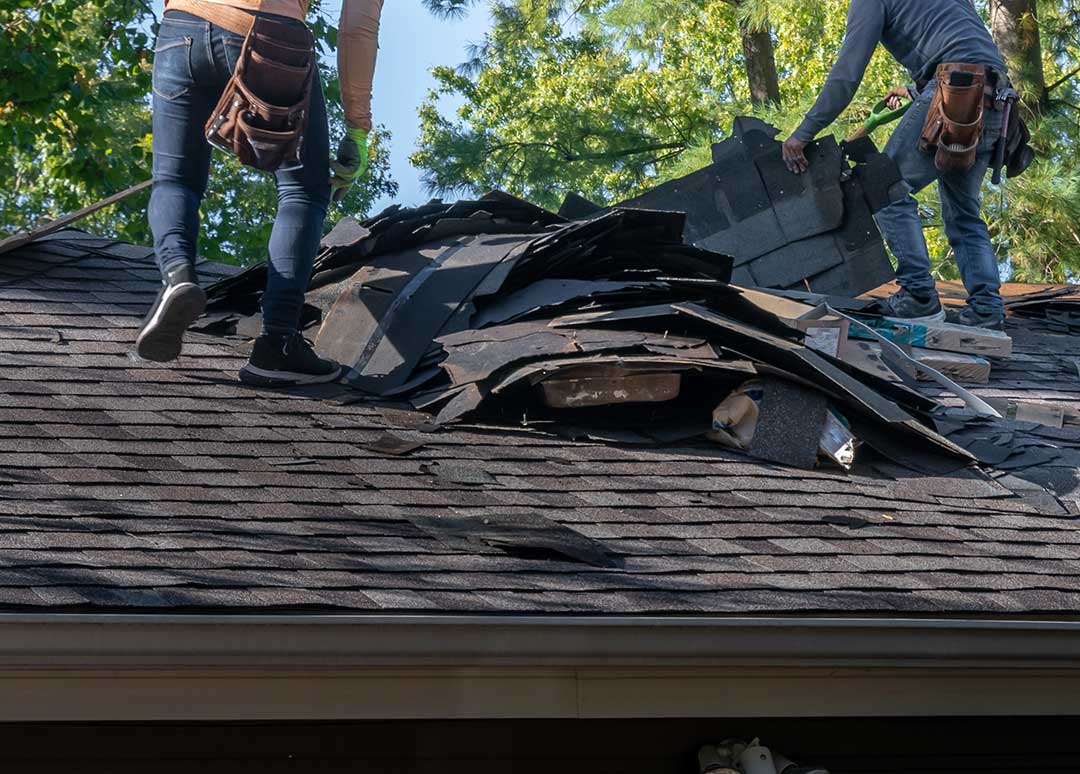
Do not walk on a wet, icy, steep, or damaged roof. Winter conditions in Greene can make shingles and roof surfaces especially slippery, while freezing and thawing may conceal moisture-related hazards. A ladder should also be used only on stable ground with proper support.
Can a damaged shingle be ignored if the roof is older?
A minor mark on an older roof may not require the same response as a puncture or lifted shingle, but age makes evaluation more important. Weathered roofing materials may already have reduced flexibility, worn seal strips, or weakened fasteners.
Impact damage can also expose the roof to additional deterioration. Rain, ultraviolet light, wind, ice, and repeated freeze-thaw cycles may enlarge a crack or loosen surrounding material.
The practical question is not simply whether the roof is old. It is whether the impact has compromised the roof’s ability to shed water. A small damaged area may be repairable, while widespread brittleness or multiple failed areas may indicate that isolated repairs will not provide a lasting solution.
What should happen after a sports ball hits the roof?
If the impact appears minor and there is no sign of a leak, document the area with photographs from the ground. Note the approximate date, the type of ball, the location of the impact, and whether rain occurred afterward.
If a shingle is missing, a vent is cracked, or water is entering the home, temporary protection may be necessary. A clean container can catch interior drips, but ceiling materials should not be punctured unless there is a serious buildup of water and the person doing so understands the electrical and structural risks.
Do not apply caulk, roofing cement, tape, or household sealant over an unfamiliar roof defect as a substitute for inspection. Improvised patches can trap water, hide the original damage, or interfere with later repairs.
Roof repair work may also be subject to New York State and local requirements, particularly when work involves roof replacement, roof recovery, structural components, or changes to the roof assembly. Questions about permits should be directed to the appropriate local code-enforcement office before substantial work begins.
How can sports-ball damage be prevented?
Prevention is usually easier than repairing a roof leak. The goal is to keep hard-hit balls away from roof surfaces and roof-mounted equipment.
Useful measures include:
- Positioning goals, batting practice, and throwing activities away from the house
- Using soft practice balls near buildings
- Installing suitable netting where repeated shots or throws are expected
- Keeping ladders, play structures, and raised platforms away from roof edges
- Teaching children not to retrieve balls by climbing onto roofs
- Checking nearby trees, fences, and structures that may redirect a ball upward
- Inspecting vulnerable vents, skylights, and gutters after an unusually hard impact
A roof does not need to be struck repeatedly to suffer damage. One high-speed impact in the wrong location can affect a vent, flashing joint, or weathered shingle. Prompt observation after the event helps distinguish a harmless mark from a defect that may allow water into the home.
