
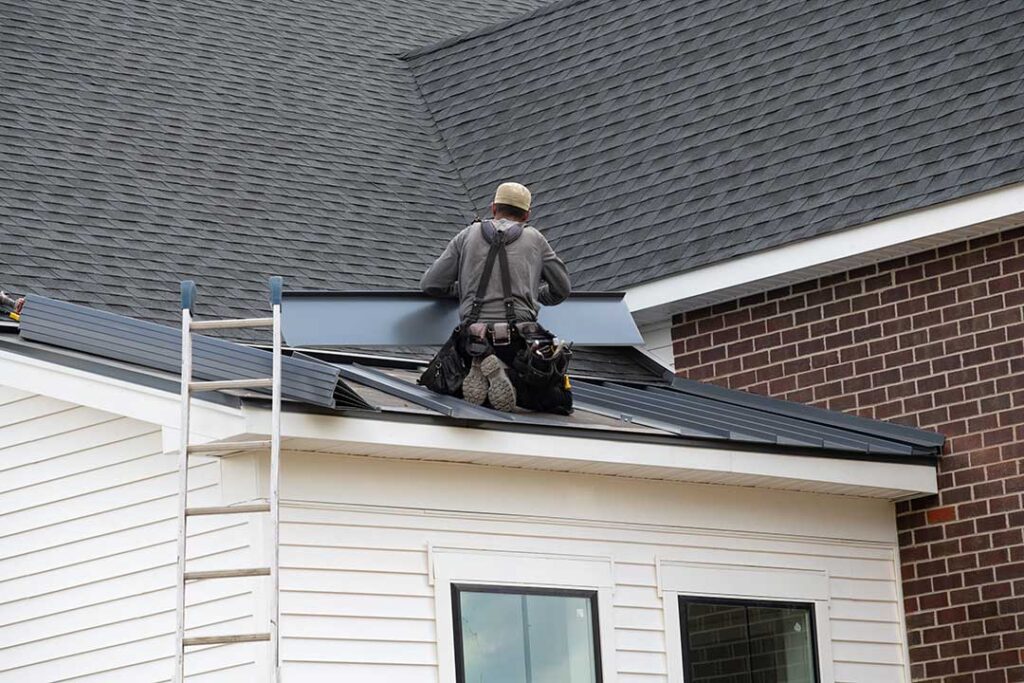
Roof valleys are the channels where two sloping sections of a roof meet. They collect and direct a large volume of rainwater, melting snow, and roof runoff toward the eaves or drainage system. Because of that concentration, a small defect in a valley can lead to a leak faster than a similar defect on an open section of roof.
In Greene, NY, valleys are exposed to repeated freeze-thaw cycles, heavy rain, wind-driven moisture, and snow that can remain packed in roof junctions longer than on nearby shingles. Learning to recognize early warning signs can help residents identify problems before water reaches insulation, ceilings, walls, or framing.
What does a failing roof valley look like?
A failing valley may show visible damage, but the first warning is often water appearing inside the home after rain or snowmelt. Exterior clues can include exposed underlayment, lifted shingles, rusted metal, open seams, or debris trapped in the channel.
Look for these signs from the ground or from a safe window-level vantage point:
- Shingles that are curled, cracked, loose, or missing along either side of the valley
- A visible gap between valley flashing and the surrounding shingles
- Metal flashing that is bent, corroded, punctured, or pulled away from the roof
- Dark streaks or areas that remain wet after the rest of the roof has dried
- Granules collecting heavily at the bottom of the valley or near downspouts
- Nails, fasteners, or roofing cement exposed in the water channel
- Leaves, twigs, and compacted debris that repeatedly collect in one location
- Sagging roof sheathing or a slight dip near the valley line
A valley does not have to look dramatically damaged to be leaking. Water can travel beneath shingles and appear indoors several feet away from the original entry point.
Which indoor signs may point to a valley leak?
Water stains on ceilings or upper walls can indicate a roof leak, but the location of the stain does not always identify the source. Roof water may follow rafters, roof decking, insulation, wiring, or wall cavities before becoming visible.
A valley-related leak may be associated with:
- Brown or yellow ceiling stains after storms
- Fresh dampness in an attic beneath a roof intersection
- Wet insulation or darkened roof sheathing
- Peeling paint near the upper corners of rooms
- Musty odors that become stronger after rainfall
- Drips that occur only during wind-driven rain or snowmelt
- Repeated staining in the same area after temporary repairs
The timing of the leak can offer useful information. Water during steady rain may suggest an opening in the valley covering or flashing. Water during rapid snowmelt may point to ice-related backup, blocked drainage, or inadequate waterproofing beneath the valley.
Why do roof valleys fail?
Most valley problems develop from a combination of water volume, movement, materials, and installation details. Common causes include:
Damaged or poorly fitted flashing
Valley flashing is designed to guide water over the roof surface. If it is too narrow, improperly overlapped, punctured by fasteners, or separated from the roof, water can work beneath the roofing materials.
Metal flashing can also expand and contract over time. Repeated movement may loosen edges or open seams, especially where the valley meets a wall, chimney, dormer, or lower roof section.
Shingle wear and movement
Shingles beside a valley experience more runoff than shingles on a typical roof plane. As shingles age, their protective granules wear away, their edges become brittle, and wind can lift them.
A closed-cut valley can fail when shingle cuts are uneven, too short, or not properly sealed. A woven valley may loosen if shingles shift or break. In either design, exposed gaps or irregular lines deserve attention.
Ice dams and freeze-thaw cycles
Snow can melt on warmer sections of a roof and refreeze near colder edges or in shaded roof intersections. Ice may block normal drainage and force water beneath shingles.
Ice damming is not always caused by a valley defect. Attic air leakage, insufficient insulation, poor ventilation, roof geometry, and weather conditions can all contribute. However, a weak valley is especially vulnerable when water backs up behind ice.
Debris and slow drainage
Leaves, pine needles, and small branches can form temporary dams. Organic debris also holds moisture against shingles and metal. Valleys below trees or beneath roof sections that shed large amounts of debris may need more frequent observation.
A valley that repeatedly collects debris may also have a drainage or roof-design issue rather than simply a cleaning problem.
How can a valley be checked safely from the ground?
A ground-level inspection can reveal many warning signs without walking on the roof. Use binoculars if necessary and examine the valley after a storm, once the roof is dry enough for visual contrast.
Check whether:
- The valley has a continuous, clean drainage path
- Shingles lie flat and extend evenly along both sides
- Metal edges appear straight and intact
- There are visible dark patches, loose materials, or exposed underlayment
- Gutters and downspouts below the valley are overflowing or unusually full of granules
- Snow and ice accumulate in the same valley during winter
- Water spills over the sides during heavy rain

Do not climb onto an icy, wet, steep, or snow-covered roof. Valleys can be particularly hazardous because they may be slick, uneven, and surrounded by fragile roofing materials. Roof ladders, traction equipment, and fall protection are necessary for many inspections.
Can a valley leak even if the shingles look fine?
Yes. A valley can leak beneath apparently sound shingles if the underlayment, flashing, fasteners, or seams have deteriorated. The visible shingle surface is only one layer of the roof system.
Problems may also be hidden where the valley meets:
- A sidewall or headwall
- A dormer
- A chimney
- A skylight
- A lower roof
- A gutter or diverter
- An area with a change in roof slope
If indoor staining continues after surface shingles appear intact, the source may be concealed below the roofing or at one of these adjoining transitions.
What should be done after finding a suspected valley problem?
Document the location and timing of the problem. Photographs of the exterior, ceiling stain, attic area, and nearby drainage components can help establish whether the issue is recurring.
Inside the attic, only inspect from a stable, well-lit surface. Look for wet insulation, water marks on wood, or daylight visible through the roof assembly. Avoid touching electrical wiring or walking between ceiling joists.
Temporary actions may include placing a container beneath an active drip and moving valuables away from the affected area. Do not seal an active leak with household caulk, roofing cement, or expanding foam without understanding the source. Such patches can trap moisture or make later repairs harder to evaluate.
Urgent attention is warranted when water is near electrical components, the ceiling is bulging, roof framing appears weakened, or snow and ice loads are substantial. New York guidance recognizes that concentrated snow can drift and accumulate in roof valleys, making winter roof access and snow removal especially dangerous.
How can valley problems be reduced?
Routine observation is more useful than waiting for a ceiling stain. Keep nearby gutters and downspouts clear, trim branches that deposit heavy debris, and watch for recurring ice buildup or overflowing drainage during storms.
During roof work, valley details should be evaluated as part of the entire roof system. Waterproof underlayment, flashing dimensions, shingle layout, ventilation, insulation, and drainage all affect performance. Replacing only visible shingles may not correct a leak if the underlying valley construction has failed.
For homes in the community, the most useful seasonal checks are after autumn leaf fall, following major wind or rain events, and during late-winter thawing. These are the periods when hidden valley weaknesses most often become visible.
