
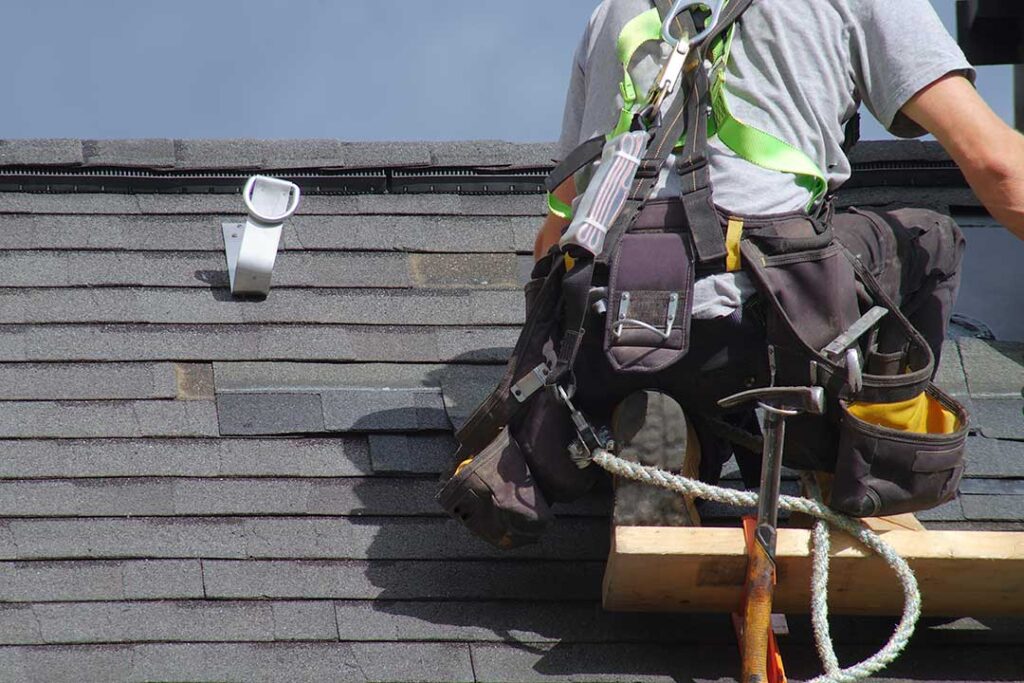
After a major storm, a roof can look intact from the ground while still having loose shingles, damaged flashing, clogged drainage, or moisture entering the attic. A careful inspection helps identify problems early, but safety should come first: ground-level checks are usually appropriate for residents, while climbing onto a wet or damaged roof can create serious hazards.
What should be checked first after a storm?
Start with conditions around the property before examining the roof itself. Look for hazards such as downed wires, leaning branches, broken glass, unstable ladders, standing water, or damaged gutters.
Wait until strong winds, lightning, and heavy rain have passed. Wear sturdy shoes and avoid walking beneath roof edges where loose shingles, branches, ice, or other materials could fall.
From the ground, walk around the home and look for:
- Missing, lifted, curled, or cracked shingles
- Shingles scattered across the yard, driveway, or porch
- Exposed underlayment or dark areas on the roof surface
- Bent or detached gutters and downspouts
- Loose metal flashing around chimneys, vents, and roof edges
- Damaged soffits, fascia, siding, or trim
- Tree limbs resting on or near the roof
- Granules collecting heavily in gutters or at the base of downspouts
Homes in Greene, NY may experience strong seasonal weather, including heavy rain, wet snow, freezing conditions, and wind associated with passing storms. Repeated moisture and freeze-thaw cycles can make small weaknesses more noticeable after a storm.
How can roof damage be inspected safely from the ground?
Use binoculars or a phone camera with a zoom function to examine roof sections without climbing. Compare what is visible on one side of the roof with the other. Uneven patterns, missing areas, or a row of lifted shingles may indicate wind damage.
Pay close attention to roof edges, ridges, valleys, and areas around penetrations. These locations often experience more wind exposure or have more joints where water can enter.
Check nearby trees as well. A branch may not create an obvious hole but can loosen shingles, dent metal components, or place pressure on the roof structure. If a tree is leaning toward the house or has large broken limbs overhead, stay clear until the area is safe.
Do not use a ladder to reach the roof immediately after a storm unless the ground is firm, the ladder can be secured, and the work can be completed without stepping onto the roof. Wet shingles, moss, frost, and loose roofing materials are slippery even when the roof appears only mildly damp.
What signs of roof damage can be found inside the house?
Interior inspection is just as important as looking at the exterior. Water may enter through a small opening and travel along rafters or roof decking before appearing on a ceiling far from the original leak.
Check the attic, if it can be entered safely, for:
- Damp insulation
- Wet or discolored roof decking
- Water droplets or damp rafters
- Fresh stains near vents, chimneys, skylights, or valleys
- Musty odors
- Daylight visible through the roof
- Rusted fasteners or recently darkened wood
Inside living areas, inspect ceilings, upper-wall corners, closets, and rooms beneath roof penetrations. Yellow, brown, or gray stains may indicate water intrusion, but a new leak can also appear as bubbling paint, sagging drywall, peeling wallpaper, or damp trim.
A stain does not always mean water is actively entering at that moment. However, a growing stain, dripping fixture, sagging ceiling, or wet electrical component requires prompt attention. Keep people away from sagging ceilings, and avoid touching electrical switches or outlets that may have been exposed to water.
How can gutters and drainage systems reveal roof problems?
Gutters often collect evidence after severe weather. Look for unusually large quantities of shingle granules, roofing fragments, nails, twigs, or pieces of metal. A few granules are normal, particularly on newer shingles, but a concentrated pile after a storm may indicate surface damage.
Check whether gutters are pulling away from the fascia, bent, separated at joints, or holding water. Downspouts should remain connected and discharge water away from the foundation.
Clogged gutters can worsen storm damage by allowing water to back up beneath roof edges or overflow against siding and trim. In areas with mature trees, leaves and small branches may block drainage soon after a storm. Clearing debris from ground level may be reasonable if it can be done safely, but do not climb onto a damaged roof or unstable gutter system.
What damage is easy to miss?
Some roof problems are not obvious from the yard. Wind can loosen shingles without removing them completely. A lifted shingle may settle back down but still have broken seals or exposed fasteners.
Other overlooked areas include:
- Flashing around chimneys, plumbing vents, and wall intersections
- Rubber boots around vent pipes
- Ridge caps along the roof peak
- Valleys where two roof sections meet
- Drip edges along eaves
- Skylight frames and seals
- Roof-to-wall transitions
- Attic ventilation components

A roof may also suffer structural damage beneath the visible covering. Sagging roof lines, warped decking, cracked framing, or doors and windows that suddenly bind can indicate movement or water-related swelling. These signs should not be dismissed as ordinary settling after a storm.
Should photographs be taken after storm damage?
Yes. Clear photographs can help document the condition of the property and establish when damage was observed. Take wide photos showing the affected roof area and closer photos of lifted shingles, damaged flashing, fallen limbs, interior stains, or debris.
Photograph the same areas from multiple angles when possible. Include surrounding features that show location, such as a chimney, vent, roof edge, or dormer. Avoid putting yourself in danger to obtain a better view.
It is also useful to write down:
- The date and approximate time of the storm
- The type of weather observed
- When damage was first noticed
- Whether water entered the home
- Any temporary steps taken to limit additional damage
Keep damaged materials and fallen roofing pieces until the condition has been documented, unless leaving them in place creates a safety hazard.
What should be done if water is entering the house?
If water is actively entering, move furniture, electronics, and other belongings away from the affected area if it is safe to do so. Place containers beneath drips, but do not stand beneath a sagging ceiling.
If water is near electrical equipment, leave the area and avoid using switches or outlets. A ceiling that is bulging or sagging may collapse under the weight of trapped water.
Temporary coverings should only be used when they can be installed without climbing onto an unsafe roof. Tarping a roof during wind, rain, or freezing weather can be more dangerous than the original damage. Any temporary covering must also avoid blocking attic vents or directing water into the building.
When is a roof inspection no longer a do-it-yourself task?
A ground-level inspection is useful for spotting warning signs, but climbing onto the roof is not appropriate when surfaces are wet, icy, steep, structurally damaged, or covered with debris. Extra caution is needed after a tree impact, visible sagging, fire, lightning strike, or suspected damage to the roof structure.
Immediate safety concerns include exposed wiring, major sections of missing roofing, unstable trees, falling materials, active interior leaks near electricity, and ceilings that are sagging. Keep residents and pets away from these areas until the hazard has been controlled.
For insurance or property records, photographs and written observations are helpful, but they do not replace a qualified assessment when damage is hidden or the roof cannot be safely reached. The priority after a storm is to prevent injury and limit further water entry without creating additional damage.
