
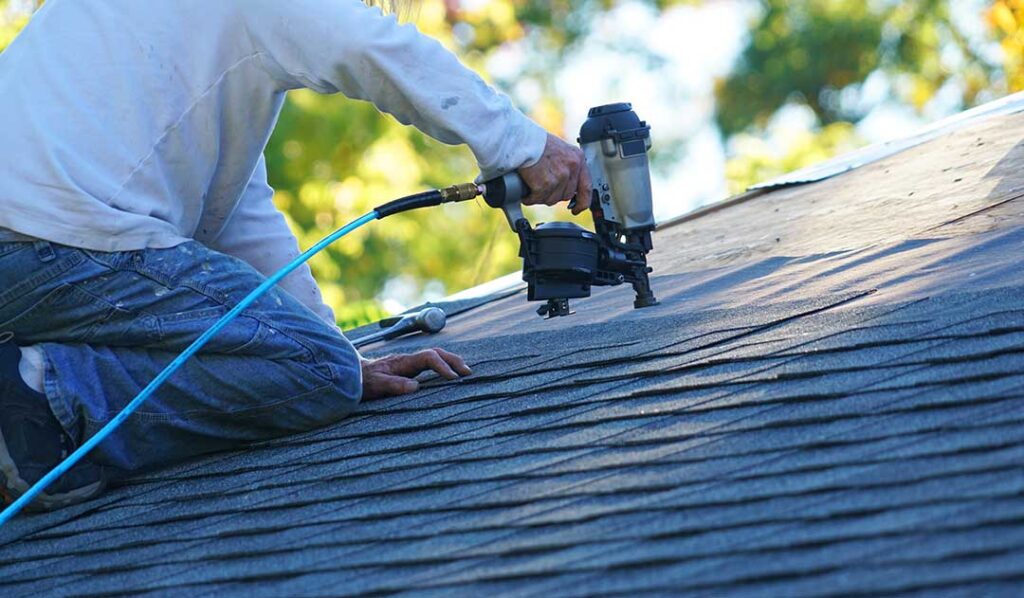
Is it safe for a homeowner to climb onto the roof?
Usually, roof work is safer to observe from the ground than to perform personally. A roof can be slippery, steep, unstable, or weakened by hidden water damage, and a fall from even a one-story roof can cause serious injury.
Homeowners should avoid roof access during rain, snow, ice, high winds, frost, or damp morning conditions. Greene, NY experiences seasonal weather that can leave shingles, metal roofing, ladders, and roof edges wet or icy even when the ground appears clear.
Before deciding to climb, consider:
- The roof’s slope and height
- Whether the surface is dry and structurally sound
- Wind conditions and nearby overhead wires
- The condition and placement of the ladder
- Whether another adult is present
- Whether the task can be completed safely from the ground
If there is any uncertainty about the roof’s condition or the safety of the work, staying off the roof is the safer decision.
What should be checked from the ground first?
A ground-level inspection can reveal many roofing problems without creating a fall hazard. Use binoculars when necessary rather than walking across the roof.
Look for:
- Missing, lifted, cracked, or curled shingles
- Dark patches that may indicate trapped moisture
- Sagging areas along the roofline
- Damaged flashing around chimneys, vents, and roof edges
- Loose gutters or downspouts
- Granules collecting at the ends of downspouts
- Tree limbs touching or hanging over the roof
- Daylight visible in the attic through roof surfaces
- Water stains on ceilings or upper walls
After heavy rain, check the attic from inside the home. Damp insulation, musty odors, stained wood, or active dripping can indicate a leak. Do not press on soft ceiling areas, because wet drywall can become heavy and fail unexpectedly.
How can a ladder be used safely?
Many roof injuries happen before a person reaches the roof. A ladder should be placed on firm, level ground away from ice, mud, loose gravel, and areas where doors or vehicles could move.
Before use, inspect the ladder for bent rails, damaged feet, missing hardware, and slippery contamination. Keep the following practices in mind:
- Face the ladder while climbing.
- Maintain three points of contact.
- Keep both hands available rather than carrying tools.
- Do not stand on the top step or the highest prohibited rung.
- Keep your belt buckle between the side rails.
- Move the ladder instead of leaning sideways.
- Do not place a ladder near overhead electrical lines.
- Have another adult stabilize the ladder when conditions are less than ideal.
A ladder is not a substitute for fall protection. Reaching from a ladder onto a roof can shift the center of gravity and create a dangerous transition, especially on sloped surfaces.
What personal equipment helps reduce risk?
Appropriate equipment can reduce some hazards, but no equipment makes unsafe roof access risk-free. Shoes should have clean, slip-resistant soles, and clothing should allow unrestricted movement without loose drawstrings or fabric that can catch on ladder parts.
For work above lower heights, properly designed fall-protection equipment may be required. A harness, anchor, lifeline, and related components must be selected, installed, and used correctly. Improvised attachment points, chimney straps, plumbing vents, gutters, and decorative features are not reliable fall anchors.
Roof jacks, guardrails, scaffolding, and other systems must also be installed for the roof design and work being performed. Homeowners who do not have training with this equipment should not assume that owning a harness makes roof work safe.
How should snow and ice be handled?
Snow and ice should not be walked on. A roof covered by winter weather can hide weak areas, skylights, loose shingles, and uneven surfaces. Snow also makes it difficult to see the roof edge, increasing the chance of stepping beyond the roofline.
From the ground, use caution around falling snow and ice. Melting conditions can release heavy slabs from eaves and gutters without warning. Keep children, pets, and visitors away from areas below roof edges after a storm.
Large accumulations, ice dams, and snow pressing against roof structures can require specialized equipment and controlled removal methods. Prying at ice with sharp tools can damage shingles, flashing, gutters, and underlayment.
Are gutters and roof edges safe to reach?
Gutter cleaning is often treated as a minor household chore, but it involves ladders, unstable footing, and repeated reaching. Wet leaves can make a roof edge slippery, while clogged gutters may be heavier than expected because of waterlogged debris.
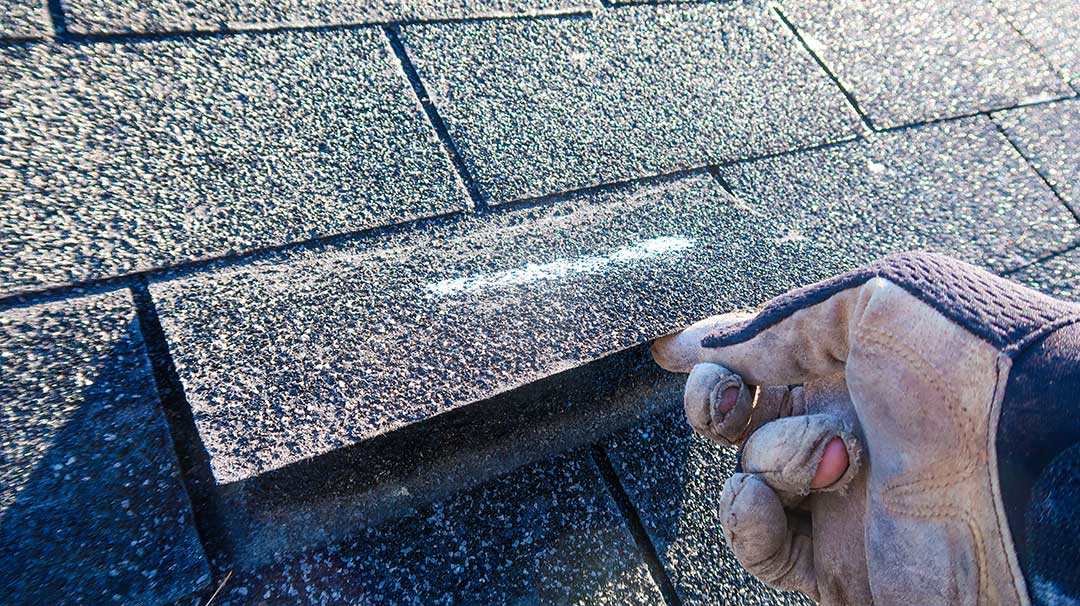
Never step on gutters, downspouts, skylights, plastic roof coverings, or roof-edge trim. These components are not designed to support a person. If a ladder must be used for a ground-level task, keep the work within easy reach and avoid twisting.
A long-handled ground tool may allow limited debris removal without climbing, but it should be used carefully to avoid striking windows, utility lines, siding, or people below.
What hazards are easy to overlook?
Some of the most serious risks are not obvious from the roof surface.
Electrical lines
Tools, ladders, wet materials, and a person’s body can conduct electricity. Maintain a wide distance from overhead lines and never assume that an insulated-looking cable is safe to touch.
Skylights and roof panels
A skylight may look solid while being unable to support a person. Older translucent roof panels can also become brittle from age and weather exposure.
Weak or concealed decking
Water damage, rot, insects, and long-term leaks can weaken the wood beneath shingles. A surface that appears intact may collapse under a person’s weight.
Wind
Wind can catch loose materials, ladders, tarps, and clothing. Gusts are especially dangerous near roof edges, where balance can be lost quickly.
Heat and fatigue
Summer roof surfaces can become much hotter than the surrounding air. Dehydration, dizziness, and tiredness increase the chance of a misstep. Take breaks in a shaded area and stop work if balance, concentration, or vision is affected.
What should happen after a storm?
After strong wind, hail, heavy rain, or a winter storm, inspect the property from the ground first. Watch for fallen branches, exposed roofing materials, damaged vents, displaced gutters, and water entering the attic or living space.
Do not climb onto a roof to cover damage during active wind, lightning, or rain. If water is entering the home, place containers under safe drip areas, move furnishings away from the leak, and avoid electrical fixtures or outlets that may be wet.
Emergency roof covering should not involve walking on damaged or unstable areas. A compromised roof may have hidden structural damage that is not visible from above.
When should roof access be avoided entirely?
A homeowner should remain off the roof when:
- The roof is wet, icy, snow-covered, or visibly damaged.
- The slope requires special equipment or makes standing difficult.
- There are overhead electrical hazards.
- The roof has skylights or fragile panels.
- The person is alone, ill, fatigued, or uncomfortable at height.
- Strong winds or thunderstorms are present.
- A ladder cannot be placed securely.
- The task requires carrying bulky materials.
- Structural damage, sagging, or a major leak is suspected.
Roof maintenance can often begin safely with observations from the ground and from the attic. The safest repair is the one that does not expose a homeowner to an avoidable fall, electrical contact, structural collapse, or changing weather conditions.
