
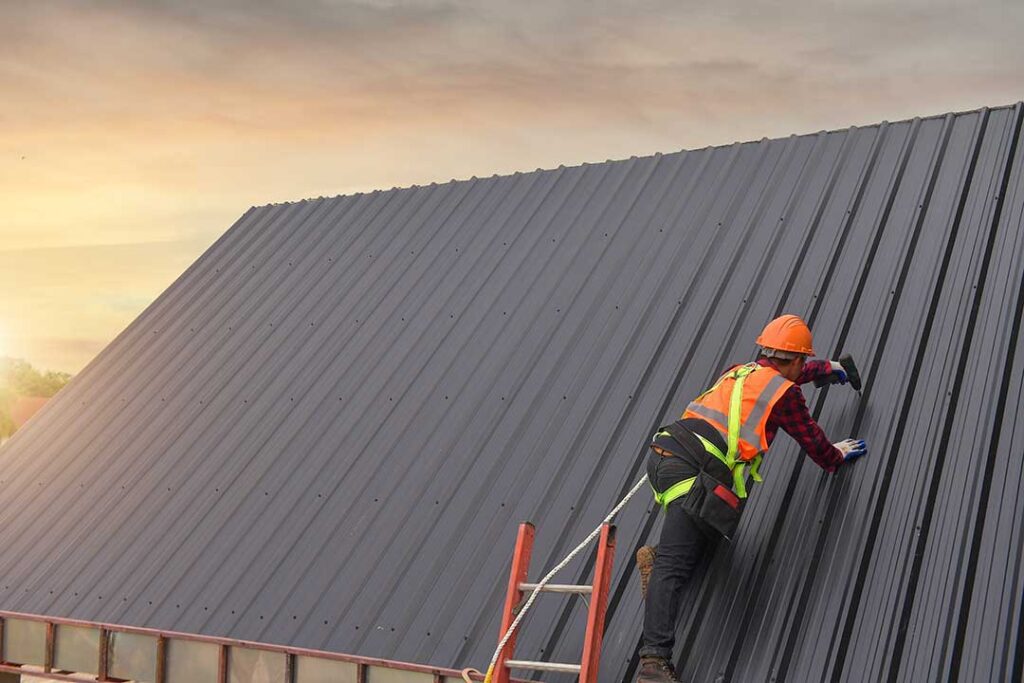
Why can a small roof problem become a major repair?
A minor roof defect rarely stays minor for long. Missing shingles, lifted flashing, cracked sealant, or a small leak can allow water to reach roof decking, insulation, framing, ceilings, and interior finishes. In Greene, NY, repeated rain, snow, ice, wind, and seasonal temperature changes can give a small weakness many opportunities to worsen.
Roof damage is not always obvious from the ground. Water may enter in one location and travel along rafters, sheathing, or insulation before appearing as a stain somewhere else. By the time an indoor symptom becomes visible, the original problem may have been present for weeks or months.
A repair that might have involved replacing a few roofing materials can eventually require removal of larger sections of the roof and repairs to the structure beneath it.
What happens when a roof leak is ignored?
An ignored leak can damage more than the ceiling directly below it. Water may soak attic insulation, weaken wood, stain drywall, and create conditions that support mold growth.
Common signs of ongoing or past water intrusion include:
- Brown or yellow ceiling stains
- Peeling paint or bubbling drywall
- Damp insulation in the attic
- Musty odors
- Soft or discolored roof decking
- Drips that appear only during heavy rain
- Water marks around chimneys, vents, skylights, or wall intersections
A ceiling stain does not always mean the roof is leaking directly above that spot. The source may be several feet away, particularly on sloped roofs where water follows framing or sheathing.
Even if the leak stops after one storm, the damage may not be resolved. Temporary drying can hide the problem while damp materials remain inside the roof assembly.
Can moisture lead to mold or unhealthy indoor conditions?
Yes. Persistent moisture can create an environment where mold and other biological growth develop, especially in dark, poorly ventilated areas such as attics, wall cavities, and spaces above finished ceilings.
Mold is not the only concern. Wet insulation loses effectiveness, which can make rooms harder to heat during winter and harder to keep comfortable during summer. Damp wood can also remain vulnerable to decay long after the original leak seems to have ended.
People with asthma, allergies, or other sensitivities may notice increased irritation in a home with unresolved moisture problems. Roof repairs alone may not address all indoor concerns if wet insulation, drywall, or framing also needs attention.
How does neglected roof damage affect the structure?
Roof coverings protect the roof deck and framing from weather. Once water gets beneath that protective layer, structural materials may gradually weaken.
Roof decking can soften or deteriorate. Rafters and trusses may develop rot near repeated leak areas. Fasteners can corrode, and connections may lose strength. These changes are often hidden until someone enters the attic or a section of ceiling begins to sag.
A sagging roofline, bowed ceiling, or visibly deflected roof surface should be treated as a serious warning. These conditions can indicate weakened structural components or accumulated water. People should avoid walking on visibly damaged roof areas or entering spaces that appear unsafe.
Structural damage is especially concerning during periods of heavy snow or ice. Added weight can place stress on compromised framing, even when the roof did not appear to be in immediate danger during dry weather.
Why are winter conditions especially hard on a damaged roof?
Cold weather can amplify existing defects. Water that enters cracks or gaps may freeze and expand, making openings larger. Ice can also form along roof edges when heat escapes into the attic and melts snow on the upper roof surface.
This cycle may contribute to:
- Lifted or displaced shingles
- Damaged flashing
- Water backing up beneath roofing materials
- Leaks near eaves, valleys, and wall intersections
- Interior moisture appearing during thaw periods
Snow and ice do not automatically mean a roof is failing. The greater concern is a roof that already has missing materials, poor drainage, damaged flashing, inadequate attic ventilation, or a history of leaks.
In Greene, NY, roofs also face repeated transitions between freezing and thawing conditions. These cycles can expose weaknesses that may not be noticeable during a dry season.
Can a neglected roof increase heating and cooling costs?
It can. A damaged roof may allow conditioned air to escape or outside air to enter through gaps around vents, attic access points, deteriorated insulation, or damaged roof assemblies.

Water-damaged insulation becomes less effective. If attic ventilation is blocked or poorly balanced, moisture and heat can accumulate in the attic. During cold weather, this may contribute to condensation and frost; during warm weather, it can increase heat transfer into the living space.
Higher energy use does not prove that a roof is damaged, but unexplained changes in comfort or utility costs can justify checking the attic and roof ventilation system.
Which roof problems should not be postponed?
Some conditions deserve prompt attention because they can worsen quickly or create safety hazards:
- Active leaking during rain or thawing
- A ceiling that is sagging, bulging, or soft
- Missing shingles over a large area
- Exposed underlayment or roof decking
- Loose metal flashing
- A tree limb or other object that has struck the roof
- Large areas of standing water
- Significant ice buildup near roof edges
- Visible daylight through the roof deck
- Electrical fixtures or wiring affected by water
Water near electrical components creates an added risk. Avoid touching wet fixtures, switches, or wiring, and keep people away from areas where ceiling materials may fall.
Roof surfaces are also dangerous when wet, icy, steep, or covered with loose materials. Homeowners can often inspect from the ground or from a window, but climbing onto a damaged roof can lead to falls or additional damage.
Is a roof inspection still useful if there is no visible leak?
Yes. A roof can have developing problems without producing an interior stain. Early inspection may identify loose flashing, cracked pipe boots, exposed fasteners, damaged ventilation components, or shingle wear before water reaches the living space.
After a major wind event, heavy snowfall, fallen branch, or prolonged period of severe weather, a ground-level check can be useful. Look for missing shingles, scattered roofing debris, bent metal, clogged drainage paths, and unusual changes in the roofline.
Attic observations can also provide clues. Damp insulation, daylight where none should be visible, darkened wood, and musty odors suggest that further evaluation may be needed.
What should residents document after roof damage?
Documentation can help clarify how a problem developed and whether damage is spreading. Take dated photographs from safe locations, record when leaking occurs, and note whether water appears during rain, snowmelt, or wind-driven storms.
Keep track of temporary measures, such as containers placed beneath drips or areas covered to limit interior damage. Temporary protection may reduce immediate harm, but it should not be mistaken for a permanent repair.
Roof maintenance is easier to manage when small defects are addressed before they affect the roof deck, insulation, framing, or interior finishes. Prompt attention also reduces the chance that a seasonal weather event will turn a manageable repair into a broader household disruption.
