

Walking on a roof is risky even when the surface looks dry and stable. Asphalt shingles can be loose, roof sheathing may be weakened by moisture, and a short slip can lead to a serious fall. For residents of Greene, NY, seasonal rain, snow, ice, wind, and freeze-thaw cycles can make roof access more hazardous than it appears from the ground.
The safest approach is to avoid walking on a roof unless the task truly requires it and the necessary fall protection is in place.
Is it safe for a homeowner to walk on a roof?
Usually, no. A homeowner may be able to inspect a roof safely from the ground, a window, or a properly positioned ladder without stepping onto the roof. Climbing onto the roof should not be treated like walking across a deck or attic floor.
Roof access becomes especially dangerous when:
- The roof is wet, icy, frosty, or covered with snow
- The roof slope is steep
- Wind is strong or gusty
- Shingles are brittle, loose, curled, or covered in moss
- The roof has skylights, fragile panels, or damaged sections
- Power lines are near the ladder or roof edge
- The roof surface is more than one story above the ground
- There is no reliable fall protection
A roof can also contain hidden weak areas. Water damage may soften the roof deck beneath shingles, and older homes may have sections that are less stable than they look.
What should be checked before going onto a roof?
A roof should be evaluated from the ground before anyone climbs. Look for visible hazards and consider whether the task can be completed without stepping onto the surface.
Check for:
- Snow, ice, rain, dew, frost, or other moisture
- Loose shingles, exposed underlayment, sagging areas, or holes
- Tree limbs that could shift or fall
- Overhead electrical wires
- Skylights or translucent roof sections
- Satellite equipment, vents, chimneys, and other trip hazards
- Gutters or roof edges that could give way
- Wind that could affect balance or ladder stability
Do not climb onto a roof during or immediately after a storm. In the local climate, freeze-thaw conditions can create thin ice that is difficult to see, especially near shaded roof edges, valleys, gutters, and north-facing sections.
How should a ladder be positioned?
A ladder is an access tool, not a substitute for roof fall protection. It must stand on firm, level ground and should not rest on a slippery surface, loose soil, snow, or ice.
For a straight or extension ladder:
- Set the base about one foot away from the building for every four feet of vertical ladder height.
- Extend the ladder at least three feet above the roof edge when it is being used to step onto the roof.
- Keep both ladder rails supported at the top.
- Secure the ladder so it cannot slide, shift, or rotate.
- Keep the area below clear of children, pets, tools, and foot traffic.
- Face the ladder and maintain three points of contact while climbing.
Never place a ladder directly on top of a vehicle, box, barrel, makeshift platform, or pile of snow. Do not carry long tools while climbing. Raise them with a rope after reaching a stable position, and only if the roof access itself is safe.
Stay well away from overhead electrical lines. Even a ladder that does not touch a wire can create a dangerous electrical path.
What footwear and clothing are appropriate?
Wear clean, slip-resistant footwear with soles that provide good traction. Shoes with worn, smooth, muddy, or heavily contaminated soles increase the chance of sliding.
Avoid loose clothing, dangling straps, and anything that can catch on roof equipment. Keep both hands available whenever possible. A tool belt can reduce the need to carry objects, but it does not improve fall protection by itself.
Do not rely on athletic shoes simply because they are comfortable. Roof surfaces vary, and rubber soles do not guarantee traction on wet shingles, metal flashing, algae, frost, or ice.
How should a person move across shingles?
If roof access is unavoidable, move slowly and deliberately. Keep the body facing the roof slope and use short, controlled steps. Avoid sudden turns, running, jumping, or walking backward.
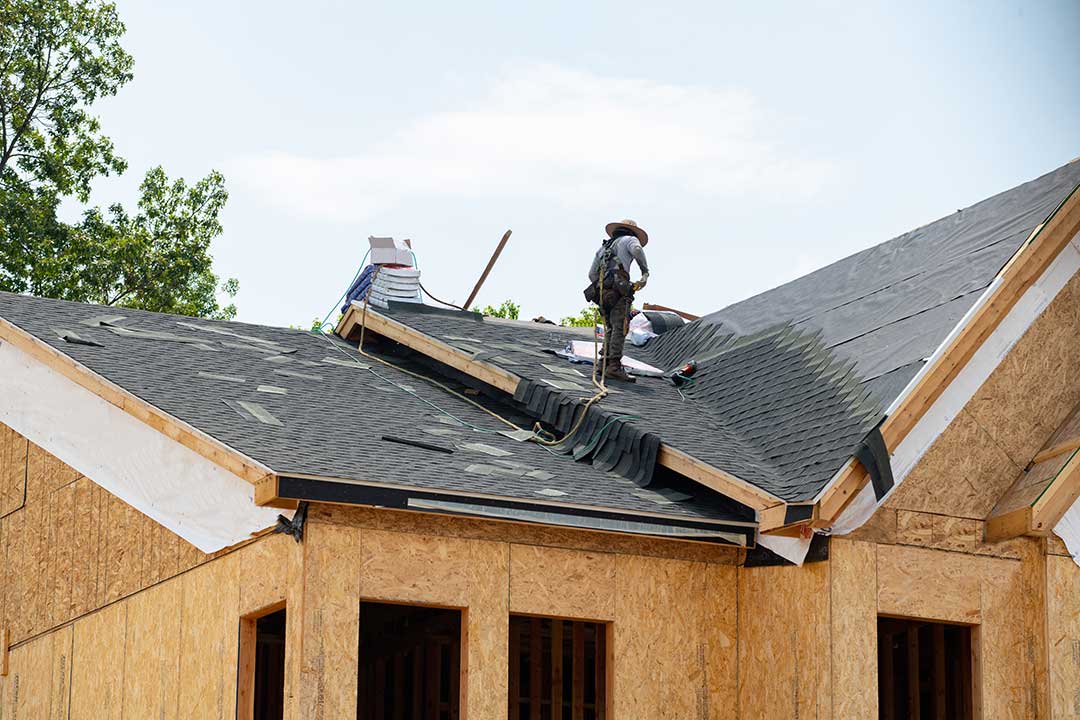
General movement guidelines include:
- Step on the stronger lower portions of shingles rather than exposed edges or tabs.
- Distribute weight evenly and avoid concentrating force on one foot.
- Keep away from roof edges, valleys, gable ends, and areas around penetrations.
- Do not step on gutters, skylights, plastic vents, or visibly damaged sections.
- Never use a chimney, vent pipe, antenna, or roof equipment as a handhold.
- Keep tools secured so they cannot slide down the roof.
- Maintain awareness of the ladder location before moving away from it.
Shingles can be damaged by foot traffic, particularly in cold weather when they become less flexible. Walking on a hot roof can also loosen granules and leave marks. Metal roofing requires additional caution because it can become extremely slippery from condensation, rain, frost, or light snow.
What fall protection is needed?
A roof edge can be dangerous even at a relatively modest height. For construction work, federal safety rules generally require fall protection when workers are exposed to falls of six feet or more above a lower level. Homeowners should treat this as a minimum safety reference, not as a guarantee that a roof is safe for do-it-yourself access.
A proper fall-protection system may include guardrails, a correctly installed personal fall-arrest system, or a fall-restraint system that prevents a person from reaching the edge. These systems require suitable anchors, compatible equipment, correct setup, and training.
A rope tied to a chimney, plumbing vent, tree, or interior furniture is not an acceptable substitute. Improperly placed harness equipment can increase risk by creating a false sense of security or causing a swing fall.
If a roof requires work near an edge, on a steep slope, over a fragile surface, or after storm damage, staying off the roof is the safest choice unless a qualified person has established a safe access and fall-protection system.
Can a roof be inspected without walking on it?
Often, yes. A ground-level inspection can reveal many problems, including missing shingles, sagging roof lines, damaged flashing, clogged gutters, and visible water stains. Binoculars or a camera with a zoom feature can help identify details from a safe position.
Inside the home, inspect ceilings and upper walls for:
- Brown or yellow water stains
- Peeling paint
- Damp insulation
- Musty odors
- Dripping after rain or snowmelt
- Light visible through the roof deck in an unfinished attic
A ladder may be used to inspect the lower roof edge or gutter from a stable position, but climbing onto the roof is not necessary for many routine observations.
When should roof access be avoided completely?
Do not walk on a roof during rain, snow, freezing temperatures, high winds, or active roof movement. Avoid damaged roofs after a fallen tree, fire, heavy ice load, or major storm because the structure may be unstable.
Leave the area and keep other people away if there are downed wires, sagging roof sections, exposed structural members, or signs that the roof deck has failed. Emergency conditions can also involve hidden electrical, structural, and falling-object hazards that are not visible from the ground.
For most household inspections in Greene, the safest practice is to observe from below, document what can be seen, and avoid turning a minor maintenance question into a fall or roof-damage emergency.
