

Replacing a roof is a major household expense, and many residents in Greene, NY, need to spread the cost over time rather than pay the full amount at once. The right financing choice depends on the roof’s urgency, the home’s equity, credit history, income, and how much monthly payment the household can manage.
Financing can make necessary work possible, but a lower monthly payment does not always mean a lower total cost. Interest, fees, variable rates, collateral, and repayment terms deserve as much attention as the advertised payment.
What should be decided before borrowing?
Before comparing loans, determine whether the roof needs immediate replacement or whether limited repairs can safely extend its service life. Leaks, exposed decking, sagging areas, widespread shingle loss, or storm damage may require prompt attention. A roof that is aging but still watertight may allow more time to build savings or compare financing offers.
A written scope of work should identify:
- Whether the project involves repair, partial replacement, or full replacement
- Removal and disposal of existing roofing materials
- Decking or structural repairs that may cost extra
- Underlayment, flashing, ventilation, and ice-dam protection
- Permit requirements, payment timing, and change-order procedures
- The total project price and any finance charges
Seasonal weather matters in the region. Snow, ice, freeze-thaw cycles, wind, and heavy rain can worsen a small roof defect, especially before winter. At the same time, rushing into financing after a storm can make it easier to overlook contract terms or accept an expensive loan.
What are the main ways to finance a new roof?
The most common options are cash savings, personal loans, home equity loans, HELOCs, credit cards, and financing arranged through a home-improvement contractor. Each has a different balance of cost, speed, risk, and flexibility.
Cash or partial cash payment
Using savings avoids interest and does not create a new monthly obligation. Paying part of the cost in cash and financing the remainder can reduce borrowing costs while preserving an emergency reserve.
A household should avoid using every available dollar for roofing if that leaves no funds for heating repairs, insurance deductibles, medical needs, or other emergencies. Roof financing should fit into the broader household budget, not replace it.
Personal loans
A personal loan is usually unsecured, meaning the home is not directly pledged as collateral. The lender generally evaluates credit, income, debts, and repayment ability.
Personal loans may offer a fixed payment and a defined payoff date. They can be useful when the borrower wants predictable budgeting or does not have enough home equity. The interest rate may be higher than a loan secured by the property, particularly for borrowers with weaker credit.
Review the annual percentage rate, origination fee, late fee, loan term, and total amount repaid. A longer term lowers the monthly payment but usually increases total interest.
Home equity loans
A home equity loan provides a lump sum secured by the home’s equity. It may have a fixed interest rate and fixed monthly payments, making it easier to budget for a known roofing cost.
This option can be less expensive than unsecured borrowing for a homeowner with substantial equity and strong credit. The risk is significant: failure to make payments can place the home at risk of foreclosure. Closing costs or other lender fees may also apply.
A home equity loan may be less suitable if the project price is uncertain or if the household expects additional major repairs soon.
Home equity lines of credit
A HELOC is a revolving line of credit secured by the home. The borrower can draw funds as needed, which may help when hidden decking or structural problems are discovered after work begins.
Many HELOCs have variable interest rates, so the payment can change over time. Some have an initial draw period followed by a repayment period, and payments may increase when the repayment phase begins.
A HELOC should not be treated like an ordinary credit card. The home is collateral, and borrowing more than necessary can create long-term financial pressure.
Credit cards
A credit card may be convenient for a small emergency repair, but it is often costly for a full roof replacement. Promotional interest rates can expire, deferred-interest terms can be misunderstood, and minimum payments may allow debt to continue for years.
Before using a card, confirm the regular interest rate after any promotional period, the payoff deadline, and whether interest is charged retroactively. Credit utilization can also affect a borrower’s credit score.
Contractor-arranged financing
Some roofing contracts include a financing option through a separate lender. This may simplify paperwork, but it should still be compared with independent offers.
Ask for the complete loan agreement, not just a monthly payment. Confirm:
- The annual percentage rate
- The total repayment amount
- Whether the rate is fixed or variable
- Any prepayment penalty
- Deferred-interest or “no payment” conditions
- What happens if the project is delayed or changed
- Whether the financing agreement is separate from the roofing contract
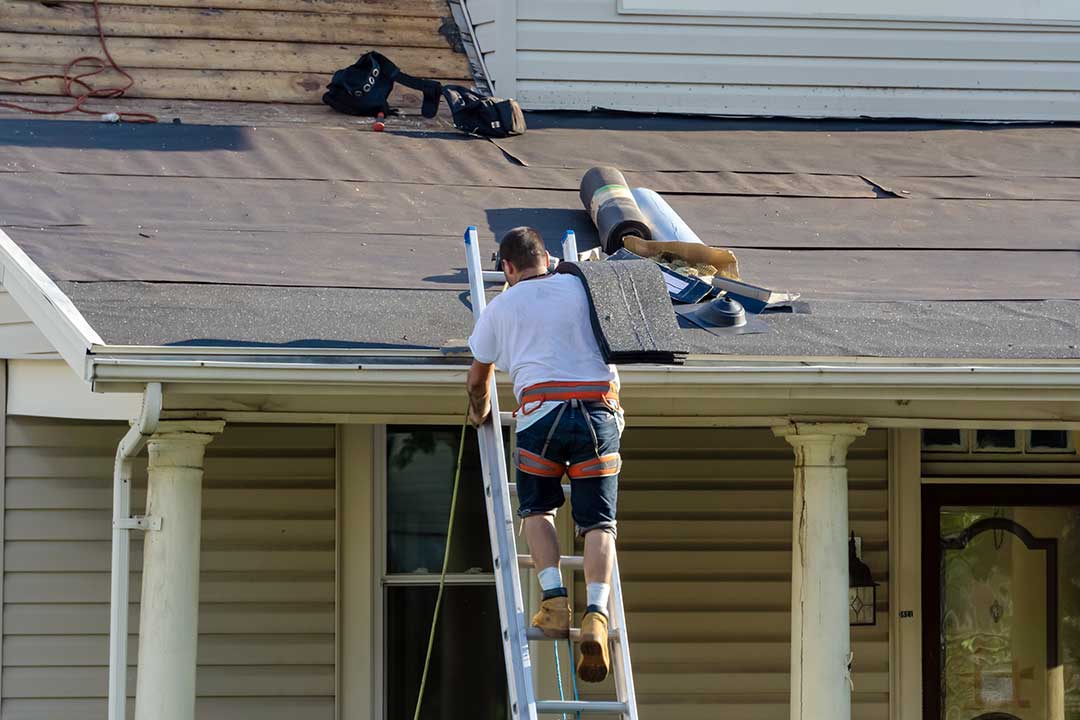
A contract for New York home-improvement work costing more than $500 generally must be in writing. The written agreement should also explain payment arrangements and applicable finance charges.
Does homeowners insurance pay for a new roof?
Insurance may cover roof damage caused by a covered event, such as certain wind or storm losses, but it generally does not pay to replace a roof solely because it is old or worn out. Policy language, exclusions, deductibles, roof age, maintenance history, and the cause of damage all matter.
Before borrowing for storm-related work, review the policy and ask the insurer how a claim would affect the deductible and coverage. Avoid signing an assignment of insurance benefits or accepting a repair agreement that is difficult to understand.
A financing decision should be based on the amount the household is actually responsible for, not on an assumption that an insurance payment will arrive.
Are there tax credits for a standard roof replacement?
Traditional roofing materials and ordinary structural roof components generally do not qualify for federal residential energy credits. Solar roofing tiles or shingles can be treated differently because they generate electricity, but eligibility depends on the specific product, installation, and tax rules in effect for the year.
Federal residential energy-credit rules have changed, and some credits applicable to earlier tax years ended after December 31, 2025. A tax professional can confirm whether a particular solar or energy-related improvement qualifies. A tax credit should never be counted as guaranteed money when deciding whether a loan is affordable.
How can borrowers compare offers fairly?
Use the same project amount and repayment period when comparing lenders. Focus on total cost rather than the smallest monthly payment.
A simple comparison should include:
- Amount borrowed
- Annual percentage rate
- Finance and origination fees
- Monthly payment
- Number of payments
- Total amount repaid
- Fixed or variable interest rate
- Security interest in the home
- Prepayment rules
- Late-payment consequences
For example, a five-year loan may cost less overall than a ten-year loan even if its monthly payment is higher. A variable-rate line may start cheaply but become more expensive if rates rise.
What warning signs should be taken seriously?
Pressure to sign immediately, requests for full payment before work begins, blank contract sections, vague descriptions of materials, or promises that insurance will cover everything are warning signs.
New York consumer protections emphasize written contracts, clear payment schedules, and retaining copies of signed documents. Payments should be tied to defined stages of work, with final payment reserved until the project is complete and required inspections or documentation have been addressed.
For households already struggling with mortgage payments or other debt, adding roof financing may create more risk than the repair itself. A housing counselor, credit counselor, or qualified financial adviser can help compare alternatives before a home-secured loan is signed.
