
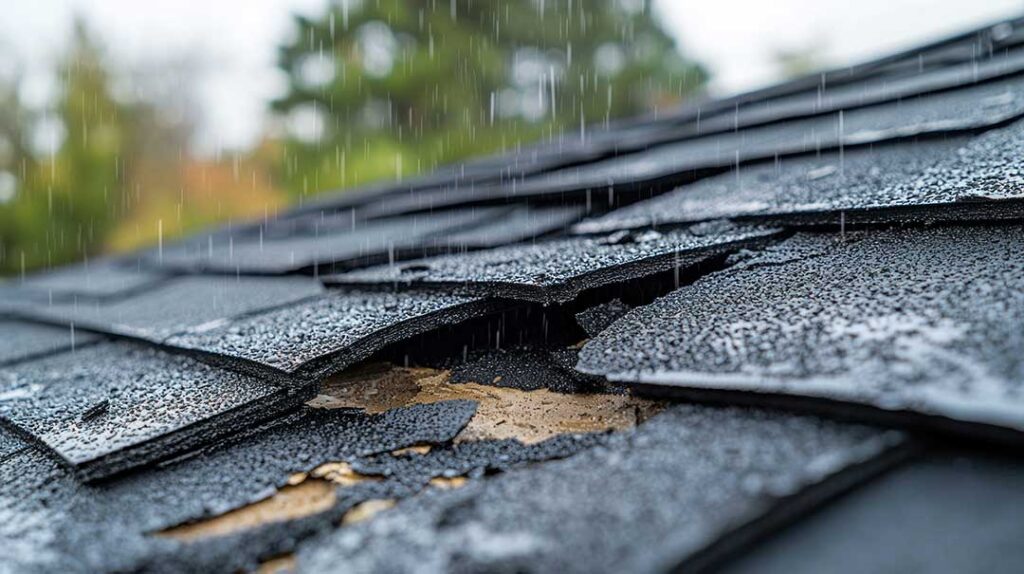
Hail can damage roofing materials in minutes, yet the evidence is not always obvious from the ground. A roof may still look intact after a storm while individual shingles, flashing components, vents, or gutters have been weakened.
For households in Greene, NY, summer thunderstorms and fast-moving storm systems can bring hail along with strong wind and heavy rain. Knowing what to look for after a storm can help identify problems before water enters the roof system.
What does hail damage look like on asphalt shingles?
Hail damage on asphalt shingles often appears as small, dark, round marks where the protective granules have been knocked away. The damaged area may feel soft or show a shallow depression when viewed closely.
Common signs include:
- Circular bruises or dents
- Exposed black or gray matting beneath the granules
- Areas that look smoother or shinier than surrounding shingles
- Cracked, split, or broken shingle surfaces
- Loose granules collected in gutters or at the bottom of downspouts
- Shingles with raised edges or pieces missing after wind and hail occurred together
Hail marks are not always perfectly round. The impact may create an irregular bruise, especially when hail strikes at an angle or when the roof surface is older and less flexible.
The most useful comparison is between the suspected damage and nearby areas that appear unaffected. A few missing granules from ordinary aging are different from repeated impact marks scattered across one or more roof slopes.
Can hail damage be seen from the ground?
Some damage is visible from the ground, but a ground-level inspection cannot reliably identify every problem. Look for missing shingles, lifted edges, exposed underlayment, damaged vents, dented metal, or unusual dark spots.
Binoculars can make a basic visual check safer and more useful. Stand at several points around the property and inspect each roof slope, because hail may strike one side more directly than another.
Avoid climbing onto the roof after a storm. Wet shingles, loose granules, damaged flashing, and hidden structural weaknesses can make the surface hazardous. A roof that appears stable from a ladder may still contain slick or broken areas.
What other parts of the roof can hail damage?
Hail affects more than shingles. Hard impacts can dent or crack several roof components, including:
- Metal flashing around chimneys, walls, valleys, and roof edges
- Ridge caps and hip caps
- Plumbing vent boots
- Roof vents and turbine vents
- Skylight frames or plastic covers
- Gutters, downspouts, and gutter guards
- Siding, trim, window screens, and exterior air-conditioning components
Metal surfaces may show small circular dents or dimples. Plastic components may crack, split, or develop punctures. Damage to a vent boot may not cause an immediate leak, but it can allow water to enter later as the material ages or temperatures change.
Checking surrounding exterior surfaces can provide useful context. Dented gutters, marked siding, damaged screens, and bruised outdoor equipment may support the possibility that the roof was exposed to hail.
How can hail damage be confused with normal roof aging?
Not every dark spot, missing granule, or curled shingle is caused by hail. Roofs naturally change with age, sunlight, temperature swings, algae growth, foot traffic, and repeated freeze-thaw cycles.
Normal aging often appears as widespread, gradual wear across the roof. Hail damage is more likely to appear as distinct impact marks, concentrated areas of granule loss, or patterns that correspond to the direction and intensity of the storm.
Wind damage usually produces lifted, creased, or missing shingles rather than isolated circular bruises. Tree branches can create long scratches, punctures, or broken sections. Small animals may damage edges, vents, or soft roof materials in ways that do not resemble hail impacts.
The timing also matters. If the roof looked unchanged before a storm and new marks appeared afterward, the storm is a reasonable possible cause. Photographs taken before severe weather can make comparisons easier.
Are small hailstones capable of damaging a roof?
Yes. Large hail is more likely to cause severe damage, but smaller hail can still harm older, brittle, or already weakened roofing materials. Wind speed, impact angle, storm duration, roof slope, material age, and temperature all affect the result.

A small stone traveling quickly may damage a vulnerable area, while a larger stone may leave only a visible mark on a newer, more flexible surface. The absence of broken shingles does not prove that no damage occurred.
Hail can also strike roof components repeatedly during a short storm. Damage may be limited to one slope or may appear on multiple elevations depending on wind direction.
What should be checked inside the house?
Interior signs may appear later than exterior damage. After a hailstorm, inspect ceilings, upper-floor walls, attics, and areas around skylights or roof penetrations for:
- New water stains
- Damp insulation
- Dripping or musty areas
- Peeling paint
- Soft drywall
- Daylight visible through the roof deck
- Moisture around vents, chimneys, or attic openings
A leak may not show up directly below the damaged shingle. Water can travel along roof decking, rafters, insulation, or interior framing before becoming visible.
If water is actively entering the home, place a container under the drip when safe and move furnishings away from the area. Do not touch wet electrical fixtures or wiring. Electrical hazards, sagging ceilings, and unstable attic surfaces require immediate caution.
What should residents do after a hailstorm?
Start with safety and documentation rather than climbing onto the roof. Record the date and approximate time of the storm, take ground-level photographs, and note visible damage to shingles, metal, siding, gutters, windows, vehicles, or outdoor equipment.
If safe, preserve damaged pieces or take close photographs without disturbing the roof. Images should show both the individual mark and the larger roof area so the location and pattern are clear.
Check the attic and upper floors during the next several days, especially after additional rain. Some leaks appear only when water reaches a particular seam or penetration.
Insurance questions depend on the policy, the cause of loss, deductibles, exclusions, and reporting deadlines. Policyholders should review their own documents and keep records of storm dates, photographs, temporary protective measures, and any interior damage.
Is a roof inspection necessary after visible hail?
A closer inspection may be justified when there are multiple impact marks, damaged metal components, missing shingles, interior water stains, or widespread granule loss. Professional access may also be necessary when the roof is steep, wet, high, fragile, or visibly compromised.
The purpose of an inspection should be to distinguish hail damage from ordinary aging, wind damage, installation problems, and other causes. A careful assessment considers the entire roof system rather than relying on one isolated mark.
For Greene households, checking the roof after a significant storm is especially sensible before the next period of heavy rain, summer humidity, or winter freeze-thaw conditions. Early identification helps reveal whether the issue is cosmetic, a developing leak, or a more serious failure that affects the roof’s ability to shed water.
