
A roof replacement can help reduce energy bills, but the savings usually come from improving the entire roof-and-attic system—not simply installing new shingles. In Greene, NY, where homes experience cold winters, snow, wind, and warm summer periods, roofing work can improve insulation, air control, ventilation, and moisture protection at the same time.
The greatest benefit is often more consistent indoor comfort. A properly improved roof assembly can help a home hold heated air during winter and limit unwanted heat buildup during summer.
Can replacing a roof lower heating and cooling bills?
Yes, but the effect depends on what is replaced and how the roof system is upgraded. New roofing materials alone may have only a modest effect on utility costs. Greater savings are possible when replacement includes improvements to:
- Attic insulation
- Air sealing
- Roof ventilation
- Flashing and moisture protection
- Insulation installed above the roof deck, where appropriate
- The condition of ductwork or mechanical equipment located in the attic
An aging roof may have damaged underlayment, gaps around penetrations, compressed insulation, or areas where wind-driven rain has caused hidden moisture problems. These conditions can reduce the effectiveness of the building envelope.
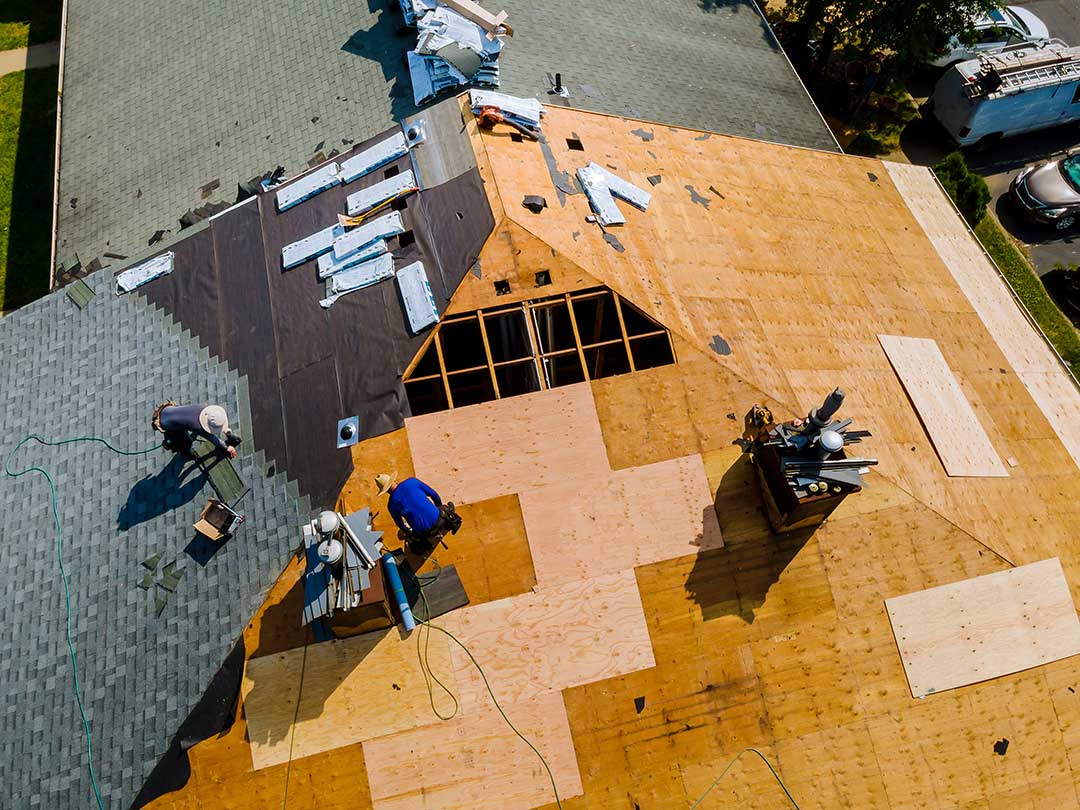
If a replacement involves removing the existing roofing down to the roof deck, it creates an opportunity to inspect the assembly and correct problems that are difficult to reach after new materials are installed.
Why does the attic matter so much?
The attic is one of the most important areas affecting home energy use. Heat naturally moves toward colder areas during winter, so poorly insulated ceilings allow warmth to escape into the attic. That forces the heating system to run longer.
During summer, an attic exposed to strong sunlight can become much hotter than the outdoor air. Without adequate insulation and ventilation, heat can transfer downward into living spaces and increase air-conditioning demand.
A roof replacement may improve energy performance when it includes:
- Air sealing around plumbing vents, electrical wiring, recessed lights, and other ceiling penetrations
- Restoring insulation that has settled, become wet, or been disturbed
- Adding insulation where the existing level is inadequate
- Maintaining clear ventilation paths from soffits to ridge or other approved outlets
- Correcting blocked vents or improperly installed baffles
Air sealing and insulation serve different purposes. Insulation slows heat transfer, while air sealing limits uncontrolled movement of air. A home can have a large amount of insulation and still lose energy through gaps and leaks.
How can a new roof help during Greene winters?
Cold-weather energy savings generally come from keeping the ceiling and attic boundary warmer and drier. A sound roof helps prevent water entry, while a well-designed attic system reduces heat loss from the occupied rooms below.
This matters during periods of snow and freezing temperatures. If warm air escapes into the attic, it can heat the underside of the roof unevenly. Snow may melt over warmer sections and refreeze near colder eaves, contributing to ice buildup. Ice dams are not caused by roofing materials alone, but poor insulation, air leakage, and inadequate ventilation can contribute to the conditions that allow them to form.
Replacing roofing without addressing attic heat loss may leave the underlying energy problem unresolved. In some homes, improving insulation and air sealing may provide more energy benefit than changing the roof covering itself.
Does roof color affect energy bills?
Roof color and surface reflectivity can influence summer heat gain. Lighter or more reflective roofing surfaces generally absorb less solar energy than darker surfaces, which may help reduce attic temperatures during hot weather.
The effect is usually more noticeable in homes with:
- Low attic insulation
- Air-conditioning equipment or ductwork in the attic
- Limited ventilation
- Large roof areas exposed to direct sunlight
- Poorly insulated upper floors
In a cold-weather climate, however, roof color is only one part of the energy picture. Winter heat loss is usually more closely related to insulation, air leakage, windows, doors, and heating equipment. A reflective roof does not replace the need for proper attic insulation.
What roof replacement choices improve efficiency?
There is no single roofing material that automatically produces the lowest energy bills. The overall assembly matters more than the visible roof covering.
Important considerations include:
Insulation above the roof deck
Rigid insulation installed above the roof deck can reduce thermal bridging through framing and create a more continuous insulation layer. This approach may be useful when attic-floor insulation is difficult to install or when the roof design requires an insulated roofline.
Attic-floor insulation
For a vented attic, insulation is commonly placed at the attic floor, separating the heated living area from the unconditioned attic. This can be effective when the attic is accessible and the ceiling plane can be thoroughly air sealed first.
Roof ventilation
Ventilation helps manage heat and moisture in a vented attic. It must be designed as a balanced system, with adequate intake and exhaust paths. Adding an exhaust vent without sufficient intake air may not solve the problem and can sometimes draw conditioned air from the home.
Durable underlayment and flashing
These components do not directly reduce energy use, but they help keep insulation dry. Wet insulation performs poorly and may lead to odors, mold growth, or damaged framing. Proper flashing around chimneys, skylights, walls, valleys, and roof penetrations also protects the building envelope.
All roof work must comply with the applicable New York State building and energy requirements in effect when the work is performed. Code requirements can change, particularly for insulation, ventilation, and roof assemblies.
How much can a homeowner expect to save?
There is no reliable single percentage for every home. Energy savings depend on the building’s age, size, insulation levels, heating fuel, air leakage, roof design, equipment efficiency, and household habits.
A roof replacement is more likely to reduce bills when the existing roof is associated with:
- Noticeable drafts near upper-floor ceilings
- Uneven room temperatures
- Excessive summer heat in upstairs rooms
- Frost or moisture in the attic
- Wet, compressed, or missing insulation
- Repeated ice buildup along eaves
- Heating or cooling equipment located in a poorly insulated attic
If the attic is already well insulated and air sealed, replacing worn shingles may provide little direct energy savings. The main benefits may instead be preventing leaks, protecting insulation, and preserving the home’s structural materials.
Should attic insulation be upgraded during roof replacement?
Often, yes—especially if the roof deck will be exposed. Roof replacement provides access that may not be available again for many years. It is a practical time to inspect insulation, identify air leaks, and determine whether the attic or roofline is the better place for improvements.
However, insulation should not simply be added without considering moisture and ventilation. Blocking soffit vents, covering wiring or lighting that requires clearance, or trapping moisture against roof sheathing can create new problems.
A careful evaluation should distinguish between a vented attic insulated at the ceiling and an unvented, conditioned attic insulated along the roofline. These are different designs and should not be mixed casually.
What should Greene homeowners check before replacing a roof?
Before treating a roof replacement as an energy upgrade, review the entire upper portion of the home:
- Look for moisture staining, frost, or damp insulation in the attic.
- Check whether ventilation openings are blocked.
- Note whether upstairs rooms are unusually hot or cold.
- Inspect ductwork for leakage if heating or cooling equipment is overhead.
- Determine whether air leaks are present around ceiling penetrations.
- Ask whether the planned roof assembly will meet current state requirements.
- Consider energy improvements that can be completed while the roof deck or attic is accessible.
For many area households, the most useful energy improvement is not a premium roof covering. It is a properly sealed, insulated, ventilated, and moisture-resistant roof assembly that works with the rest of the home.
