

What roof maintenance can a homeowner safely do?
Most routine roof maintenance involves inspection, cleaning, drainage checks, and early attention to minor warning signs. Homeowners can often handle ground-level observations and simple upkeep, but walking on a roof introduces fall and damage risks that should not be taken lightly.
A useful maintenance routine includes:
- Looking at the roof from the ground several times a year
- Checking the attic for moisture, staining, or daylight
- Keeping gutters and downspouts clear
- Trimming branches that rub against roofing materials
- Removing leaves and debris from roof valleys when it can be done safely
- Recording changes with dated photographs
Roof maintenance is most effective when it prevents small problems from becoming concealed water damage. A missing shingle, blocked gutter, or loose flashing detail may not cause an obvious interior leak immediately.
How often should a roof be inspected in Greene, NY?
A roof should receive a basic visual inspection at least twice a year, usually in spring and fall. Additional checks are worthwhile after strong wind, heavy snowfall, ice buildup, or a severe thunderstorm.
Seasonal inspections are useful because winter weather can expose weaknesses that were not visible in warmer months. Snow and ice may loosen shingles, stress flashing, and reveal drainage problems. Spring is a good time to look for wind damage, granule loss, sagging gutters, and branches that came down during storms.
In autumn, leaves can collect in valleys, around chimneys, and behind roof-mounted equipment. Wet organic debris can hold moisture against roofing materials and may obstruct water from reaching the gutters.
A visual inspection from the ground can reveal:
- Curled, cracked, lifted, or missing shingles
- Dark areas that may indicate moisture or algae growth
- Sagging sections along the roofline
- Loose or displaced flashing
- Excessive granules in gutter channels or at downspout outlets
- Moss or plant growth
- Damaged vent covers or pipe collars
Binoculars can make these checks more useful without requiring anyone to climb onto the roof.
Is it safe to walk on the roof?
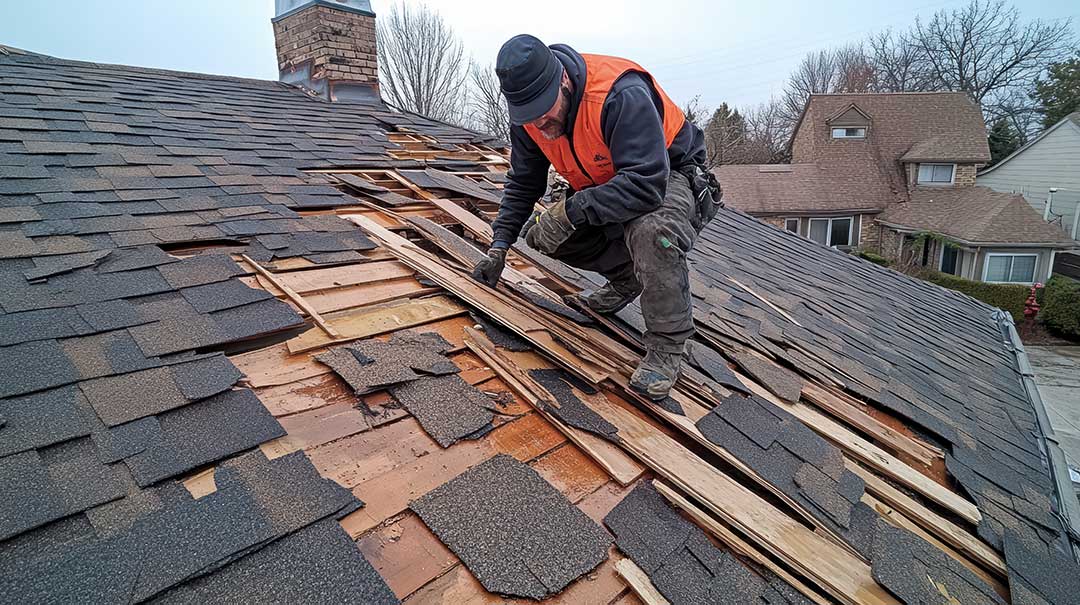
For most homeowners, walking on a sloped roof is not a safe maintenance task. Roofing surfaces can be slippery from dew, frost, moss, or loose granules, and shingles can be damaged by foot traffic even when they appear sound.
Ladders also create hazards when placed on uneven ground, near overhead wiring, or against unstable gutter edges. If a roof must be accessed to investigate a suspected problem, the work may require proper fall protection, stable access equipment, and knowledge of how different roofing materials respond to pressure.
Ground-level inspection is usually the safer choice. A camera with optical zoom can help document a questionable area. Interior inspection from the attic may also provide useful evidence without placing someone on the roof.
How should gutters and downspouts be maintained?
Gutters should be checked during spring and fall and after major storms. They need to carry water away from the roof edge and discharge it far enough from the foundation to prevent repeated saturation near the walls.
Remove leaves, twigs, roofing granules, and sediment from the channels. Check that gutters are not pulling away from the fascia or holding standing water. Downspouts should be firmly connected, free of blockages, and directed away from the foundation.
Overflow marks on siding or soil often indicate that water is escaping from a clogged or poorly aligned gutter. Water stains below the roof edge may also point to a drainage problem rather than a failure in the main roof field.
Avoid leaning a ladder directly against a gutter. The added pressure can bend the gutter or pull fasteners from the fascia. Keep both feet of the ladder on stable ground, and do not perform gutter work during icy, wet, or windy conditions.
What should be checked in the attic?
The attic can reveal roof problems before water reaches finished ceilings or walls. Inspect it during daylight and again after rain if a leak is suspected.
Look for:
- Damp insulation
- Brown or yellow staining on roof sheathing
- Mold-like growth or persistent musty odors
- Rust around fasteners
- Wet rafters or trusses
- Daylight visible through areas that should be sealed
- Frost or condensation during cold weather
Not every attic stain means the roof is currently leaking. Old stains may remain after a past issue was corrected, while condensation can result from insufficient ventilation, warm air leakage, or high indoor humidity.
Bathroom and kitchen exhaust fans should discharge outdoors rather than into the attic. Warm, moist air entering the attic can condense on cold roof surfaces and resemble a roof leak. Maintaining balanced ventilation and sealing obvious air leaks can help reduce this risk.
How can winter weather affect roof condition?
Snow itself does not always damage a roof, but repeated freeze-thaw cycles can increase stress on roofing materials and drainage components. Ice may form along eaves when heat escapes into the attic and melts snow unevenly. The resulting water can move beneath roofing materials or enter around flashing.
Homeowners should not chip ice from shingles or use sharp tools on the roof. This can remove protective granules, tear membranes, and damage gutters. Steam, heat, or chemical products should not be used without understanding their effects on roofing and nearby materials.
After a heavy storm, check for fallen branches, displaced shingles, bent metal components, and blocked drainage. If snow or ice has created a visible structural concern, staying off the affected area is the safest response.
When does a small roof problem need prompt attention?
Some conditions should not be delayed because they can allow water into the structure or create a safety risk. Prompt attention is appropriate when there is:
- Active dripping or rapidly spreading interior staining
- A large missing section of shingles
- Exposed underlayment or roof decking
- A visibly sagging roof area
- Loose metal flashing near a chimney, wall, or roof edge
- A damaged vent or open penetration
- Tree impact or other storm-related structural damage
- Water entering near electrical fixtures
Place a container beneath an interior drip if necessary, but avoid disturbing wet ceilings that appear swollen. Water may be collecting above the visible stain. If electrical components are wet, avoid contact and address the electrical hazard separately.
Minor signs such as a few loose granules or a single discolored ceiling spot still deserve documentation and monitoring. Photograph the area, note the date and weather conditions, and compare it during later inspections.
What maintenance mistakes should be avoided?
Several common habits can shorten roof life or hide developing damage.
Do not pressure-wash shingles. High-pressure water can strip granules and force moisture beneath roofing layers. Do not paint over damaged shingles or seal every visible gap with household caulk; the wrong material can trap water or interfere with intended drainage.
Avoid piling leaves against roof penetrations, covering attic vents, or allowing tree limbs to scrape the roof. Do not assume a roof is sound simply because there is no ceiling stain. Water may travel along framing before appearing indoors.
A simple maintenance record is helpful. Note inspection dates, storm events, visible changes, gutter cleaning, attic observations, and any areas that need follow-up. For homes in the community exposed to snow, ice, wind, and seasonal debris, that record can make gradual changes easier to recognize before they become more disruptive.
