
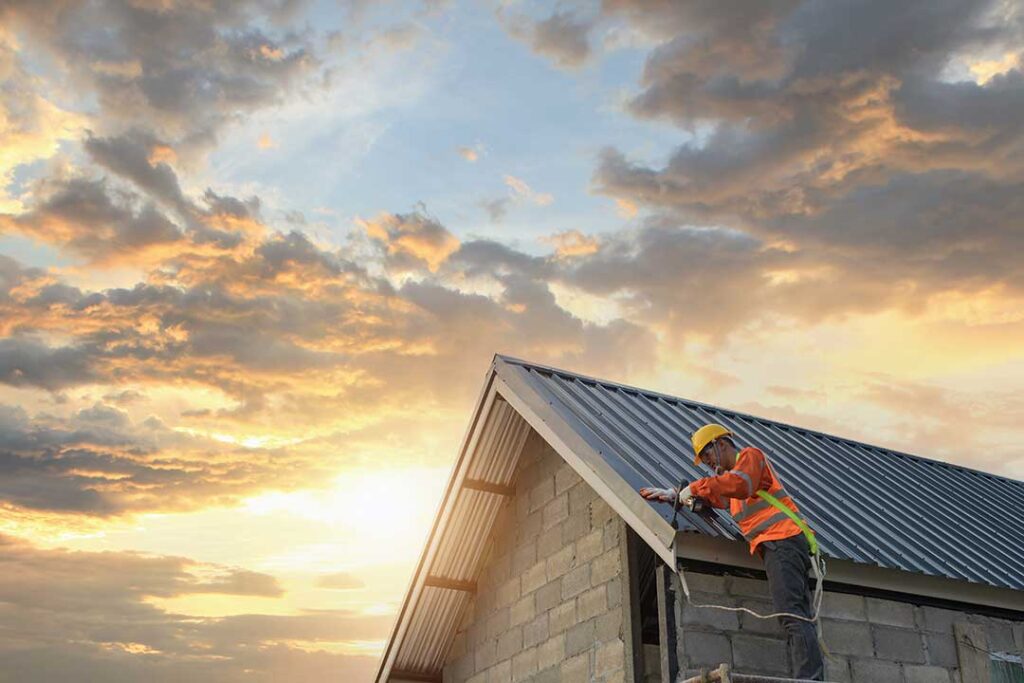
Roof eaves are the edges of a roof that extend beyond the exterior walls. They may look like a simple architectural detail, but they help control rainwater, protect siding and foundations, support attic ventilation, and reduce weather-related wear on a home.
For households in Greene, NY, roof eaves are especially useful because roofs must handle changing seasonal conditions, including heavy rain, snow, ice, wind, and repeated freeze-thaw cycles.
What are roof eaves?
A roof eave is the lower edge of a sloped roof where the roof extends past the wall below. The underside of this extension is often called the soffit. The visible trim along the outer edge is commonly called the fascia.
Together, these components form part of the roof’s edge system:
- Eave: The roof projection beyond the wall.
- Soffit: The underside covering beneath the eave.
- Fascia: The vertical board or trim at the outer edge.
- Gutter: The channel attached near the eave that collects roof runoff.
- Drip edge: Metal flashing that helps direct water away from roof edges and into the gutter system.
Although these parts are often discussed separately, they work together to manage water and air around the roof.
How do roof eaves protect walls and siding?
The main protective function of an eave is to move water away from the wall surface. Without enough roof overhang, rain can run directly down siding, around window and door openings, and into areas where the wall meets the foundation.
A properly designed eave helps shield:
- Exterior siding from repeated wetting
- Window and door trim from runoff
- Wall joints and corner details
- Soil near the foundation from concentrated roof water
- Porches, steps, and other features close to the exterior wall
The amount of protection depends on the roof pitch, eave depth, gutter placement, wind exposure, and the building’s design. A deep eave offers more shelter, but even a modest overhang can reduce direct water exposure when the roof drainage system is functioning properly.
Roof eaves do not make walls waterproof. Water can still reach the siding during wind-driven rain, and poorly sealed openings may allow moisture into the wall assembly. Their purpose is to reduce the amount and speed of water reaching vulnerable surfaces.
Why are eaves important for gutters?
Eaves provide the most practical location for gutters because they sit at the lower edge of a sloped roof. As rain and melting snow travel down the roof, they reach the eave and can be collected before falling beside the building.
A well-functioning gutter arrangement helps direct water toward downspouts and away from the foundation. Problems may develop when:
- Gutters are clogged with leaves or roof debris
- Gutters slope incorrectly or pull away from the fascia
- Downspouts discharge too close to the foundation
- Ice or snow damages the gutter edge
- The drip edge is missing or installed incorrectly
- Roof runoff overshoots the gutter during heavy rain
In Greene, seasonal leaf fall and winter snow can place extra stress on these components. Gutters and downspouts should be observed after major storms and after periods of snow and ice. Water stains on the fascia, soil erosion below the eaves, or overflowing gutters are signs that the drainage system may not be handling runoff correctly.
Do roof eaves help attic ventilation?
Yes. Eaves commonly contain soffit vents, which allow outside air to enter the lower part of the attic. That air can move upward toward ridge, gable, or other exhaust vents.
This intake-and-exhaust pattern helps remove heat and moisture from the attic. In winter, attic ventilation can reduce moisture buildup caused by indoor air leaking into the attic. In warmer weather, it can help release accumulated heat from solar heating.
Ventilation works only when air can move freely. Common obstructions include:
- Insulation pushed tightly against the soffit
- Blocked or painted-over vent openings
- Inadequate exhaust ventilation
- Bird nests, insects, or accumulated debris
- Moisture-damaged wood or deteriorated soffit panels
Attic ventilation should not be confused with air sealing. Vent openings bring in outdoor air, while air sealing limits warm, moist household air from entering the attic through ceiling penetrations, light fixtures, access hatches, and other gaps. Both functions matter.
What happens when eaves are damaged?
Eave damage can allow water and pests to reach parts of the roof and wall that are normally protected. Damage may appear as sagging soffits, peeling paint, soft fascia, exposed wood, staining, gaps, or detached trim.
Possible causes include:
- Overflowing or poorly supported gutters
- Ice buildup and repeated freeze-thaw movement
- Wind damage
- Long-term moisture exposure
- Animal or insect activity
- Roof leaks near the lower edge
- Improperly installed flashing
- Decay in the fascia or rafter tails
Damage at the eave may be more than a cosmetic issue. If water reaches the roof framing or wall assembly, it can contribute to wood decay, insulation problems, mold growth, or loss of structural strength. A small opening may also allow birds, bats, squirrels, or insects to enter the attic.
Are roof eaves the same as roof overhangs?
The terms are related but are not always used in exactly the same way. A roof overhang is any portion of the roof that extends beyond a wall. An eave is generally the lower horizontal edge of a sloped roof. The sloping edges at the sides of a roof are usually called rakes.
This distinction matters because eaves and rakes often use different construction details. Eaves commonly contain soffit vents and gutters, while rakes typically use bargeboards or rake trim and usually do not collect the same volume of water.
How can homeowners check eaves safely?
A ground-level inspection can reveal many problems without climbing onto the roof. Look for:
- Sagging or separated gutters
- Water stains under the roof edge
- Missing or loose soffit panels
- Peeling paint or darkened wood
- Gaps where insects or animals could enter
- Overflow marks on siding
- Soil washed away below downspouts
- Icicles or ice buildup that appears repeatedly
- Plants or debris blocking soffit vents
A pair of binoculars can help inspect higher eaves from the ground. Climbing onto a roof or ladder during wet, icy, windy, or snowy conditions creates a fall hazard and should not be attempted casually.
If the eave is sagging, framing appears exposed, water is entering the attic, or electrical equipment is near a wet area, the condition requires prompt attention because it may involve more than exterior trim.
What should be considered during roof replacement?
A roof replacement is also an opportunity to examine the eave design. Important details include the condition of the fascia and soffit, the placement of the drip edge, the path of attic ventilation, and how gutters attach to the roof edge.
Replacing shingles without correcting damaged edge components may leave the underlying problem in place. Conversely, changing the eave design without considering ventilation, snow movement, or gutter drainage can create new issues.
For homes with older construction, additions, enclosed porches, or varied rooflines, each eave may drain differently. A roof edge that appears uniform from the ground can contain several separate drainage and ventilation conditions.
Properly maintained roof eaves quietly perform several jobs at once: they limit water exposure, support drainage, help ventilate the attic, and protect the roof-to-wall connection. Regular observation is often enough to identify early signs of trouble before moisture damage spreads into the structure.
