
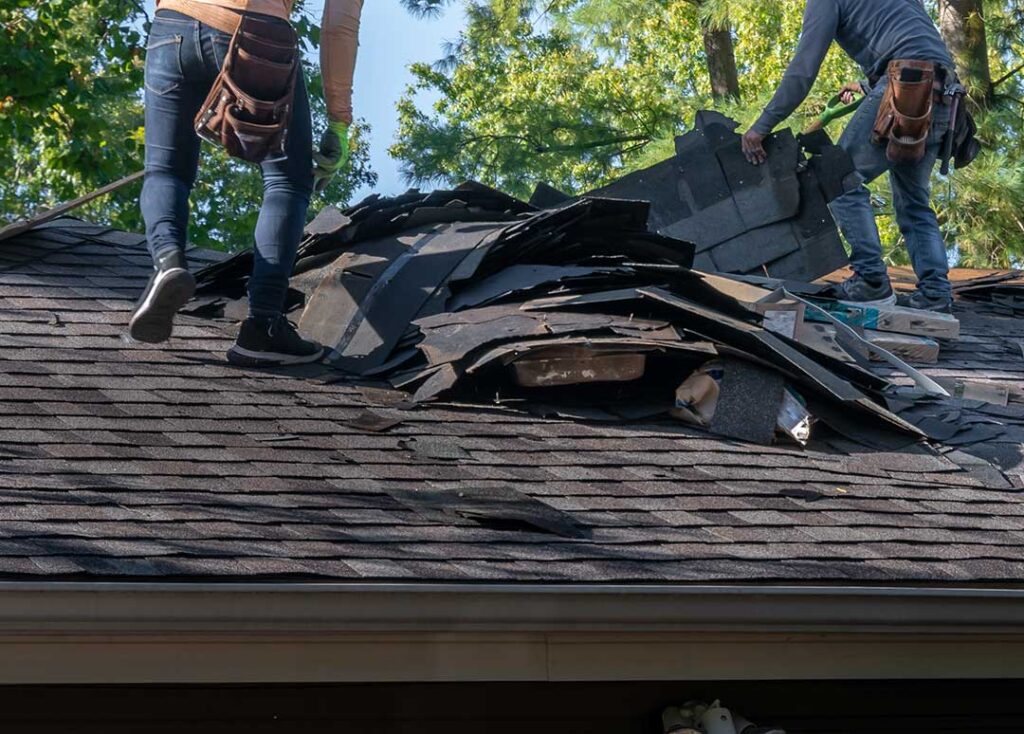
Roof repairs often fail for predictable reasons: the visible problem is treated instead of the underlying cause, temporary materials are used as permanent fixes, or work is attempted during unsafe weather. For residents of Greene, NY, seasonal rain, snow, ice, wind, and freeze-thaw cycles can expose small roofing mistakes quickly.
Understanding the most common errors helps homeowners decide what can be monitored, what requires prompt attention, and which conditions are unsafe to handle without specialized equipment.
Repairing Only the Visible Leak
A ceiling stain does not necessarily show where water entered the roof. Water can travel along roof decking, rafters, insulation, or attic surfaces before appearing indoors.
A common mistake is placing sealant around the area directly above the stain and assuming the leak is solved. The actual entry point may be several feet away, near a roof penetration, flashing joint, valley, or damaged shingle.
Better practice includes checking the entire path between the interior stain and the roof surface. Look for:
- Damp or discolored attic wood
- Wet insulation
- Water trails on rafters
- Damaged flashing around vents and chimneys
- Missing, lifted, cracked, or unusually dark shingles
- Debris trapped in valleys
A stain that appears only during wind-driven rain may point to a different entry point than a leak that occurs during steady rainfall. The timing and weather conditions provide useful clues.
Using Caulk or Roof Cement as a Permanent Solution
Roofing sealants can be useful for limited applications, but they are often misused. A thick layer of cement over a cracked shingle, flashing seam, or vent may slow water temporarily while hiding the damage underneath.
Sealants also age differently from roofing materials. Temperature changes can cause them to shrink, crack, or separate from metal and asphalt surfaces. In a climate with repeated freezing and thawing, a repair that looks solid in autumn may fail during winter.
A lasting repair generally requires correcting the damaged component rather than covering it. That could mean replacing a shingle, securing loose flashing, repairing a small section of roof decking, or correcting a drainage problem.
Replacing Shingles Without Checking the Roof Deck
Shingles are only one layer of a roofing system. If water has entered repeatedly, the wood decking beneath them may be softened, delaminated, or weakened.
Installing new shingles over damaged decking can create an uneven surface and leave hidden structural problems in place. Fasteners may also fail to hold properly in deteriorated wood.
Before replacing shingles, inspect the surrounding area for:
- Spongy or springy decking
- Sagging between rafters
- Mold-like staining or persistent dampness
- Rusted or improperly placed fasteners
- Multiple layers of old roofing material
- Signs that water has been present for a long period
Not every roof stain means the decking needs replacement, but concealed damage should not be assumed away.
Ignoring Flashing Around Roof Penetrations
Flashing directs water away from places where the roof meets another material or structure. It is commonly found around chimneys, plumbing vents, skylights, walls, and roof valleys.
Flashing problems are easy to overlook because the shingles may appear intact. Common defects include lifted edges, separated seams, corrosion, gaps, and fasteners that have backed out. In some cases, older flashing was installed in a way that allows water to collect rather than drain.
The repair must match the design of the roof. Adding surface sealant without restoring proper overlap or water flow may create a short-term patch rather than a dependable repair.
Reusing Old or Damaged Materials
A leftover shingle may seem suitable for a small repair, but roofing materials can vary in size, color, thickness, exposure, and weathering. An incorrect replacement may not lock into adjacent shingles properly or may sit higher than the surrounding surface.
Damaged materials should not be reused simply because they are available. Shingles with curled edges, brittle surfaces, broken adhesive strips, or hidden cracks can fail soon after installation.
Matching is also more than a cosmetic concern. Properly fitted materials help maintain the roof’s water-shedding pattern and reduce exposed seams.
Repairing a Roof During Unsafe Conditions
Wet shingles, frost, snow, and strong wind create serious fall hazards. Roof surfaces become especially unpredictable during early-morning frost, after freezing rain, or during a rapid temperature change.
Cold conditions can also affect roofing materials. Asphalt-based products may become less flexible, and adhesive strips may not bond properly unless the surface and weather are suitable. A patch applied during poor conditions may appear finished but fail once wind, rain, or melting snow reaches it.
Never treat a ladder, roof edge, or temporary foothold as safe merely because the repair appears small. A roof problem that can wait should not be addressed during hazardous weather.
Blocking Ventilation While Trying to Stop Drafts
Roof ventilation is sometimes mistaken for a defect because air movement may be felt in the attic. Sealing vents without understanding the system can trap heat and moisture.
Poor attic ventilation can contribute to:
- Condensation on roof sheathing
- Damp insulation
- Mold growth
- Premature shingle aging
- Ice buildup along eaves
- Wood deterioration
Air sealing should focus on unwanted openings between the living space and attic, such as gaps around wiring, plumbing, recessed fixtures, and attic access panels. Purpose-designed intake and exhaust vents should not be blocked as a general leak-prevention measure.
Neglecting Gutters, Valleys, and Drainage
Roof water problems are often caused or worsened by drainage. Clogged gutters, blocked downspouts, damaged valley lining, and poor water discharge can force water beneath shingles or against fascia and wall surfaces.
In Greene, seasonal leaves, spring debris, snow, and ice can all affect drainage. Water that repeatedly backs up at the roof edge may damage sheathing even when the shingles are in reasonable condition.
Check whether:
- Gutters are pulling away from the roof edge
- Downspouts discharge water near the foundation
- Valleys contain leaves or packed debris
- Ice has lifted shingles or gutter sections
- Water stains appear near eaves or exterior walls
Cleaning drainage components does not repair damaged roofing, but it can prevent a minor problem from becoming a larger one.
Failing to Document the Problem
Roof issues are easier to diagnose when their timing and conditions are recorded. Photos from the ground, notes about the weather, and details about where water appears can reveal patterns that are not obvious during a dry inspection.
Useful information includes:
- The date and duration of a leak
- Whether rain was light, heavy, or wind-driven
- Whether melting snow was present
- The location of interior staining
- Any recent tree damage, gutter overflow, or roof work
- Whether the problem returns after a temporary repair
Documentation also helps distinguish an active leak from an old stain. A dry mark may remain visible long after the roof has stopped admitting water, while fresh moisture in the attic indicates a current concern.
Knowing When a Repair Is No Longer a Small Repair
A single missing shingle may be a limited maintenance issue. Widespread granule loss, repeated leaks, sagging decking, extensive moss or algae-related deterioration, storm damage across several roof sections, or aging materials throughout the roof indicate a broader evaluation is needed.
Immediate attention is warranted when water is near electrical fixtures, the ceiling is bulging, structural wood appears weakened, or the roof has been damaged by a fallen branch. Stay clear of unstable areas and avoid entering wet electrical spaces.
The safest repair decision begins with identifying the cause, not just covering the symptom. Careful observation, proper material matching, sound drainage, and respect for weather conditions can prevent many small roofing problems from becoming interior damage or structural repairs.
