
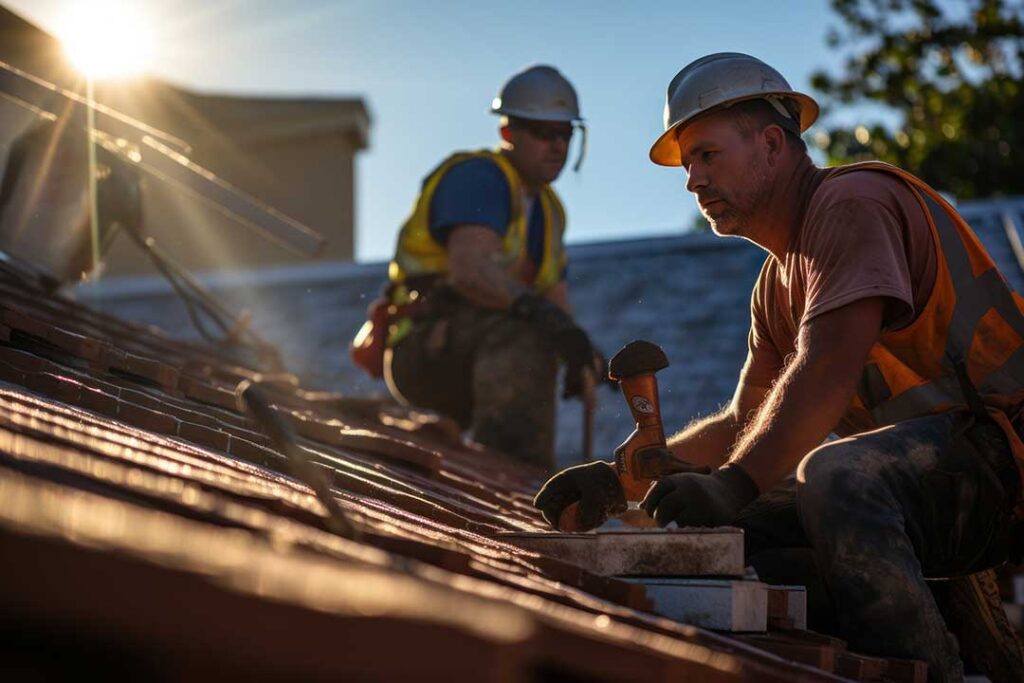
Strong winds can damage a roof even when there is no obvious hole or missing shingle. In Greene, NY, wind events may occur with thunderstorms, winter storms, fast-moving cold fronts, and remnants of larger weather systems. The most useful response is to understand where wind damage develops, what signs to look for, and which conditions require immediate attention.
How do severe winds damage a roof?
Severe winds affect a roof through uplift, pressure changes, flying debris, and water intrusion. Damage often begins at vulnerable edges before spreading across the larger roof surface.
Wind can:
- Lift or loosen shingles
- Tear shingles away from their fastening points
- Bend or detach metal flashing
- Damage ridge caps and roof vents
- Pull gutters and fascia away from the structure
- Break branches that puncture the roof covering
- Expose the underlayment or roof deck
- Drive rain beneath roofing materials
The roof perimeter usually experiences the greatest stress. Eaves, rakes, corners, ridges, and roof-to-wall transitions can be more vulnerable than the center of a roof because wind changes direction and pressure around these areas.
A roof does not need to lose an entire section to sustain meaningful damage. A few lifted shingles can allow water to enter during the next rain, particularly if the adhesive bond has weakened with age or cold weather.
Why can wind damage occur without missing shingles?
A roof may appear intact from the ground while still having hidden damage. Wind can loosen fasteners, break the seal between shingle tabs, crease roofing materials, or create small openings around flashing.
Some common concealed problems include:
- Shingles that are lifted but settle back into place
- Cracked sealant around vents, chimneys, and skylights
- Torn underlayment beneath apparently undisturbed shingles
- Bent drip edge or flashing
- Loose roof decking near an edge or penetration
- Water entering an attic before stains appear on a ceiling
A ground-level inspection may miss these conditions. Binoculars can help identify obvious issues, but walking on a roof after a storm is hazardous, especially when surfaces are wet, icy, steep, or covered with debris.
Which parts of a roof are most vulnerable?
Roof edges and penetrations deserve particular attention after high winds. These areas interrupt the smooth surface of the roof and create locations where wind can get underneath materials.
Inspect visually for changes around:
- Eaves and rake edges
- Ridge caps and hips
- Valleys
- Plumbing vent boots
- Chimneys and chimney flashing
- Skylights
- Roof-mounted equipment
- Solar installations
- Dormers and other roof-to-wall intersections
- Attached porches, garages, and low-slope sections
Older roofs may be more susceptible because repeated seasonal exposure can reduce shingle flexibility and weaken adhesive strips. Previous repairs, poor drainage, inadequate fastening, and long-term moisture exposure can also make a roof less resistant to wind.
What should residents look for after a windstorm?
The safest first step is an exterior inspection from the ground after the storm has passed and conditions are stable. Look for changes that were not present before the weather event.
Warning signs include:
- Shingles in the yard, driveway, or gutters
- Shingles that appear raised, curled, creased, or out of alignment
- Bare patches on the roof
- Exposed dark underlayment or wood decking
- Detached flashing or trim
- Hanging gutters or downspouts
- Debris resting on the roof
- Broken branches on or near the structure
- Damp attic insulation or daylight visible through the roof deck
- New ceiling stains or water marks
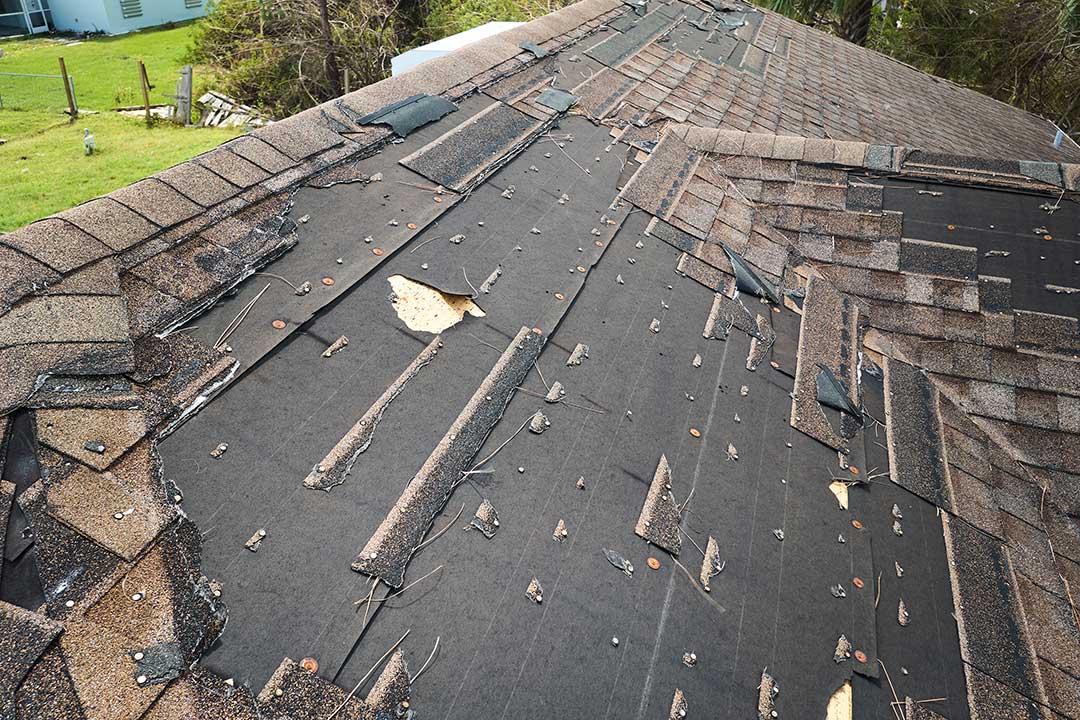
Check the attic only if it can be done safely. Use a flashlight rather than touching wet insulation, wiring, or damaged structural materials. A musty smell, damp wood, or fresh moisture after a wind event may indicate an opening that is not visible from outside.
Can wind damage lead to leaks later?
Yes. A roof can remain dry immediately after a storm and begin leaking during a later rainfall. This happens when wind loosens a shingle or flashing component without creating an opening large enough to admit water right away.
Wind-driven rain can move sideways or upward beneath damaged roofing. Once water reaches the underlayment, roof deck, insulation, or framing, it may travel away from the original entry point. The ceiling stain may therefore appear several feet from the actual roof defect.
Delayed leaks are especially possible when:
- The storm is followed by freezing temperatures
- The damaged area is near a chimney or roof valley
- Ice or snow conceals a small opening
- A roof has multiple layers of older roofing
- Attic ventilation is limited
- Water enters around flashing rather than through the field of the roof
A clean ceiling does not prove that the roof escaped damage.
How do trees and debris affect wind damage?
Trees can damage a roof directly or indirectly. Large branches may puncture shingles, crack the roof deck, damage rafters, or strike siding and gutters. Smaller branches and sticks can scrape roofing granules away or block drainage paths.
Debris should not be dragged across shingles. It can cause additional tearing and may hide damaged areas. If a large limb is resting on the roof, or if electrical lines are involved, stay clear of the area. Structural damage and electrical hazards are more urgent than ordinary shingle loss.
Leaves and small branches can also clog gutters and downspouts. After heavy wind, blocked drainage may cause water to back up against the roof edge or overflow near the foundation.
Does a newer roof always resist severe winds?
No. A newer roof may have stronger materials and newer installation, but its performance depends on the entire roof assembly. Fastener placement, edge detailing, flashing, roof shape, installation quality, and exposure all matter.
New York’s residential building requirements include provisions addressing roof-covering wind resistance and structural wind loads. However, code compliance does not mean a roof is immune to damage from every storm. Building codes establish minimum requirements, while actual performance depends on the intensity and direction of the wind, the condition of the roof, nearby trees, and windborne debris.
A roof with a steep slope, multiple intersecting sections, or large overhangs may experience different wind pressures than a simple roof. Homes in more open areas can also experience stronger, less obstructed wind than homes protected by surrounding buildings or mature trees.
What should be done if wind damage is suspected?
Avoid climbing onto the roof or entering areas with visible structural damage. Keep people away from loose materials, hanging gutters, broken branches, and sagging ceilings.
If water is entering the home:
- Place containers beneath active drips if the ceiling is stable
- Move furniture and electronics away from the affected area
- Avoid electrical fixtures that are wet or surrounded by water
- Photograph visible damage from a safe location
- Record when the storm occurred and when symptoms appeared
- Use a temporary, safe interior measure only if it does not involve electrical or structural hazards
A qualified roof or building inspector may be necessary when damage is not visible from the ground, when the roof is steep or unsafe to access, or when the roof deck, framing, chimney, or electrical system may be affected. Emergency conditions such as a partially collapsed roof, exposed wiring, major interior flooding, or a tree on the structure require immediate safety precautions before any roof work begins.
How can wind resistance be improved over time?
Routine maintenance can reduce the chance that minor weaknesses become major storm damage. Useful preventive steps include keeping gutters clear, trimming hazardous branches, checking attic ventilation, maintaining flashing, and addressing small leaks before winter weather.
It is also helpful to keep records of the roof’s age, previous repairs, and recurring leak locations. After a significant storm, compare current photos with older exterior photos when available. Changes in shingle alignment, flashing position, or roof-edge condition are easier to recognize with a reference point.
For local homes, preparation should account for both wind and seasonal weather. A roof that survives a summer thunderstorm may still have a weakened edge that becomes more vulnerable when freezing temperatures, snow, and ice follow later in the year.
