
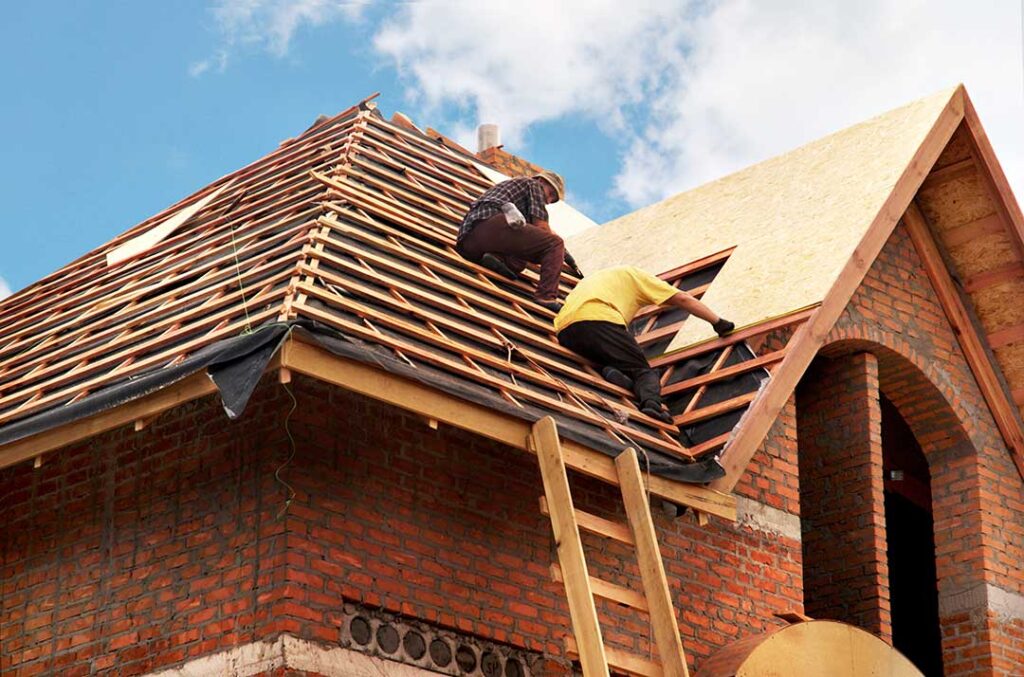
What should be done first after roof damage?
After a roof emergency, the first priorities are personal safety, temporary protection, and documentation. Do not climb onto the roof during rain, snow, high winds, darkness, or when surfaces are visibly unstable.
Start by checking whether anyone inside the home is at risk. Leave areas beneath sagging ceilings, active leaks near electrical fixtures, or fallen roofing materials. If water is reaching electrical outlets, light fixtures, appliances, or the service panel, avoid contact with the area and shut off power only if it can be done safely.
From the ground, look for obvious problems such as:
- Missing shingles or sections of roofing
- A tree limb or other object resting on the roof
- Water entering through a ceiling or upper wall
- Loose flashing around a chimney, vent, or roof edge
- Sagging roof decking or a visibly collapsed area
- Ice buildup blocking drainage during winter weather
A roof emergency does not always mean the entire roof has failed. A small opening can still allow substantial water into insulation, wall cavities, and ceilings, especially during wind-driven rain.
How can a leak be controlled from inside?
For a minor, active leak, place a container beneath the drip and protect nearby floors and furniture with plastic sheeting or towels. If the ceiling is bulging with trapped water, a small opening at the lowest point may relieve pressure, but this should only be attempted when the area is away from electrical wiring and the ceiling material is otherwise stable.
Do not rely on the visible drip to locate the roof opening. Water can travel along rafters, roof decking, insulation, and framing before appearing indoors. The point where water enters the room may be several feet away from the actual exterior damage.
If attic access is safe, look for wet insulation, darkened wood, daylight through the roof, or water trails. Do not enter an attic if the floor is unclear, the structure appears damaged, or there is a risk of stepping through the ceiling below.
What temporary measures are safe from the ground?
Temporary protection can limit additional damage, but it is not a permanent repair. A tarp may help cover an exposed area if it can be installed without climbing onto a hazardous roof. From the ground, avoid throwing heavy objects onto the roof or attempting to secure a tarp with loose materials that could fall or become airborne.
Roofing damage in Greene, NY can be complicated by changing weather. Rain, freeze-thaw cycles, snow, and strong wind can turn a small opening into a larger failure. Temporary coverings should be checked from a safe location after severe weather, especially if water continues entering the home.
Do not use household sealants, spray foam, roofing cement, or duct tape as a substitute for repairing damaged shingles, flashing, or roof decking. These materials may hide the source of a leak, trap moisture, or make later repairs more difficult.
Should damaged shingles be replaced immediately?
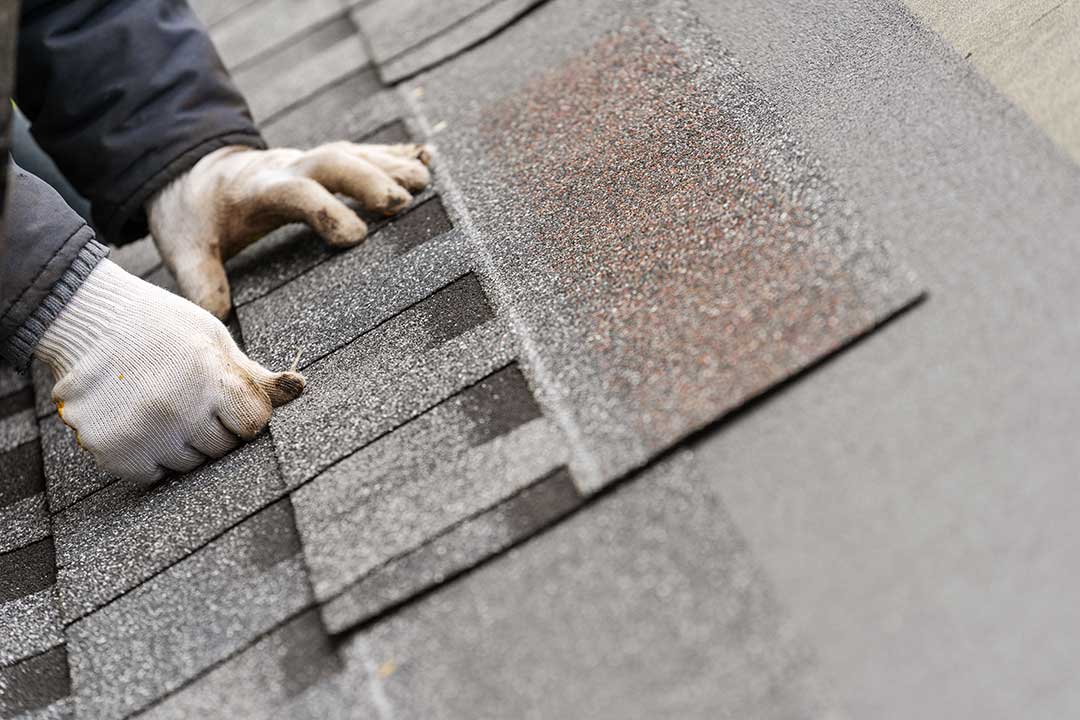
A missing or lifted shingle should be addressed promptly, but the timing depends on weather and roof condition. If the surrounding shingles are secure and the roof can be reached safely, a temporary covering may reduce exposure until proper repairs are possible.
Do not attempt shingle replacement during wet, icy, windy, or cold conditions. Roofing materials become brittle in cold weather, and walking on a roof can damage otherwise sound shingles. A ladder placed on snow, ice, soft ground, or an uneven surface can also shift unexpectedly.
Wind damage may not be obvious from the ground. Shingles can remain in place while their seals are broken or their edges are lifted. After a storm, inspect the ground for granules, shingle pieces, exposed underlayment, or fragments of flashing. These signs do not prove the full extent of damage, but they are useful for documenting what occurred.
What should be documented after an emergency?
Photographs and written notes can help explain the condition of the roof and interior. Document the damage before moving or discarding materials, provided doing so does not create a safety risk.
Useful records include:
- Wide photographs showing the affected side of the home
- Close photographs of missing, cracked, curled, or displaced roofing
- Images of fallen branches or other impact damage
- Photos of ceiling stains, wet flooring, and damaged belongings
- The date and approximate time the problem was discovered
- Weather conditions around the time of the damage
- Steps taken to reduce further water entry
Keep receipts for emergency materials, cleanup, drying equipment, or temporary protection. Insurance policies differ, so coverage should not be assumed. Some policies require prompt notice, reasonable steps to prevent further damage, and preservation of damaged materials for inspection.
How can winter roof emergencies be handled safely?
Winter creates several different roof problems, including ice dams, heavy snow, frozen gutters, and damage caused by repeated thawing and refreezing. Removing snow from a roof can be dangerous, particularly on steep surfaces or when snow is sliding from upper sections.
An ice dam may form when melting snow refreezes near a cold roof edge. Water can then back up beneath roofing materials and enter the attic or wall system. Interior staining may appear before the exterior problem is visible.
Avoid chipping ice with sharp tools. This can damage shingles, metal flashing, gutters, and the roof deck. Pouring hot water onto an ice dam may create rapid refreezing and slippery conditions. If snow or ice is creating a structural concern, keep people away from the affected area and treat it as a safety problem rather than a routine maintenance task.
When is emergency roof work unsafe for a homeowner?
Roof work should not be attempted when the roof is unstable, the damage involves structural collapse, power lines are nearby, or access requires standing on an icy, wet, steep, or heavily snow-covered surface. Tree removal from a roof is especially hazardous because branches may be under tension or resting on damaged framing.
Professional assistance is warranted when:
- The roof deck is sagging or collapsed
- A large section of roofing has been removed
- A tree or major limb has struck the structure
- Water is near electrical equipment
- The attic or ceiling may collapse
- The roof is inaccessible without climbing
- The home has extensive interior water damage
- Wind or severe weather is still underway
Safety takes priority over stopping every drop of water immediately. A damaged roof can be repaired; injuries from falls, electrocution, or structural collapse can be far more serious.
How can future emergencies be reduced?
Routine observation helps identify problems before severe weather exposes them. Look from the ground twice a year and after major storms. Pay attention to missing or uneven shingles, exposed fasteners, damaged flashing, blocked drainage, and branches rubbing against the roof.
For area households, useful preventive steps include keeping gutters and downspouts clear, trimming branches that overhang the roof, checking attic ventilation, and inspecting ceilings for new stains. A properly ventilated and insulated attic can also reduce moisture accumulation and help limit conditions that contribute to winter ice dams.
Keep a basic emergency kit available with plastic sheeting, buckets, absorbent towels, a flashlight, work gloves, and a phone charger. Store it where it can be reached without entering a wet or damaged area. Knowing where the electrical shutoff and main water shutoff are located can also reduce confusion during a storm-related emergency.
A quick, safe response usually means limiting interior exposure, documenting the condition, and avoiding risky roof access. Temporary measures are useful only when they can be completed without placing people in danger or concealing damage that still needs attention.
