
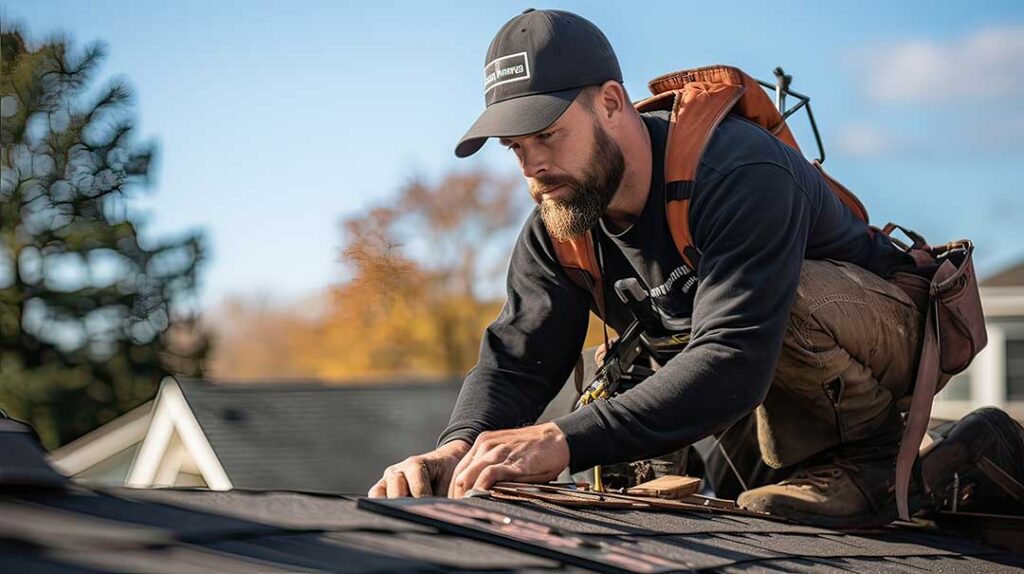
Roof decking is the structural surface installed over a roof’s rafters or trusses. It supports the underlayment and roof covering while helping distribute weight from snow, maintenance activity, and other loads across the roof structure.
For residents in Greene, NY, understanding this hidden part of the roof is useful because decking can be affected by moisture, ice, repeated freeze-thaw cycles, and long-term ventilation problems. A roof may appear sound from the ground while the wood beneath the shingles has already weakened.
What exactly is roof decking?
Roof decking, also called roof sheathing, is the layer of wood or wood-based panels attached directly to the roof framing. The roof covering—such as asphalt shingles, metal panels, or another material—is installed above it.
Common decking materials include:
- Plywood
- Oriented strand board, commonly called OSB
- Solid wood boards, especially in older homes
- Specialized structural panels in certain roof systems
The decking is not the same as the shingles or underlayment. Each layer serves a different purpose:
- Roof framing provides the main structural support.
- Decking creates a continuous surface and transfers loads to the framing.
- Underlayment provides an additional water-resistant layer beneath the roof covering.
- Roof covering is the exterior weather surface.
- Ventilation and insulation help control heat and moisture below the decking.
A failure in one layer can place additional stress on the others.
Why does roof decking matter?
Sound decking helps keep the roof plane flat, supports proper fastening, and provides a stable base for the roof covering. If the decking is soft, warped, split, or poorly fastened, shingles or panels may not perform as intended.
Decking also affects how securely roofing fasteners hold. A nail driven into deteriorated wood may not provide reliable attachment, even if the roof covering itself is relatively new.
In winter, the decking must also tolerate changing moisture conditions. Snow can remain on a roof for extended periods, and melting snow may refreeze near colder roof edges. This can allow water to work beneath the roof covering and reach vulnerable areas of the sheathing.
What causes roof decking damage?
The most common cause is long-term water intrusion. A small leak around a roof penetration, flashing detail, valley, chimney, or roof edge can gradually saturate the wood.
Other causes include:
Repeated leaks
A leak does not need to produce a visible ceiling stain to damage decking. Water may travel along rafters or insulation before appearing inside the home. By the time a stain becomes noticeable, nearby sheathing may have been wet more than once.
Condensation
Warm, moist air from the living space can enter a poorly ventilated attic and condense on colder surfaces. This is different from a roof leak, but the result can be similar: damp wood, staining, mold growth, and gradual loss of strength.
Ice-related water backup
In cold weather, snowmelt can refreeze along colder roof edges. Water behind the ice may move beneath shingles or underlayment. Proper insulation, air sealing, ventilation, and ice-barrier installation all influence how much risk a roof faces.
Age and repeated roofing work
Older boards may have experienced decades of wetting and drying. Multiple layers of roofing or repeated fastener installation can also leave decking perforated or weakened.
Inadequate fastening
Decking that was not properly attached to the framing may move, squeak, or flex. Movement can contribute to nail withdrawal, visible roof rippling, and premature roof-covering problems.
How can a homeowner recognize damaged decking?
Some signs are visible from inside the attic or living space, while others appear on the roof surface.
Potential warning signs include:
- Soft or spongy areas underfoot in an attic
- Dark staining or water marks on the wood
- Delamination, where plywood layers separate
- Swollen or raised OSB edges
- Musty odors or persistent attic dampness
- Sagging between rafters or trusses
- Shingles that appear wavy, uneven, or locally depressed
- Nails that loosen repeatedly
- Light visible through roof joints or damaged boards
A single stain does not prove that an entire roof deck needs replacement. Damage is often localized, but the surrounding area should be checked because water can spread beyond the point where it entered.
Walking on roof decking is hazardous, particularly when the surface is wet, covered by insulation, or weakened by rot. Attic inspections also require care around electrical wiring, nails, and areas where there is no safe walking platform.
Does every roof replacement require new decking?
No. Roof decking does not automatically need to be replaced whenever shingles or another roof covering is changed. If the existing sheathing is dry, structurally sound, adequately fastened, and suitable for the new roof system, it may remain in place.
Replacement becomes more likely when the decking is:
- Water-damaged or rotten
- Delaminated or swollen
- Severely cracked or split
- Too thin or widely spaced for the planned roof covering
- Unable to hold roofing fasteners securely
- Structurally deficient under applicable building requirements
The decision depends on the material, condition, roof design, and the requirements for the new roof covering. New York’s residential code includes provisions related to roof sheathing, underlayment, ice barriers, fastening, and roof-covering installation. Local building requirements may also apply when substantial repairs or structural changes are involved.
What happens when damaged decking is found during roofing work?
Roofing work may reveal conditions that were not visible from below. A small area near a valley or roof penetration may require a limited repair, while widespread staining or soft wood may indicate a larger moisture problem.
Typical repair steps may include:
1. Removing the roof covering and underlayment over the affected area.
2. Exposing enough decking to identify the full extent of damage.
3. Cutting out unsound material back to supported framing.
4. Installing replacement sheathing of appropriate thickness and type.
5. Fastening the replacement securely to the roof framing.
6. Addressing the source of moisture before installing new underlayment and roof covering.
Simply covering rotten wood with new shingles does not restore structural support. Likewise, replacing the decking without correcting a flashing or ventilation problem can allow the damage to return.
How does attic ventilation affect roof decking?
Ventilation helps remove heat and moisture from the attic, but it cannot compensate for major air leaks or roof leaks. A balanced system generally uses intake ventilation near the lower roof edges and exhaust ventilation near the upper portions of the roof, provided the roof design allows it.
Blocked vents, compressed insulation, bathroom exhaust directed into the attic, and gaps around ceiling penetrations can all increase moisture exposure. In a cold-season climate, these problems may contribute to frost formation or condensation on the underside of the decking.
Improving ventilation should be based on the actual cause of the moisture. Adding an exhaust vent without adequate intake air may not solve the problem and can sometimes draw more warm, moist air from the house.
What should Greene residents ask about roof decking?
When roof work is planned, useful questions include:
- What type and thickness of decking is currently present?
- Are there visible signs of water damage or inadequate fastening?
- Is the damage localized or spread across several roof sections?
- What caused the decking problem?
- Will the replacement material be supported by framing at its edges?
- Does the proposed roof covering require a particular sheathing surface?
- How will ice-barrier and underlayment details be handled?
- Are attic moisture or ventilation conditions contributing to the problem?
Understanding the answers helps distinguish a normal roof-covering replacement from a project that also involves structural repair. The decking may be hidden, but it plays a central role in the roof’s safety, durability, and ability to withstand the wet, snowy, and changeable conditions common in the community.
