
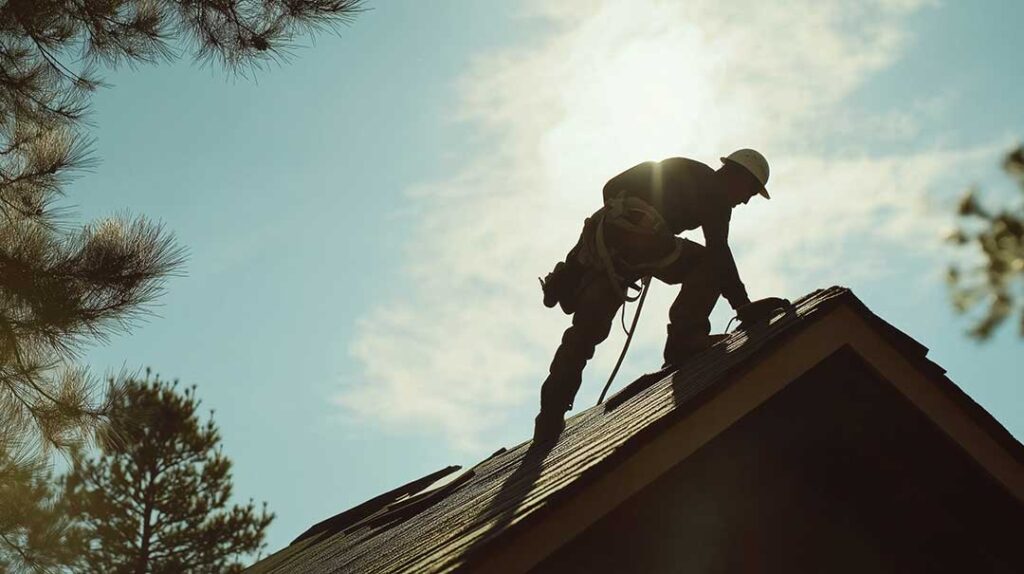
Shade trees are valuable to many homes in Greene, NY. They cool the house, provide habitat, reduce glare, and add character to established neighborhoods and rural properties. They can also affect roof performance, especially when branches overhang the roof or dense foliage prevents surfaces from drying.
The main issue is not shade by itself. Roof problems usually develop when shade combines with trapped leaves, slow drying, moss, algae, falling branches, or blocked drainage. Understanding those connections helps homeowners protect both mature trees and roofing materials.
Does shade shorten the life of a roof?
Shade does not automatically damage a roof or guarantee a shorter service life. A clean, well-ventilated roof may perform normally even beneath partial tree cover.
The risk increases when a shaded roof stays damp for long periods. Sunlight and air movement help dry rain, dew, melting snow, and humidity. Dense branches can reduce that drying effect, particularly on roof sections facing away from the strongest afternoon sun.
Persistent dampness may contribute to:
- Moss and algae growth
- Faster surface wear on asphalt shingles
- Decay in wood roofing materials
- Deterioration around roof edges and valleys
- Moisture reaching the roof deck if growth becomes heavy
In a climate with wet spring weather, summer humidity, autumn leaf fall, and winter snow or ice, repeated wetting and drying can put more stress on roofing materials than shade alone.
How do leaves and needles affect roofing?
Fallen leaves are often a bigger concern than the shade created by a tree. When organic debris collects on a roof, it can hold moisture against the shingles and block water from flowing toward gutters and downspouts.
Debris commonly gathers in:
- Valleys where two roof slopes meet
- Areas below overhanging limbs
- Roof-to-wall intersections
- Around chimneys, plumbing vents, and skylights
- Low-slope sections and porch roofs
Wet leaves can form a dense layer that dries slowly. As the material breaks down, it may create soil-like conditions where moss and small plants can take hold. Pine needles and small twigs can also accumulate in gutters, increasing the chance of overflow during heavy rain or snowmelt.
A roof does not need to be covered with debris to develop a problem. Even a narrow band of leaves along a valley can interfere with drainage and keep a small area wet.
Can tree shade cause moss or algae?
Shade encourages moss when moisture is already present. Moss is most likely to appear where a roof is cool, damp, and exposed to organic debris. Algae can also develop on shaded or humid roof sections, although algae and moss are different organisms and do not create exactly the same type of wear.
Moss is more concerning because it can lift or separate the lower edges of shingles as it grows. That can allow wind-driven rain to move beneath the roofing surface. Moss also holds additional water against the roof, extending the time that shingles remain damp.
Algae may leave dark streaks or discoloration without immediately weakening the roof. However, heavy organic growth often signals that the area is not drying efficiently. It is also common for moss or algae to appear first on one roof slope because of its orientation, nearby trees, pitch, or drainage pattern.
Do branches touching the roof cause damage?
Yes. Branches that rub against shingles can wear away protective granules and damage the surface over time. Movement from wind may create repeated abrasion, even if the branch appears small.
Branches can also:
- Scratch metal flashing
- Damage ridge caps and exposed sealant
- Break shingles during storms
- Drop cones, twigs, and bark
- Provide a path for squirrels or other animals to reach the roof
Large limbs create a more serious risk. A healthy tree can lose branches during wet snow, ice, high winds, or sudden temperature changes. In the region around Greene, winter conditions can add weight to both tree limbs and roofing surfaces, making clearance especially useful before the coldest part of the year.
Should homeowners remove trees near a roof?
Usually, removing a healthy tree is not necessary simply because it casts shade. Mature trees provide cooling, privacy, wind buffering, and environmental benefits. The better approach is often to manage the relationship between the tree and the roof.
Useful steps include:
- Keep branches from resting on or rubbing against roofing materials.
- Remove dead, broken, or visibly unstable limbs.
- Maintain enough clearance for air movement over the roof.
- Keep gutters and downspouts clear during leaf fall and after storms.
- Watch valleys and roof edges for recurring debris buildup.
- Avoid piling trimmed branches against the house.
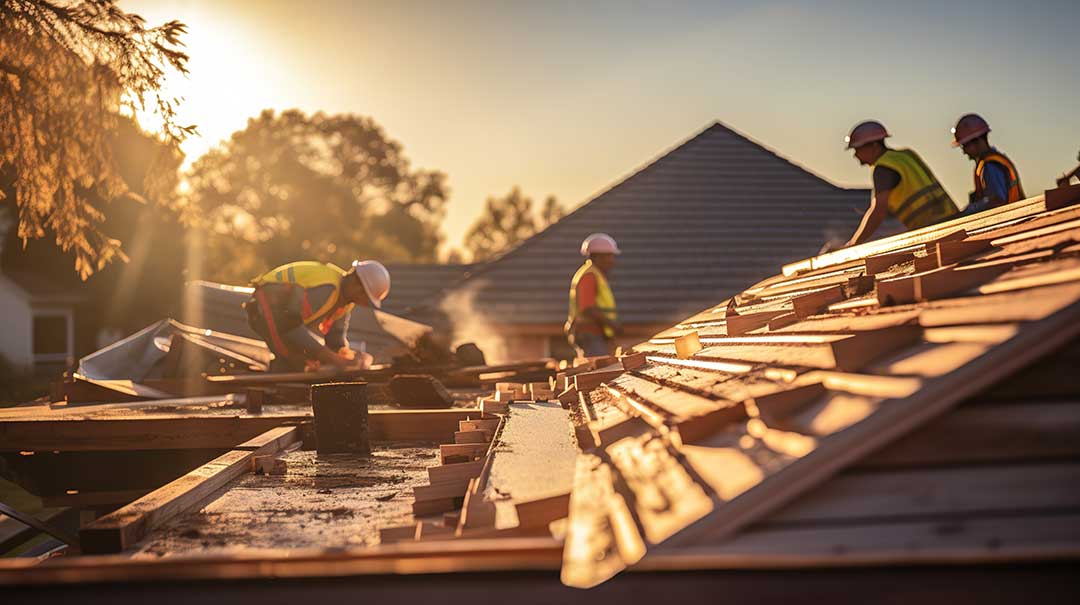
Tree work can be hazardous near power lines, steep roofs, or large unstable limbs. Those conditions require appropriate safety measures rather than a do-it-yourself approach.
How often should a shaded roof be checked?
A shaded roof deserves more frequent observation than a roof in full sun, especially when trees overhang the structure. A practical schedule is to look over the roof and drainage system in spring, after major summer storms, during autumn leaf fall, and after significant winter weather.
From the ground, look for:
- Dark streaks or green patches
- Moss along shingle edges
- Sagging gutters
- Water stains beneath roof edges
- Missing, lifted, or cracked shingles
- Branches resting on the roof
- Debris collecting in valleys
A pair of binoculars can make a ground-level inspection more useful. Walking on shingles is not necessary and may cause damage, particularly when the surface is wet, icy, steep, or brittle.
Is cleaning a mossy roof safe?
Roof cleaning methods matter. Pressure washing can remove protective granules, loosen shingles, and force water beneath roofing materials. Scraping aggressively can cause similar damage.
Light surface growth may sometimes be addressed with a roof-safe treatment and gentle removal method appropriate for the roofing material. Product labels, runoff concerns, nearby plants, and local water conditions should be considered before applying any chemical treatment.
If moss is thick, the roof is steep, shingles are deteriorated, or access requires climbing, safety becomes the primary concern. A damaged roof can be made worse by an unsafe cleaning attempt.
Can shade ever help a roof?
Moderate shade can reduce direct solar heating and may limit some heat-related expansion and contraction. It can also help keep upper rooms cooler during hot weather. Those benefits do not cancel out the risks of trapped moisture or physical tree contact.
The most favorable situation is usually a roof with partial shade, good air circulation, clear drainage, and no branches rubbing against the surface. The least favorable situation is dense, continuous shade combined with leaf buildup, poor ventilation, low slope, and standing water.
What matters most for roof longevity?
The presence of trees is only one factor. Roof age, material, installation quality, pitch, attic ventilation, flashing condition, drainage, storm exposure, and maintenance all influence how long a roof performs.
For households in Greene, a sensible maintenance routine is to control branch contact, remove organic debris before it becomes compacted, keep drainage paths open, and watch for moss in areas that remain damp. These measures preserve the benefits of shade trees while reducing the conditions that tend to shorten roof life.
