

What does roof ventilation do?
Proper roof ventilation allows fresh air to enter the attic near the lower roof edges and warm, moist air to leave through higher openings. This steady air movement helps regulate attic conditions, protect roofing materials, and reduce moisture-related damage.
A roof is more than its shingles. It includes the roof deck, insulation, underlayment, framing, flashing, and the attic space beneath it. If that space cannot release heat and moisture, problems may develop even when the visible roof appears to be in good condition.
A balanced ventilation system usually includes:
- Intake vents located at the eaves or soffits
- Exhaust vents placed near the ridge or upper roof area
- Clear air channels between insulation and the roof deck
- Sealed openings that prevent indoor moisture from leaking into the attic
The intake and exhaust openings need to work together. Installing an exhaust vent without enough intake air can limit airflow and may draw conditioned air from the living space instead.
Why does ventilation matter in Greene, NY?
Seasonal temperature changes, winter snow, spring moisture, and summer humidity can all affect attic conditions in Greene. During cold weather, warm indoor air naturally rises. If it reaches the attic through gaps around light fixtures, plumbing penetrations, attic hatches, or ductwork, it can condense on cold roof surfaces.
That moisture may:
- Wet insulation and reduce its effectiveness
- Cause wood roof decking to darken, soften, or decay
- Encourage mold growth
- Rust fasteners and metal components
- Freeze and thaw around roof edges
- Contribute to peeling paint or damp odors indoors
In summer, sunlight can make the roof surface and attic extremely hot. Ventilation helps release some of that heat, reducing the temperature difference between the roof covering and the attic. It does not replace insulation or air sealing, but it supports both systems.
Can poor ventilation damage shingles?
Yes. Excessive attic heat and trapped moisture can shorten the useful life of roofing materials. Heat can accelerate aging in asphalt shingles, while moisture can damage the roof deck beneath them.
Poor ventilation does not always cause immediate leaks. Instead, deterioration may progress gradually. A homeowner might first notice curling or brittle shingles, stained decking visible from the attic, rusty nails, or damp insulation. These signs can have several possible causes, so ventilation should be evaluated along with flashing, roof penetrations, gutters, and general roof condition.
Ventilation is also not a substitute for a watertight roof. If rain or melting snow is entering through damaged shingles or flashing, adding vents will not correct the underlying leak.
What is the difference between intake and exhaust ventilation?
Intake ventilation brings outdoor air into the lower portion of the attic. Soffit vents are common because they allow air to enter continuously along the eaves. Other intake designs may be used where soffits are limited, but the openings must be protected from wind-driven rain, insects, and debris.
Exhaust ventilation allows warm or humid air to leave. Ridge vents, static roof vents, gable vents, and mechanical ventilators are examples. The most suitable arrangement depends on the roof shape, attic design, insulation layout, and available intake openings.
A balanced system generally moves air from low to high. If exhaust openings are installed too low or intake openings are blocked, airflow may be uneven. Gable vents can also interact poorly with ridge ventilation if the system allows wind to move across the attic instead of carrying air upward through the roof assembly.
How does insulation affect roof ventilation?
Insulation and ventilation serve different purposes. Insulation slows heat transfer between the home and attic, while ventilation helps manage air movement and moisture in the attic space.
Both must be installed correctly. If loose-fill or batt insulation covers soffit vents, outdoor air cannot enter freely. In rafter spaces, ventilation channels may be needed to maintain a clear path from the eaves to the upper roof area.
Adding more insulation without checking the vents can make attic performance worse. Likewise, adding vents without sealing air leaks from the living area may allow warm household air to continue entering the attic.
Air sealing is especially important around:
- Attic access panels
- Recessed light fixtures
- Bathroom and kitchen exhaust ducts
- Plumbing and electrical penetrations
- Chimney and flue clearances
- Top plates and wall cavities
Bathroom and kitchen exhaust fans should discharge outdoors through properly installed ducts. They should not release moist air into the attic.
Does roof ventilation prevent ice dams?
Proper ventilation can reduce the conditions that contribute to ice dams, but it cannot guarantee that ice dams will never form.
Ice dams develop when heat escaping from the home warms parts of the roof, causing snow to melt. Water then runs toward colder eaves, where it can freeze. Balanced ventilation, adequate insulation, and careful air sealing help keep roof temperatures more consistent.
Other factors include snow depth, roof design, sun exposure, weather patterns, and the location of heat-producing areas below the roof. A ventilation system alone will not correct major heat loss through the attic floor or roof assembly.
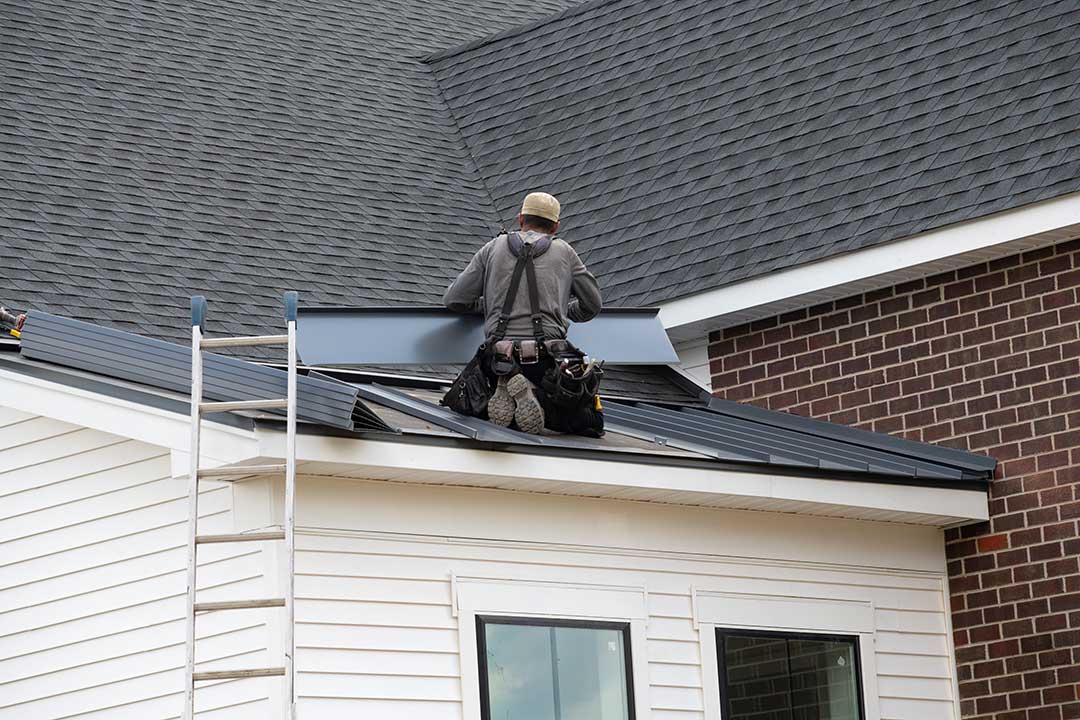
Snow and ice should not be removed from a roof by walking on it or using sharp tools. Those actions can injure people and damage shingles or underlayment. Roof access becomes particularly hazardous during winter conditions.
What are common signs of a ventilation problem?
Some problems are easiest to find by looking inside the attic rather than from the ground. Warning signs include:
- Frost or water droplets on the underside of the roof deck
- Musty smells
- Mold-like staining
- Damp or compressed insulation
- Rusted nails or metal framing connectors
- Darkened or deteriorated roof sheathing
- Excessive heat in the attic during summer
- Peeling paint or moisture stains near upper ceilings
From outside, signs may include damaged soffit screens, blocked eave openings, missing vent covers, or snow that melts unevenly across the roof. These observations do not identify the exact cause, but they indicate that the attic deserves closer inspection.
Can too much ventilation create problems?
More vents are not automatically better. Poorly planned openings can permit wind-driven rain, snow, insects, or cold air to enter. Mechanical attic fans may also create negative pressure if the attic lacks sufficient intake ventilation, potentially pulling heated or cooled air from the home.
Vent placement should match the roof design and the type of attic assembly. Cathedral ceilings, finished attic rooms, low-slope sections, and roofs with multiple additions may require a different approach from a simple open attic.
New construction and major remodeling must also follow applicable New York State building and energy-code requirements. Code compliance can depend on the roof assembly, insulation method, building age, and project scope.
How can residents check attic ventilation safely?
A basic visual inspection can be performed from the attic floor or access area, provided the space is dry, stable, and safe to enter. Avoid stepping between ceiling joists, touching exposed wiring, or disturbing insulation unnecessarily.
Look for:
- Visible soffit openings or baffles
- Clear airflow paths beneath the roof deck
- Exhaust vents near the upper roof
- Moisture staining or frost
- Gaps around the attic hatch and penetrations
- Bathroom or kitchen ducts that terminate outdoors
A roof or attic inspection becomes a safety matter when there is structural damage, active leakage, electrical exposure, mold concerns, steep access, unstable flooring, or significant snow and ice. In those situations, trained evaluation is appropriate because ventilation problems often overlap with roofing, insulation, moisture-control, and code issues.
