
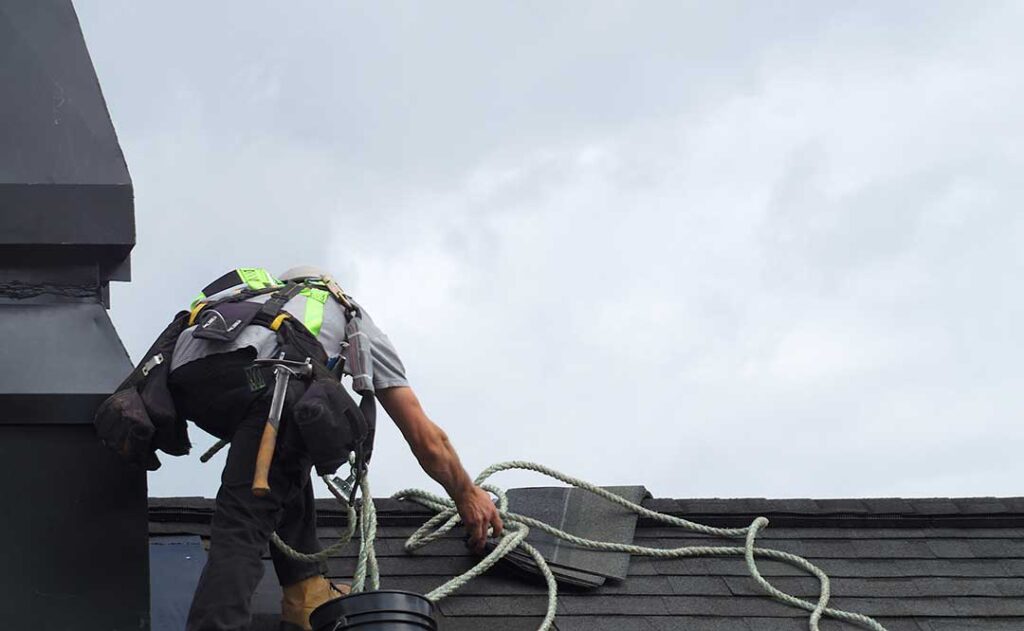
Severe wind can damage a roof even when the shingles look mostly intact. Gusts may lift shingles, loosen flashing, push debris into the roofing surface, or create openings that allow rain and melting snow to enter later.
For households in Greene, NY, wind-related problems are especially worth checking after thunderstorms, strong cold fronts, remnants of tropical systems, and winter weather that combines wind with ice or heavy snow.
How can strong wind damage a roof?
Wind damage usually begins at the roof’s edges, corners, ridges, and other areas where air pressure changes quickly. A gust may get beneath a loose shingle and lift it, while repeated gusts can gradually weaken fasteners and seals.
Common forms of wind damage include:
- Missing shingles or pieces of shingles
- Shingles that are lifted, curled, creased, or partially detached
- Exposed underlayment or roof decking
- Damaged ridge caps along the roof peak
- Loose or bent metal flashing around chimneys, vents, and wall intersections
- Displaced soffit, fascia, or gutter sections
- Fallen branches or punctures caused by airborne debris
- Water entering through a small opening that was not visible from the ground
A roof does not need to lose a large section of shingles to develop a leak. A single damaged area near a valley, vent, chimney, or roof edge can allow water to travel beneath surrounding materials.
Which parts of a roof are most vulnerable?
Roof edges and corners generally experience more wind pressure than the middle of a roof slope. The first rows of shingles along the eaves and rakes can be especially vulnerable if adhesive strips have weakened or if previous repairs were incomplete.
Ridge caps also deserve attention. These shorter, separately installed shingles cover the peak and may loosen before the main roof covering shows obvious damage.
Other vulnerable locations include:
- Valleys where two roof slopes meet
- Areas around plumbing vents and exhaust vents
- Flashing near chimneys or taller wall sections
- Skylights and roof-mounted equipment
- Transitions between older and newer roofing materials
- Sections shaded by trees, where moisture may slow the resealing of shingles
Older roofs may be more susceptible because years of sun, temperature changes, moisture, and ice can make shingles brittle or reduce the effectiveness of their adhesive seals. However, a relatively new roof can also be damaged by unusually strong gusts, poor installation, flying debris, or a pre-existing defect.
Can a roof be damaged without missing shingles?
Yes. Wind can create hidden damage without removing a shingle completely. A shingle may lift and settle back into place, leaving a broken seal or creased surface. Fasteners may loosen, or the lower edge may no longer lie flat.
Signs of less obvious damage include:
- Raised shingle edges
- Shingles that appear uneven compared with nearby rows
- Dark lines or exposed strips where a shingle has shifted
- Creases running through the shingle
- Granules collected below downspouts or at the base of a downspout
- Small ceiling stains that appear after rain rather than immediately after the wind event
- Drafts or daylight visible in an unfinished attic
A ground-level view cannot reveal every problem. Binoculars may help identify obvious changes, but climbing onto a wet, steep, icy, or damaged roof creates a serious fall risk.
What should residents check after a severe windstorm?
Begin with a safe visual inspection from the ground. Look for roof coverings in the yard, branches on the roof, damaged gutters, leaning vents, and areas where the roofline appears uneven.
Then check the attic, if it can be reached safely. Look for:
- Damp insulation
- Water stains on rafters or roof decking
- Daylight entering through the roof
- Dripping or active moisture
- A musty smell that was not present before the storm
- Wet electrical components or wiring near a leak
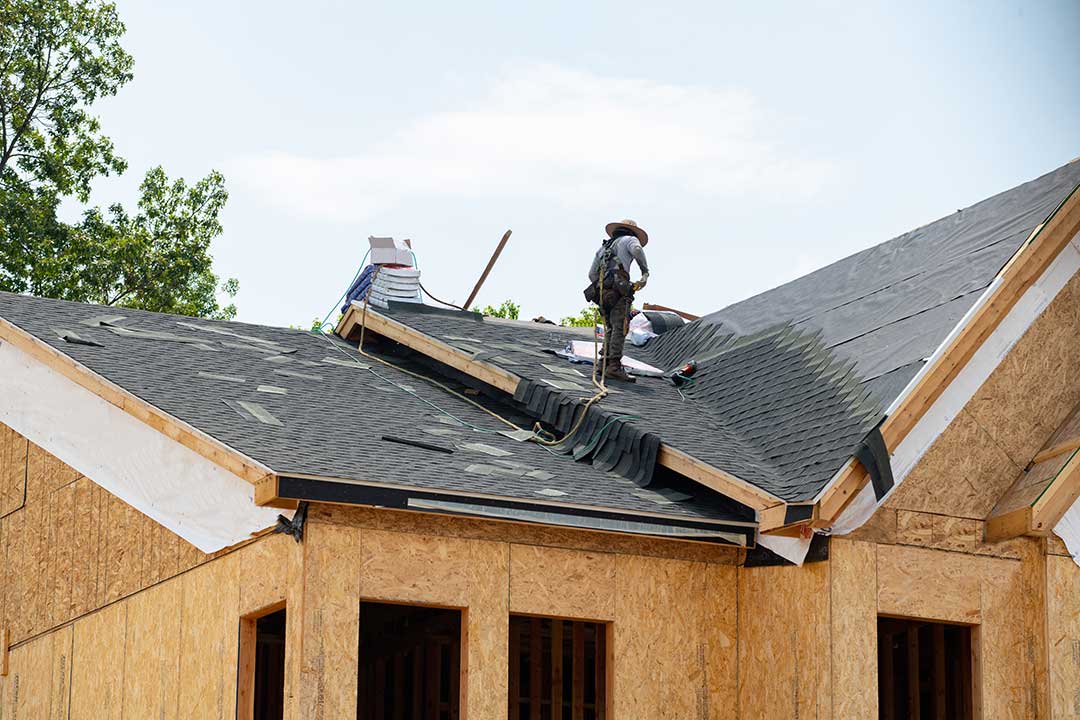
Inside the living areas, inspect ceilings, upper walls, and the spaces around chimneys or skylights. Water may travel along framing before appearing far from the original entry point.
If a tree or large branch has struck the roof, stay clear of sagging areas and do not assume the structure is stable. Downed electrical lines, damaged utility connections, and unstable branches can create hazards beyond the roofing problem itself.
Why can leaks appear days after the wind?
A roof leak may not become visible during the storm because water can be held temporarily by underlayment, insulation, or framing. Some openings admit water only when rain arrives from a particular direction.
Wind-driven rain can also move sideways beneath shingles or flashing. In colder weather, moisture may freeze inside a roof assembly and become noticeable only after temperatures rise.
For that reason, the absence of an immediate ceiling stain does not prove that the roof escaped damage. Monitoring attic areas and upper ceilings for several days after a severe event can reveal problems that were initially hidden.
Does wind damage always require roof replacement?
No. The appropriate response depends on the extent, location, age, and condition of the roof. A small number of displaced shingles may be repairable, while widespread lifting, damaged decking, repeated leaks, or failing flashing may require more extensive work.
A roof can also have storm damage combined with ordinary wear. For example, a wind event may expose a weakness that developed over several seasons. Distinguishing storm-related damage from age-related deterioration can be difficult without examining the surrounding roof materials.
Temporary measures may be appropriate when water is entering the building, but coverings and emergency repairs must be installed safely. Tarping a roof during strong wind, rain, or icy conditions can be dangerous and may cause additional damage if it is not secured properly.
How do trees and outdoor objects affect wind risk?
Trees near a home can increase the chance of impact damage, particularly when branches are weakened by decay, ice, disease, or repeated weather stress. Wind may also move unsecured outdoor items, such as furniture, tools, decorations, or construction materials, onto the roof.
Before periods of expected severe weather, residents can reduce avoidable risks by:
- Securing lightweight objects
- Moving loose items indoors or into a protected area
- Trimming dead branches when conditions are safe
- Keeping gutters and roof drainage paths clear
- Checking that attic ventilation openings are not obstructed
- Reviewing emergency supplies, including flashlights and containers for interior drips
These steps do not prevent every type of roof damage, but they can reduce the number of hazards that become airborne or allow water to accumulate.
What should be documented after roof damage?
Photographs taken from safe locations can help record the condition of the roof and surrounding property. Useful documentation may include wide views of the roofline, close views of visible damage, fallen branches, damaged gutters, interior stains, and water in the attic.
Record the date of the storm and when each problem was first noticed. Keep damaged roofing pieces or fallen debris only if doing so does not create a safety risk. Do not disturb unstable materials, electrical equipment, or sections affected by structural damage.
Prompt attention is warranted when there is active leaking, sagging, exposed decking, a large opening, damaged electrical equipment, or a tree resting on the structure. In those situations, occupants should avoid the affected area until it is safe to evaluate.
What is the most overlooked wind-damage issue?
Flashing and roof-edge components are often overlooked because they are less noticeable than missing shingles. A storm can loosen metal flashing, drip edges, soffits, or fascia while leaving the main roof field looking normal.
These components help direct water away from vulnerable joints. If they shift, water may enter behind siding, around a chimney, or beneath the roof covering. After severe wind, a careful inspection should include the entire roof drainage and edge system—not just the visible shingles.
