

Choosing a roof color is mainly a decision about proportion, climate, maintenance, and long-term appearance. In Greene, NY, the right shade should work with the home’s siding, brick, stone, trim, landscaping, and seasonal surroundings while remaining practical through sun, rain, snow, ice, and changing temperatures.
Which roof colors work well with homes in Greene, NY?
Medium and darker roof colors are often versatile choices for homes in the area, especially on traditional houses with neutral siding, brick foundations, or natural wood details. Common options include charcoal, weathered gray, brown, and blended black-gray tones.
The best choice depends on the entire exterior rather than the roof alone. A color that looks attractive on a small sample may appear much stronger when it covers a large roof surface.
Consider how the roof relates to:
- Siding color and texture
- Brick, stone, or masonry accents
- Shutters, doors, gutters, and trim
- Foundation color
- Nearby trees and landscaping
- The home’s architectural style
- The appearance of neighboring homes
A roof does not need to match every exterior feature. It usually looks more balanced when it complements the main colors without competing with them.
Should the roof be lighter or darker than the siding?
A roof that is noticeably darker than the siding is a common and dependable combination. Dark gray roofing often works with white, cream, pale gray, blue-gray, tan, and muted green siding. Brown roofing can coordinate well with beige, tan, warm gray, cream, and earth-toned exteriors.
A lighter roof may be suitable when the siding is dark or when the home has a modern design. However, light colors can make a roof appear visually larger, particularly on houses with broad, low-pitched roof sections.
A very dark roof can give a home a grounded appearance, but it may also emphasize the roof’s size. This is worth considering on homes with multiple roof planes, dormers, porches, or large attached additions.
A useful approach is to compare the roof with the siding in terms of both color and visual weight. Dark siding with a similarly dark roof can look intentional and dramatic, while dark siding with a medium-gray roof may create more contrast.
How does roof color affect heat and energy use?
Roof color can influence how much solar heat the roof surface absorbs, but the effect on indoor comfort depends on more than color. Attic insulation, ventilation, roof orientation, air sealing, ceiling design, and the home’s heating and cooling systems often have a greater influence.
Dark roofing generally absorbs more sunlight than light roofing. That may contribute to warmer roof surfaces during sunny weather. Light-colored roofing reflects more solar energy, although the practical difference varies by material, roof pitch, attic construction, and surrounding shade.
For homes in a four-season climate, choosing a roof color solely for summer cooling can overlook winter conditions. A balanced decision should account for the full year, including heating needs, snow cover, shade from trees, and attic performance.
Roof color should not be treated as a substitute for proper insulation or ventilation. A well-designed roof assembly can help manage heat and moisture regardless of whether the shingles are light, medium, or dark.
What color is best for a traditional or older home?
Traditional homes often look natural with weathered gray, charcoal, brown, or blended colors that resemble slate, wood, or other established roofing materials. The goal is usually to support the home’s original character rather than make the roof the dominant feature.
For older homes, examine permanent exterior elements first. Brick, stone, older wood siding, and masonry details may have subtle undertones that are easy to miss. A brown roof with a red-toned brick foundation can create warmth, while a cool gray roof may work better with blue-gray siding or stone.
Historic appearance does not always require an exact reproduction of an older roof. Modern roofing materials are available in color blends that suggest natural materials while offering contemporary durability. The most suitable appearance depends on the home’s design, existing features, and any local property restrictions.
How should roof color be tested before making a decision?
A small sample viewed indoors is not enough. Roof color changes throughout the day as the angle of sunlight shifts, and surrounding trees, snow, pavement, and siding can affect how the color is perceived.
Before selecting a shade:
- View large samples outdoors rather than relying only on a brochure.
- Check the color in direct sun, shade, and overcast conditions.
- Compare it against the siding, trim, foundation, and roof flashing.
- Look at the sample from the street, not only from close range.
- Recheck the color in both summer and winter surroundings when possible.
- Compare several nearby shades instead of focusing on one favorite.
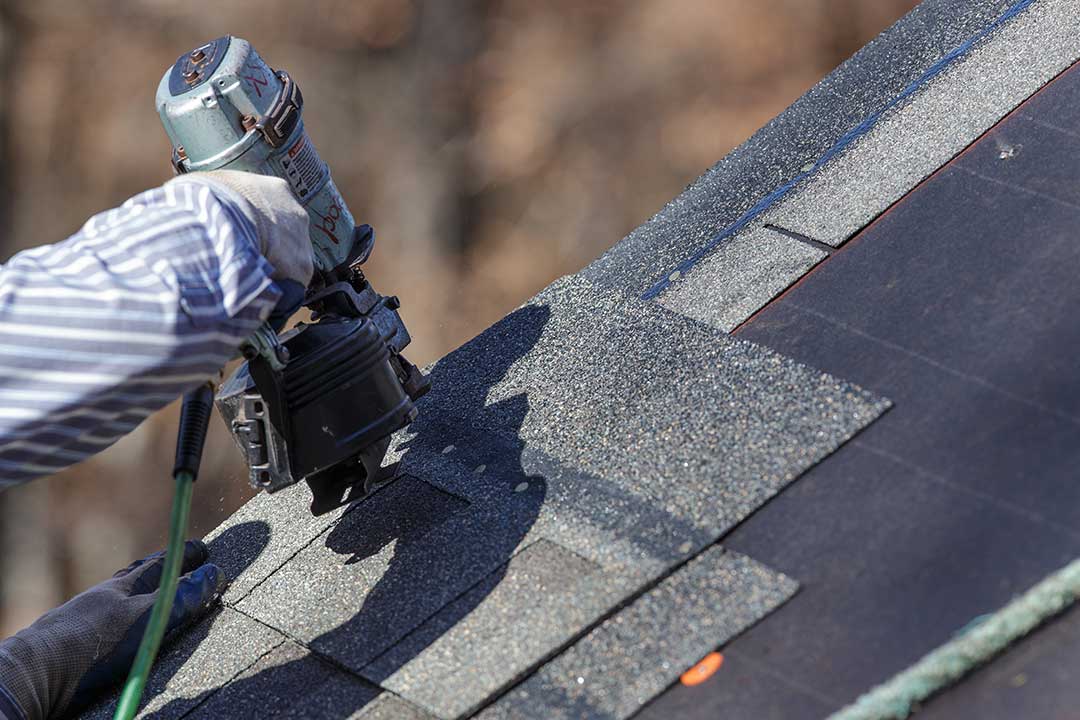
Blended shingles can be especially difficult to judge because they may contain several related colors. A sample that appears mostly gray at close range may look warmer, darker, or more varied across a complete roof.
Do roof colors hide dirt, moss, and weathering?
Some colors disguise surface changes better than others, but no roof color prevents moss, algae, lichen, staining, or debris. Trees, shade, moisture, roof orientation, and nearby branches often have more influence on these issues than color alone.
Medium blended colors can make minor variations less noticeable than a solid, very dark color. Light roofs may show dark organic growth or accumulated debris more clearly. Very dark roofs may show pale dust, pollen, and areas of fading.
A roof’s ability to resist staining depends more on its material and construction than on the basic shade. Regularly keeping leaves and branches from collecting on the roof can also help, especially in areas with mature trees and changing seasonal weather.
Does a roof color affect resale or neighborhood appearance?
Roof color can influence a home’s appearance and may affect how easily future buyers picture themselves living there. Neutral, restrained colors generally appeal to more households than highly unusual shades.
This does not mean every roof should look identical. A home can stand out through architectural details, siding, landscaping, or trim while using a roof color that fits the surrounding residential setting.
Before choosing a distinctive color, check any neighborhood association rules, historic requirements, or local building restrictions that may apply. Requirements can vary by property, and color decisions are easier to change before materials are ordered or installed.
What common mistakes should homeowners avoid?
The most common mistake is choosing the roof color in isolation. A roof is a large visual surface, so its relationship to the rest of the home matters more than the sample’s appearance by itself.
Other mistakes include:
- Matching the roof exactly to the siding, creating a flat appearance
- Choosing black without considering how strongly it will contrast with the exterior
- Ignoring the undertones in brick, stone, or painted trim
- Deciding from a small indoor sample
- Assuming a computer rendering shows the true color
- Selecting a shade based only on current trends
- Forgetting that sunlight, snow, and tree cover change the roof’s appearance
A practical final choice usually combines three qualities: it complements the home’s permanent features, suits the surrounding setting, and remains appealing over many years. For area households facing seasonal snow, rain, summer sun, and falling leaves, a balanced medium or dark neutral is often easier to live with than a highly bold or narrowly matched color.
