
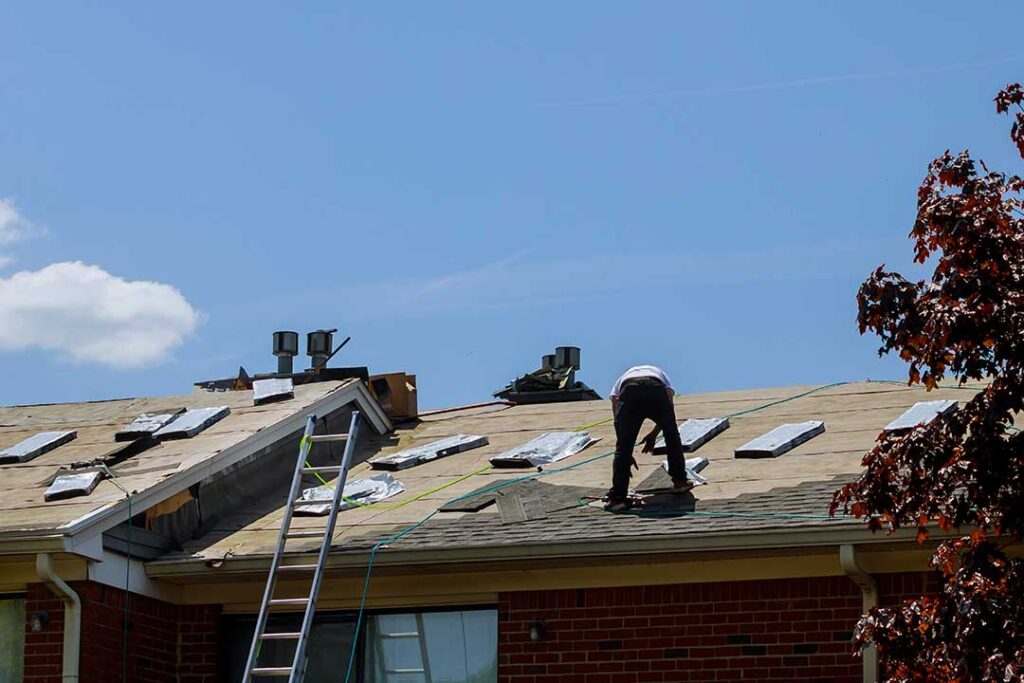
A roof leak should be treated as a home safety and damage-control problem, not just a minor maintenance issue. The first priorities are to protect people, reduce water damage, and avoid making the situation worse while identifying what may have caused it.
What should you do first after finding a leak?
Move furniture, electronics, rugs, and other belongings away from the affected area. Place a bucket or container under active dripping, and use towels or plastic sheeting to limit the spread of water.
If water is near a light fixture, outlet, appliance, or electrical wiring, do not touch the wet area. Turn off power to the affected circuit only if the electrical panel can be reached safely from a dry location. If there is standing water near the panel, leave it alone and move everyone away from the area.
Look up at the ceiling and walls from a safe position. A small stain may indicate water traveling along rafters, insulation, wiring, or framing before it becomes visible indoors. The place where water appears is not always directly below the roof opening.
Take clear photographs of:
- The ceiling or wall stain
- Active dripping or pooling
- Damaged belongings
- Any visible exterior damage from the ground
- Snow, ice, fallen branches, or storm debris connected with the leak
Documentation can help track whether the problem is getting worse and may be useful for insurance records.
Is it safe to go onto the roof?
Usually, no. A wet, icy, snow-covered, steep, or damaged roof is especially dangerous. Roof surfaces can be slippery even when they appear dry, and hidden damage may not support a person’s weight.
Do not climb onto the roof during rain, wind, lightning, or active snowfall. Avoid ladders placed on wet ground, snow, ice, or uneven surfaces. Never walk near sagging roof areas, loose shingles, exposed decking, or branches resting on the structure.
In Greene, winter weather can create several overlapping hazards. Snow and ice may cover damaged shingles, block drainage paths, or add weight to already weakened roof sections. Heavy rain can also expose problems around flashing, chimneys, vents, skylights, and roof edges.
A visual inspection from the ground is safer. Look for missing shingles, lifted edges, sagging gutters, fallen limbs, damaged flashing, or water flowing where it normally does not.
Should you make a temporary repair?
A temporary measure may be reasonable if it can be completed from inside the home or from a stable, dry location. For example, a container can catch dripping water, and a plastic sheet can protect furniture or flooring.
Do not seal an indoor ceiling stain with paint before the area has dried. Painting over discoloration can hide continuing moisture and make it harder to determine whether the leak has stopped.
Do not spray expanding foam, caulk, roofing cement, or other materials into an unknown ceiling opening. These products may conceal symptoms without stopping the source. They can also trap moisture inside the roof assembly.
Exterior coverings should not be installed by climbing onto a hazardous roof. A tarp that is poorly secured can tear loose, collect water, damage shingles, or create additional danger in windy conditions.
How can you tell whether the leak is urgent?
Some leaks require immediate attention because they may involve electrical hazards, structural damage, or rapidly spreading water.
Treat the situation as urgent if:
- The ceiling is bulging, sagging, cracking, or making unusual sounds
- Water is coming through a light fixture or electrical outlet
- Water is spreading quickly across multiple rooms
- A roof section appears collapsed or visibly uneven
- Snow or ice is heavily accumulated above a leaking area
- A tree limb or other object has struck the roof
- Doors or windows suddenly become difficult to open
- Insulation, drywall, or ceiling materials are falling
- Water is reaching a furnace, boiler, electrical equipment, or other utility
Keep people and pets away from sagging ceilings. A bulge may contain a substantial amount of water, and puncturing it can release water unpredictably while weakening the ceiling surface.
Roof leaks accompanied by major sagging, structural movement, or storm damage should not be handled as a routine patching task. Evacuate the affected part of the home if necessary and use emergency services when there is an immediate threat to life or safety.
Why might a roof leak appear far from the actual damage?
Roof water often travels sideways before entering the living space. It may follow roof decking, rafters, insulation, plumbing vents, or framing members.
Common sources include:
- Damaged or missing shingles
- Cracked or displaced flashing
- Failed seals around vent pipes
- Blocked valleys or roof drainage paths
- Ice buildup at roof edges
- Deteriorated chimney or skylight flashing
- Wind damage that lifts roofing materials
- Condensation in a poorly ventilated attic
- Overflowing gutters or downspouts
- Old roof sheathing weakened by repeated moisture

A leak that appears only during wind-driven rain may involve flashing or a roof edge rather than a broad failure in the roof surface. A leak that appears during freezing weather may be connected to ice buildup, frozen drainage, or condensation. A leak that continues after rain has stopped may reflect water stored in insulation or other building materials.
What should you check in the attic?
An attic inspection can help identify the general path of water, but it should only be done from a stable surface with adequate lighting. Do not step directly on insulation or ceiling drywall, because those surfaces may not support body weight.
Look for:
- Darkened wood or wet insulation
- Water stains on rafters or roof decking
- Damp nails or metal fasteners
- Mold-like growth or musty odors
- Daylight visible through the roof
- Compressed or displaced insulation
- Frost or moisture on the underside of the roof
Use caution around electrical wiring, recessed lights, and sharp roofing nails. If the attic is hot, cramped, contaminated, or difficult to enter safely, remain outside it.
How should you dry the area?
Dry wet materials as soon as it is safe. Remove standing water, increase air circulation, and separate damp belongings so they can dry. If outdoor air is humid or rain is continuing, opening windows may not help. Fans and dehumidifiers can be useful when electricity can be used safely.
Porous materials such as carpet padding, insulation, ceiling tile, and some forms of drywall may remain wet inside even when their surfaces feel dry. Lingering moisture can lead to odors, deterioration, or mold growth.
Do not disturb materials that may contain hazardous substances, especially in older homes, without understanding the risks. Water damage can also affect hidden areas such as wall cavities and insulation, where drying is more difficult.
Should you report the leak to an insurer?
Review the policy and notify the insurer promptly if the damage may be covered. Coverage often depends on the cause of the leak, the condition of the roof, policy exclusions, and whether damage resulted from a sudden event or long-term deterioration.
Keep records of:
- The date and approximate time the leak was discovered
- Weather conditions
- Photographs and videos
- Temporary steps taken to protect the home
- Damaged personal property
- Any receipts related to emergency cleanup or materials
Avoid discarding damaged items until they have been documented, unless they create a health or safety hazard. Do not make permanent repairs before the cause and extent of damage are reasonably documented.
How can future leaks be reduced?
After the immediate problem is controlled, inspect the roof and drainage system regularly, especially after windstorms and before winter. Keep gutters and downspouts clear, watch for loose flashing, and check attic ventilation for signs of condensation.
In the local climate, roofs may experience repeated freeze-thaw cycles, spring runoff, summer storms, and occasional early or late-season snow. These conditions can enlarge small cracks, loosen materials, and place stress on roof edges and drainage points.
A ceiling stain should not be ignored simply because it dries. The roof may stop leaking temporarily while damaged materials continue to deteriorate. Finding the source, documenting the condition, and addressing safety concerns early can prevent a small water entry problem from becoming a larger structural or indoor air-quality issue.
