
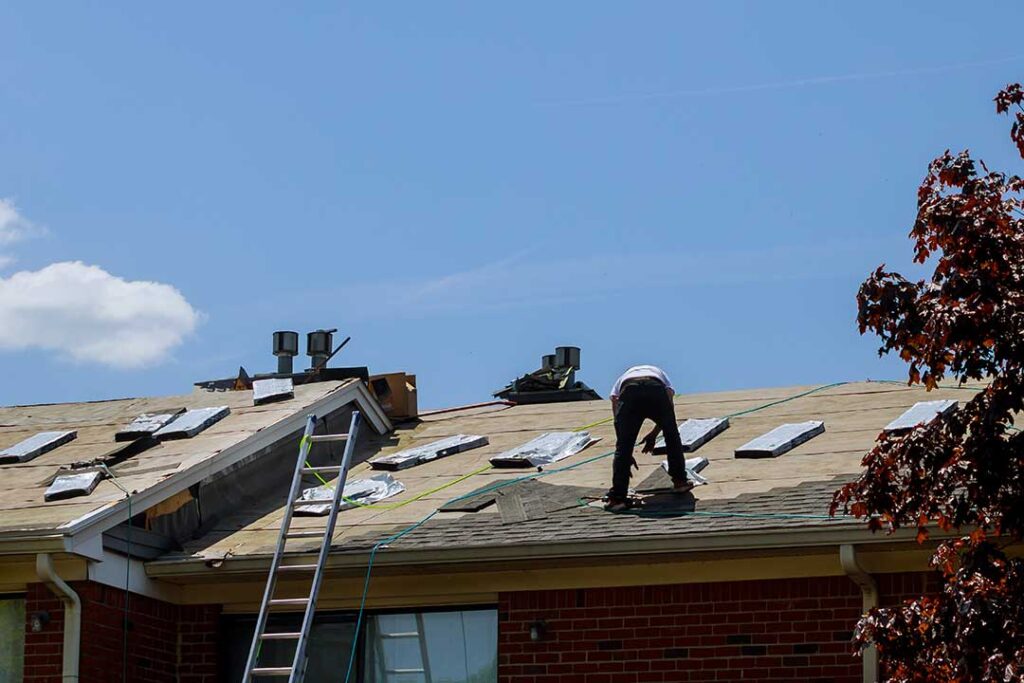
Roof leaks rarely begin as a dramatic hole in the roof. More often, water enters through a small weakness around a shingle, flashing joint, vent, or drainage area and slowly spreads through roofing materials, insulation, and ceilings. In Greene, NY, seasonal weather changes can make these weak points more noticeable, especially after heavy rain, winter snow, ice, wind, and repeated freeze-thaw cycles.
What are the most common causes of roof leaks?
The most common causes are damaged shingles, aging roofing materials, failed flashing, clogged drainage systems, ice-related damage, and problems around roof penetrations. A ceiling stain may appear far from the actual entry point, so the visible damage does not always identify the source.
Damaged or missing shingles
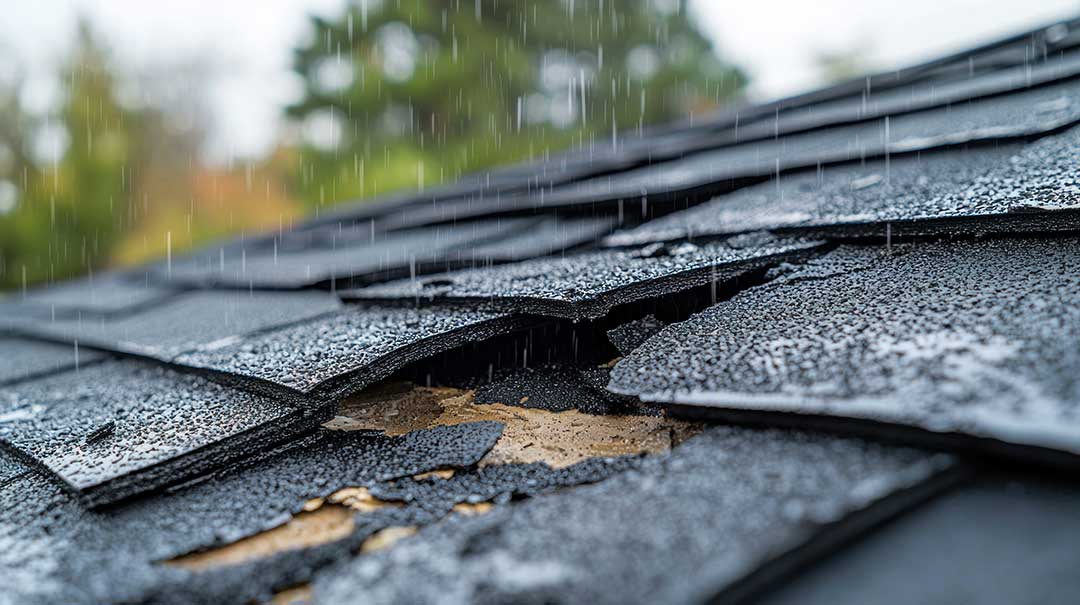
Shingles protect the roof deck from rain and snow. Strong wind, falling branches, foot traffic, and age can crack, loosen, curl, or remove them. Even a small exposed area can allow water beneath nearby shingles.
Common signs include:
- Shingles with lifted, torn, curled, or missing sections
- Granules collecting in gutters or at downspouts
- Dark patches where the protective surface has worn away
- Small leaks that appear only during wind-driven rain
A roof does not need to look severely damaged to leak. Water may enter through a narrow gap and travel along the roof deck before reaching the interior.
Worn-out roofing materials
As roofing materials age, they become less flexible and less resistant to moisture. Asphalt shingles may lose granules, dry out, crack, or separate at their edges. Older underlayment can also become brittle or deteriorate.
Age alone does not prove that a roof is leaking, but an older roof with repeated repairs deserves closer observation. Leaks may become more frequent as several components reach the end of their useful service life at the same time.
Why does flashing cause so many leaks?
Flashing is material installed around joints and openings where water is likely to collect or change direction. It is commonly found around chimneys, roof edges, valleys, skylights, plumbing vents, and wall intersections.
Flashing can leak when it:
- Pulls away from the surface
- Develops rust or corrosion
- Cracks at seams
- Was poorly installed
- Loses its seal around fasteners or joints
- Is damaged by ice, wind, or repeated movement
Roof valleys deserve special attention because they carry water from two roof sections into a drainage path. Leaves, ice, shingle debris, or damaged valley materials can interrupt that flow and push water beneath the roofing.
A common misconception is that caulk alone permanently fixes a flashing leak. Sealant may temporarily slow water entry, but it can shrink, crack, or separate as temperatures change. The underlying flashing or installation problem may still remain.
Can clogged gutters cause a roof leak?
Yes. Gutters do not usually create a hole in the roof, but clogged or poorly draining gutters can cause water to back up beneath shingles, behind fascia, or into roof edges.
During autumn, leaves and small branches can collect in drainage channels. Winter freezing may then turn trapped water into ice, adding weight and blocking normal runoff. If downspouts discharge too close to the building, water can also collect near the foundation and contribute to moisture problems below the roofline.
Warning signs include:
- Water spilling over the front or sides of gutters
- Sagging gutter sections
- Staining beneath the roof edge
- Dampness near exterior walls
- Peeling paint or water marks around eaves
Keeping drainage paths clear is especially useful before periods of heavy rain and before winter conditions arrive.
How do ice dams lead to leaks?
Ice dams form when snow on a roof melts in warmer areas and refreezes near colder roof edges. The resulting ice can block normal drainage. Water held behind the dam may move beneath shingles and into the roof assembly.
Ice dams are more likely when a roof has uneven temperatures, insufficient insulation, air leakage from the living space, or limited ventilation. They can also form during repeated cycles of daytime thawing and nighttime freezing.
Interior signs may include:
- Water stains on ceilings near exterior walls
- Damp insulation in an attic
- Drips around upper-floor windows
- Peeling paint or bubbling drywall
- Icicles accompanied by interior moisture
Large ice formations should not be removed by climbing onto the roof or striking the ice. Those actions can damage shingles and create fall hazards. Preventive improvements usually focus on controlling heat loss and maintaining balanced attic ventilation rather than simply removing visible ice.
Why do roof vents and other penetrations leak?
Every opening through a roof creates a potential leak point. Plumbing vent pipes, exhaust vents, skylights, chimneys, antennas, and similar features require carefully fitted flashing and weather-resistant seals.
Leaks around these areas may result from cracked rubber boots, loose flashing, deteriorated sealant, or movement caused by wind and temperature changes. Plumbing vent flashing is a frequent source of ceiling stains because the opening passes directly through the roof surface.
Roof penetrations should be inspected after major storms and whenever a leak appears near a bathroom, kitchen, attic, or upper-floor wall. The location of a ceiling mark can provide a clue, but water may travel horizontally along framing before becoming visible.
Can condensation be mistaken for a roof leak?
Yes. Not every attic moisture problem comes from rain. Warm, moist household air can enter a cold attic through gaps around light fixtures, wiring, attic doors, ducts, or plumbing openings. If that air reaches cold surfaces, condensation can form and resemble a roof leak.
Condensation is more likely during cold weather and may affect nails, roof sheathing, insulation, or rafters. Signs can include widespread dampness, frost on the underside of the roof, mildew-like odors, or moisture that appears without rain.
Proper attic airflow, sealed air leaks, and suitable insulation help reduce this problem. Bathroom and kitchen exhaust should discharge outdoors rather than into an attic space.
What other overlooked conditions can cause leaks?
Several less obvious problems can allow water into a building:
- Roof debris: Leaves, branches, and accumulated material can hold moisture against shingles and block drainage.
- Tree contact: Branches can scrape away protective granules or puncture roofing during storms.
- Improper repairs: Exposed fasteners, mismatched materials, or covered damage may leave a leak pathway.
- Low-slope sections: Areas with limited pitch drain more slowly and are more sensitive to seams, ponding, and debris.
- Wind-driven rain: Water can enter beneath roofing edges or flashing even when there is no obvious hole.
- Damaged roof decking: Long-term moisture can weaken the wood beneath the shingles, allowing the problem to spread.
Homes with additions, porches, dormers, or multiple roof angles often have more transition points. Each transition requires careful drainage and flashing, so complex roof shapes may have more potential leak locations than a simple roof plane.
What should residents do after noticing a roof leak?
Begin by limiting interior damage. Place a container beneath active dripping, move furniture or belongings, and record the location of stains or damp areas. If water is near electrical fixtures, switches, or wiring, avoid touching the affected components and use caution until the area is safe.
Do not assume a dry ceiling means the problem has ended. A leak may stop when rain stops while moisture remains inside insulation or wood. Bubbling paint, sagging drywall, musty odors, and spreading stains indicate that the affected area needs prompt attention.
Roof inspections can involve steep surfaces, unstable shingles, ice, and hidden structural damage. Climbing onto a wet, snowy, or damaged roof creates unnecessary risk. From ground level or an attic, residents can often identify useful clues without walking on the roof.
Regular observation after storms, seasonal gutter maintenance, and attention to attic moisture can help identify small problems before they become widespread interior damage. In a climate with snow, freezing temperatures, wind, and heavy seasonal rainfall, early detection is often more useful than waiting for a large ceiling stain to appear.
