
Is it safe for a homeowner to walk on a roof?
Walking on a roof is rarely as simple as stepping onto a ladder and crossing the shingles. Even a low roof can become dangerous because of slope, loose granules, hidden damage, wet surfaces, fragile materials, and the distance to the ground.
For most routine inspections, it is safer to observe the roof from the ground, attic, windows, or a properly positioned ladder without stepping onto the roofing surface. If roof access is necessary, conditions and equipment should be evaluated first. A fall from a one-story roof can still cause serious injury, especially onto concrete, stone, decks, or landscaping features.
In Greene, NY, seasonal weather adds several concerns. Snow, freezing temperatures, spring moisture, fallen leaves, algae, and damp morning dew can all reduce traction. Roofs may also remain wet after rain has stopped, particularly on shaded slopes.
What should be checked before stepping onto a roof?
Do not walk on a roof until the weather, surface, structure, and access route have been checked.
Avoid roof access during or shortly after:
- Rain, snow, sleet, or freezing drizzle
- Frost, dew, or visible moisture
- Strong wind or gusts
- Extreme heat, which can soften some roofing materials
- Conditions that make the ladder unstable or difficult to secure
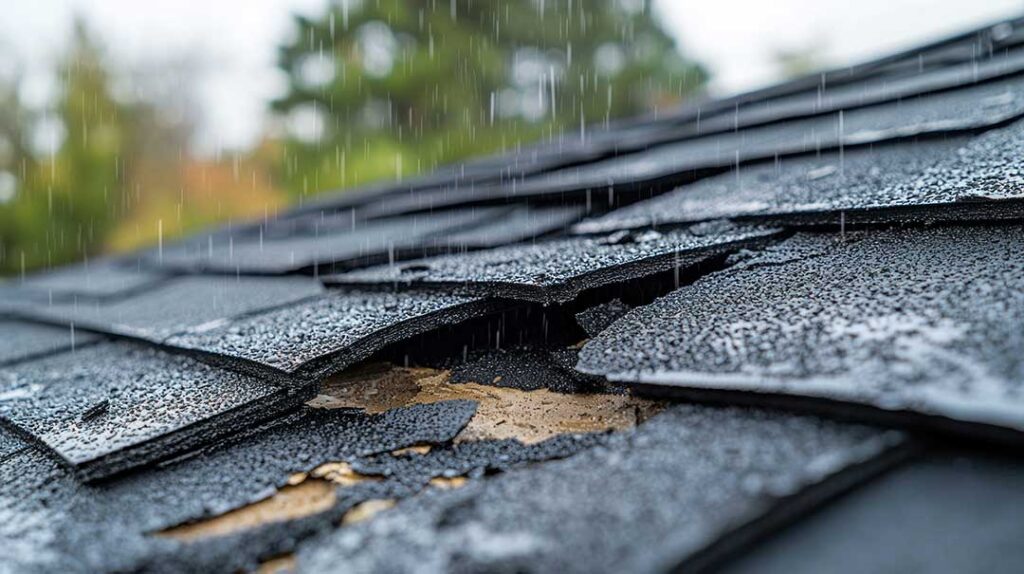
Look for signs that the roof may not safely support foot traffic. These include sagging areas, soft spots, cracked or missing shingles, exposed underlayment, loose metal, damaged decking, and areas near roof edges or penetrations.
A roof may look intact while having hidden structural damage. Water intrusion can weaken roof decking around chimneys, plumbing vents, skylights, valleys, and roof edges. Avoid stepping near any area that appears discolored, depressed, blistered, or uneven.
Which roofs are unsafe to walk on?
Steep roofs, brittle roofing, and damaged surfaces should generally not be walked on by untrained homeowners.
A roof becomes more hazardous as its slope increases because balance is harder to maintain and a slip can quickly become a slide. There is no single slope that makes every roof unsafe, but a surface that requires careful climbing rather than ordinary walking should be treated as a fall hazard.
Extra caution is needed with:
- Older asphalt shingles that shed large amounts of granules
- Wood shingles or shakes that may split under pressure
- Slate, clay tile, and concrete tile, which can crack easily
- Corrugated or standing-seam metal roofing
- Roofs with moss, algae, leaves, or accumulated debris
- Areas around skylights, solar equipment, vents, and chimneys
- Low-slope roofs with ponding water or concealed deterioration
Never assume that a flat-looking roof is safe. Low-slope roofs can still have slippery membranes, fragile skylights, unprotected edges, and weak sections.
What footwear is best for roof work?
Wear clean, soft-soled shoes with good traction. Footwear should be free of mud, oil, gravel, grass, and other debris that could reduce grip.
Avoid smooth-soled shoes, work boots with deeply packed mud, sandals, and shoes with hard heels. Some aggressive boot treads can also be a problem because they may catch on roofing materials or damage shingles.
Before climbing, check the soles. Small stones can scratch surfaces or act like ball bearings underfoot. On asphalt shingles, walk carefully because loose granules can make the surface feel unstable and may be displaced by repeated foot traffic.
Good footwear does not replace fall protection. It only reduces one part of the risk.
How should someone walk across asphalt shingles?
Use slow, deliberate movements and keep the body facing the direction of travel. Take short steps and place each foot carefully rather than pivoting or turning quickly.
On sloped asphalt shingles:
- Step on the stronger lower portions of the shingles, not on exposed edges.
- Keep weight centered over the feet.
- Avoid sudden movements, jumping, or carrying bulky objects.
- Move parallel to the roof edge when practical instead of walking directly up or down a steep slope.
- Keep hands free whenever possible.
- Do not step on ridge caps, loose shingles, flashing, or areas that appear raised.
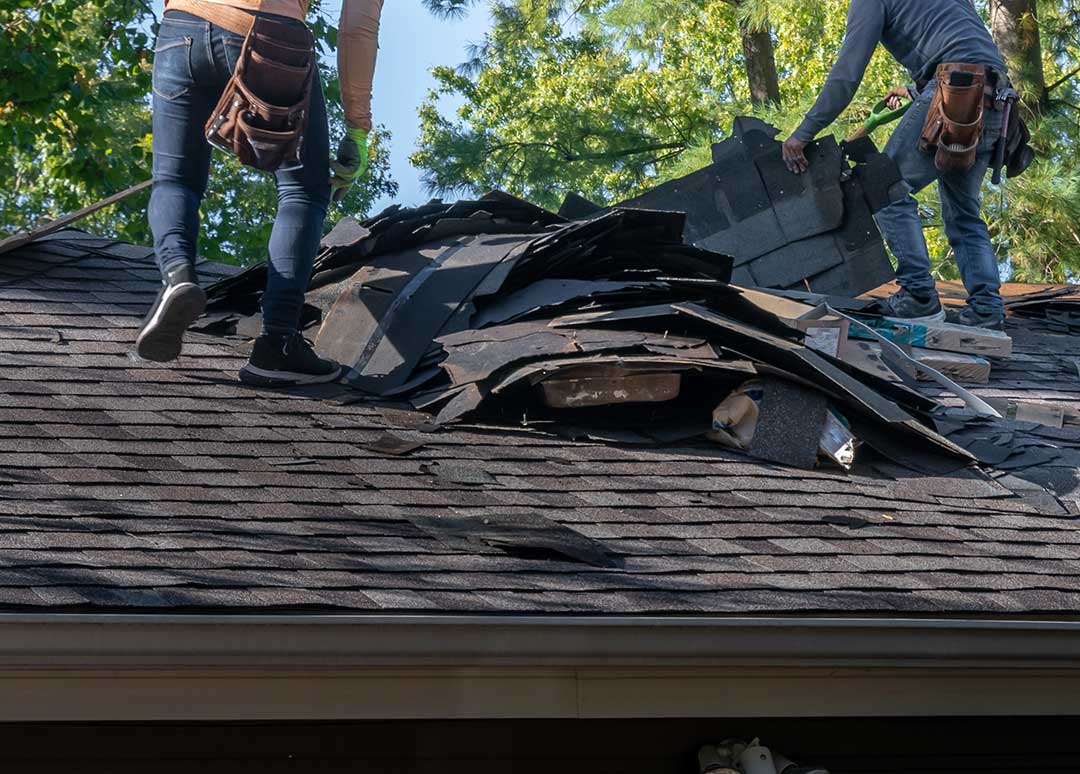
Walking directly on shingles can shorten their service life by loosening granules, bending tabs, or disturbing seal strips. Repeated foot traffic is especially harmful in warm weather, when asphalt-based materials may be softer.
Never step on a skylight unless it has been specifically designed and clearly identified as walkable. Many skylights are not strong enough to support a person, even if they appear solid.
How can a ladder be used more safely?
The ladder is often the most dangerous part of roof access. It should stand on stable, level ground and be positioned according to the manufacturer’s instructions. A ladder that rocks, sinks, rests on ice, or leans against an unstable surface should not be used.
Keep the climbing area clear of tools, hoses, toys, branches, and other obstacles. Maintain three points of contact while climbing: two hands and one foot, or two feet and one hand.
Do not carry tools in your hands while climbing. Use a tool belt only if it does not interfere with balance, or raise equipment after reaching a secure position. Never move a ladder while standing on it, and do not step from a ladder onto a roof unless the ladder is properly secured and extends high enough to provide a stable handhold.
A ladder should not be used as a substitute for a fall-protection system on a roof.
Is a harness enough to make roof walking safe?
No. A harness by itself does not prevent a fall. A complete personal fall-arrest system requires compatible equipment, a suitable anchor, correct connection, adequate clearance, and knowledge of how to use the system.
Improvised anchors, chimney straps, plumbing vents, gutters, roof jacks, and parts of the roof framing may fail or may not be designed for fall protection. A fall-arrest system can also create suspension hazards if a person cannot be rescued quickly.
Roof workers exposed to significant fall hazards generally need properly planned protection such as guardrails, a suitable restraint system, or a correctly installed fall-arrest system. These systems require training and should not be assembled casually for a one-time inspection.
What should residents do after a storm?
After heavy wind, snow, ice, or a fallen branch, inspect the roof from the ground first. Look for missing shingles, exposed underlayment, bent flashing, sagging lines, damaged vents, and debris.
Do not climb onto a roof immediately after a storm to place a tarp or retrieve an object. Wet roofing, hidden structural damage, and unstable debris can make conditions more dangerous than they appear. Keep people away from areas below loose materials, since shingles, ice, branches, and other debris can fall without warning.
If water is entering the home, place containers below leaks and move belongings away from the affected area when possible. Roof access should wait until conditions are dry and the structure can be approached safely.
When should roof access be avoided entirely?
Do not walk on the roof if there is uncertainty about its strength, slope, condition, or the adequacy of fall protection. Avoid access when alone, during poor weather, near electrical hazards, or when mobility, balance, or vision is impaired.
For Greene households, this includes taking extra care during freeze-thaw periods, when roof surfaces may look dry but still contain ice. Snow-covered roofs should be treated as inaccessible unless specialized safety procedures and equipment are in place.
A ground-level inspection, attic check, or photograph taken from a safe location often provides useful information without exposing anyone to an unnecessary fall.
