

Walking on a roof is more hazardous than it may appear. Sloped shingles, hidden weak spots, loose granules, wind, moisture, and roof edges can turn a short inspection into a serious fall. For most homeowners, the safest approach is to inspect from the ground, attic, or a securely positioned ladder rather than stepping onto the roof.
If roof access is genuinely necessary, the surface, weather, ladder, footwear, and fall protection should all be evaluated first.
Is it safe for a homeowner to walk on a roof?
Sometimes, but only under limited conditions. A low-slope roof with dry, stable roofing and safe access presents less difficulty than a steep asphalt-shingle roof, metal roof, or aging roof with unknown structural condition. Even a roof that looks sound from below may contain deteriorated sheathing or areas weakened by water damage.
Do not walk on the roof if:
- The surface is wet, icy, frosty, muddy, or covered with snow
- Wind is strong enough to affect balance or move tools
- The roof is steep, especially if there is no properly installed fall-protection system
- Shingles are loose, curled, brittle, or missing
- The roof has moss, algae, heavy leaf buildup, or loose granules
- You see sagging, soft spots, cracked decking, or signs of water intrusion
- You are taking medication, feeling unwell, or uncomfortable with heights
- You would need to carry bulky materials while climbing
In Greene, NY, changing weather makes timing especially important. Cold-season frost, snow, ice, and freeze-thaw conditions can make a roof unsafe even when the surface appears mostly clear. Spring moisture and summer heat can also affect traction and roofing materials.
What should be checked before stepping onto the roof?
Begin with a ground-level inspection. Use binoculars to look for missing shingles, damaged flashing, blocked drainage paths, sagging areas, and debris. Check the attic, if accessible, for daylight through the roof deck, damp insulation, stained wood, or active dripping.
Look at the roof from several angles. A roof can appear flat from the driveway while having a steeper section above a porch, addition, dormer, or garage. Changes in roof height and slope are common locations for slips and missteps.
Also inspect the access route:
- Place the ladder on firm, level ground.
- Keep the base away from soft soil, ice, mud, and uneven paving.
- Make sure the ladder is tall enough to provide a secure transition at the roof edge.
- Keep the area below clear of children, pets, vehicles, and distractions.
- Do not lean a ladder against gutters, downspouts, skylights, or fragile trim.
- Secure the ladder so it cannot slide or shift.
A ladder should not be treated as fall protection. It provides access, but it does not make an unsafe roof safe.
What footwear is safest?
Wear clean, soft-soled shoes with good tread. Athletic shoes may be suitable for a very limited inspection on a dry, low-slope surface, but they are not adequate protection for steep roofing or hazardous conditions.
Avoid:
- Work boots with heavily worn soles
- Smooth-soled shoes
- Wet footwear
- Shoes carrying mud, gravel, or metal debris
- Bare feet or socks
Before climbing, check the soles for small stones and roofing granules. Debris can reduce traction and scratch or damage some roofing surfaces.
How should a person walk on asphalt shingles?
If the roof is dry, stable, and low enough to access safely, move slowly and keep your body facing the slope. Take short steps and maintain three points of contact whenever practical: two feet and one hand, or two hands and one foot.
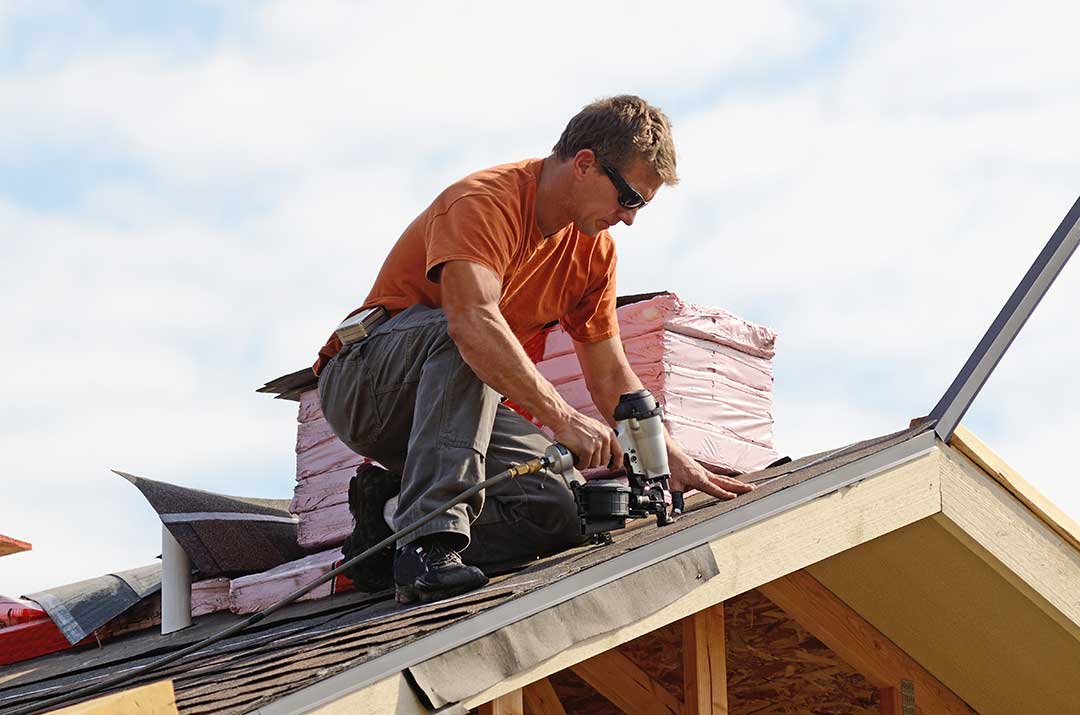
On asphalt shingles, step near the lower portion of the shingle where it overlaps the course below, rather than directly on the exposed tabs. Avoid stepping on ridge caps, flashing, skylights, vents, pipe boots, gutters, and roof edges.
Do not jump across sections, turn quickly, or walk backward. Keep your eyes on the surface instead of looking down toward the ground. If carrying an item, use a tool belt or hoist it separately so both hands remain available for balance.
Never assume a shingle roof is stronger because it is new. New shingles can be slippery, and the roof deck beneath them may still have construction debris, uncovered openings, or incomplete fastening.
How are metal, slate, tile, and low-slope roofs different?
Roofing materials require different precautions, and some should not be walked on casually.
Metal roofing can be extremely slippery when damp, frosted, dusty, or heated by the sun. Seams and panels may also flex underfoot. Tile and slate can crack under concentrated weight, and broken pieces create additional sharp and unstable footing.
Low-slope roofs are easier to cross than steep roofs, but they still contain hazards. Membrane roofing can be damaged by sharp objects, loose gravel, tools, and unnecessary foot traffic. Ponding water may conceal soft decking or deteriorated materials.
If the roof material is unfamiliar, fragile, unusually steep, or visibly damaged, do not walk across it simply to obtain a closer look.
What fall protection is needed?
A harness by itself does not prevent a fall. A complete personal fall-protection system requires compatible equipment, a properly rated anchor, suitable connection hardware, and a plan for preventing or responding to a fall.
Improvised attachment points are dangerous. Chimneys, plumbing vents, gutters, tree branches, and roof framing that has not been evaluated should not be assumed to support a person. A fall-arrest system also requires enough clearance below the roof edge to prevent striking the ground or an obstruction.
For roof work several feet above a lower level, recognized fall-protection methods may include guardrails, safety nets, or properly designed personal systems. Setting up that equipment incorrectly can create a false sense of security. Roof work involving steep slopes, damaged decking, edge exposure, or specialized anchors should be left to workers trained in fall protection.
What should be done if the roof is covered with snow or ice?
Do not walk on it. Snow can hide holes, weak decking, skylights, and roof edges. Ice can remain under a thin layer of snow or refreeze after daytime melting. Shoveling from the roof can also damage shingles and increase the chance of falling.
From the ground, look for heavy snow buildup, sagging roof lines, displaced gutters, or large ice formations. Do not stand beneath roof edges where sliding snow or ice could fall. If there is concern about structural loading or an active leak, keep people away from the affected area until the condition can be safely evaluated.
What are safer alternatives to walking on the roof?
Many routine observations can be completed without roof access:
- Use binoculars or a camera with a zoom lens from the ground.
- Inspect the attic for stains, damp insulation, or daylight.
- Observe gutters and downspouts from a ladder positioned only for gutter-level access.
- Check ceilings and upper walls for new water marks.
- Look for shingle debris around the foundation after strong weather.
- Use a ground-level hose test only when conditions are safe and water cannot reach electrical equipment.
A roof inspection is not an emergency task. If the surface is wet, icy, steep, unstable, or damaged, postponing access is safer than attempting a quick look. When fall hazards or structural concerns are present, trained roofing personnel with appropriate equipment are needed rather than an unprotected homeowner.
