
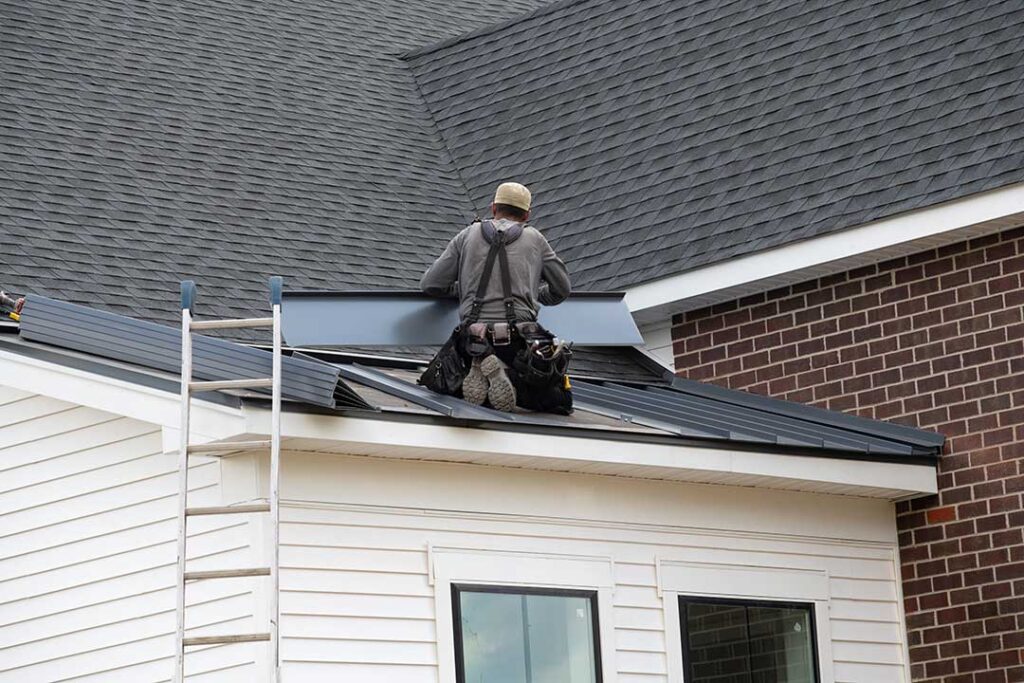
Humidity affects a roof mainly by slowing drying, increasing condensation, and keeping roofing materials damp for longer periods. In Greene, NY, seasonal changes between humid summers, wet weather, and cold winters can expose a roof assembly to repeated moisture cycles that affect shingles, metal, wood sheathing, insulation, and flashing.
What does humidity do to a roof?
High humidity does not usually damage a roof by itself. The greater concern is moisture that remains trapped in or around the roofing system.
A roof has several layers that must work together:
- The outer roofing material sheds rain and snow.
- Underlayment provides an additional water-resistant layer.
- The roof deck supports the roofing material.
- Insulation and attic surfaces help control indoor temperatures.
- Ventilation allows heat and moisture to leave the roof cavity.
If humid air enters the attic or roof assembly and meets a colder surface, water vapor can condense into liquid water. Repeated condensation may cause staining, mold growth, corrosion, swelling, or decay even when the roof covering appears intact from the ground.
How does humidity affect asphalt shingles?
Asphalt shingles tolerate normal outdoor humidity, but prolonged dampness can shorten the useful life of the roofing system. Moisture may collect beneath debris, around poorly sealed penetrations, or where the roof deck remains wet.
High humidity can contribute to:
- Shingle granule loss when moisture and temperature changes weaken the surface
- Curling, buckling, or distortion caused by movement in a damp roof deck
- Algae or moss growth in shaded areas
- Slower drying after rain, especially on low-slope sections
- Deterioration of the wood beneath the shingles
Humidity is often blamed for shingle failure when the underlying issue is poor drainage, inadequate ventilation, a roof leak, or a roof deck that was damp during installation. Shingles need a sound, dry, and properly supported base.
Can humidity damage a metal roof?
Metal roofing is generally resistant to rot, but it is not immune to moisture-related problems. Condensation on the underside of metal panels can drip onto insulation, framing, or the roof deck.
The most common concerns include:
- Corrosion at cut edges, fasteners, seams, and damaged coatings
- Condensation beneath panels when warm, moist air meets cold metal
- Rust on exposed screws or metal components
- Moisture trapped between the roof and an underlayment or solid deck
- Expansion and contraction that loosen seals over time
A metal roof can last a long time in a damp climate when water has a path to drain or evaporate. The condition of the underside is just as important as the visible exterior surface.
Why is wood sheathing especially vulnerable?
Roof decking and framing are often made from plywood, oriented strand board, or solid wood. These materials absorb moisture from leaks, condensation, humid attic air, and damp insulation.
Wood does not need to be visibly soaked to experience problems. Elevated moisture levels over time can lead to:
- Swelling and edge distortion
- Loss of structural strength
- Soft spots around leaks
- Fungal decay
- Mold growth on surfaces and insulation
- Nail or fastener movement
In older homes, additions, and houses with partially finished attics, different roof sections may have different ventilation and insulation conditions. One part of the roof may dry normally while another remains damp.
How does winter humidity create attic condensation?
Winter condensation is a common concern in Greene. Indoor air contains moisture from cooking, bathing, laundry, houseplants, and normal occupancy. That warm air can move into an attic through ceiling penetrations, gaps around light fixtures, attic access panels, plumbing openings, or ductwork.
When the air reaches a cold roof deck or nail, moisture may condense. Warning signs include:
- Frost on the underside of the roof deck
- Water droplets or dark stains in the attic
- Damp insulation
- Peeling paint near ceiling edges
- Musty odors
- Rusted nails or metal fasteners
The problem may become visible during a thaw, when frost melts and drips onto insulation or ceilings. This can be mistaken for a roof leak even though the water originated inside the building.
Does attic ventilation remove humidity?
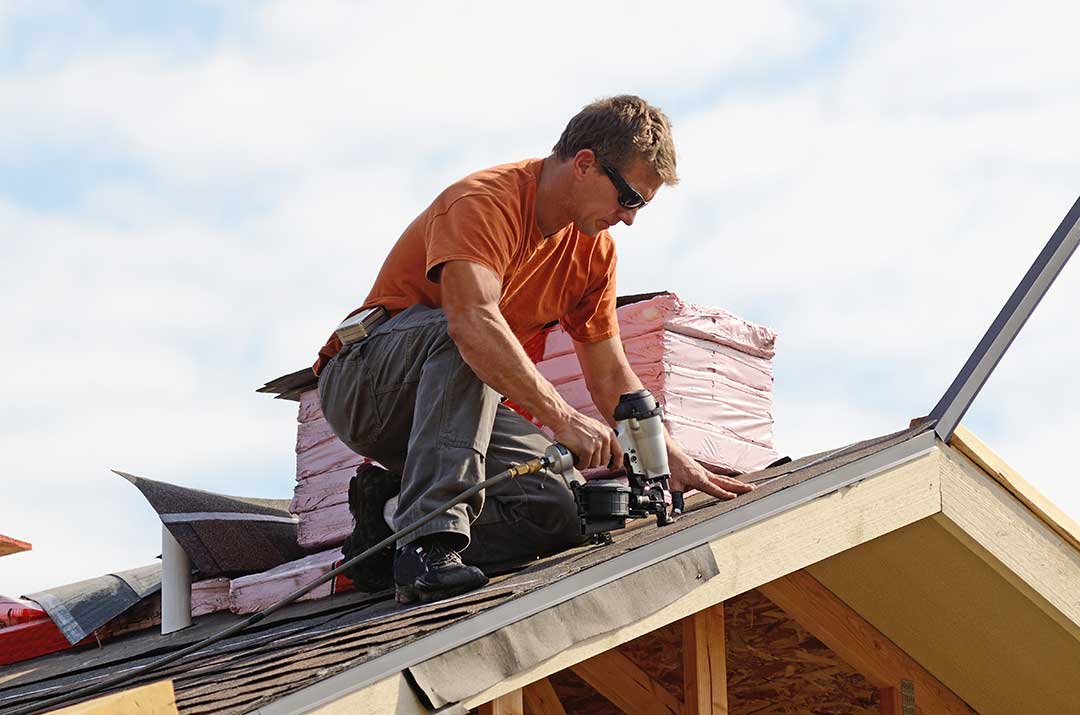
Proper attic ventilation can help remove heat and moisture, but vents are not a cure for every moisture problem. Ventilation works best when the attic has a balanced air path, with lower intake and higher exhaust openings that are not blocked by insulation, debris, or snow.
Ventilation cannot compensate for:
- Air leaks from the living space
- Missing or compressed insulation
- Bathroom or kitchen exhaust venting into the attic
- Roof leaks
- Blocked soffit or intake vents
- Excessive indoor humidity
- Improperly designed enclosed roof cavities
Air sealing at the ceiling plane is often just as important as moving air through the attic. Exhaust fans should discharge outdoors rather than into the roof cavity.
Which roofing materials handle humid conditions best?
No roofing material eliminates moisture risk. Performance depends on the entire roof assembly, including drainage, flashing, underlayment, ventilation, installation quality, and the ability to dry.
Different materials respond differently:
- Asphalt shingles: Can perform well but may support moss or algae in damp, shaded areas. The roof deck must remain dry and stable.
- Metal roofing: Resists biological decay but requires careful control of underside condensation and corrosion.
- Wood shakes or shingles: Absorb and release moisture naturally but need space to dry and are more vulnerable to decay when shaded or poorly ventilated.
- Synthetic roofing products: May resist water absorption, but the deck and underlayment beneath them can still develop condensation or leaks.
- Low-slope membranes: Depend heavily on proper drainage, seams, flashing, and protection from standing water.
The material alone is rarely the deciding factor. A well-designed roof with ordinary materials can outperform a premium material installed over a damp or poorly ventilated assembly.
What can homeowners look for safely?
A ground-level inspection can reveal useful clues without walking on the roof. Look for missing or lifted shingles, rust-colored streaks, sagging areas, clogged drainage paths, and heavy moss or organic debris.
Inside the attic or upper floors, check for:
- Darkened wood around roof penetrations
- Damp or compressed insulation
- Frost or water droplets in cold weather
- Peeling ceiling finishes
- Persistent musty smells
- Stains that enlarge after rain or thawing
Do not enter an attic if the floor is incomplete, insulation is unstable, wiring is exposed, or structural damage is suspected. Roof surfaces can also be slippery after humid weather, rain, frost, or morning dew.
How can indoor humidity be reduced?
Controlling indoor moisture helps protect the roof as well as the rest of the house. Practical steps include using kitchen and bathroom exhaust fans that vent outdoors, covering boiling pots, drying wet clothing appropriately, and keeping basement moisture under control.
During cold weather, indoor relative humidity often needs to be lower than people expect to prevent condensation on cold surfaces. The appropriate level varies with insulation, window performance, outdoor temperature, and building design. Persistent condensation, damp insulation, or visible roof-deck decay requires investigation because the source may be an air leak, a roof leak, or both.
Humidity-related roofing damage usually develops gradually. Early attention to ventilation, drainage, air sealing, and wet materials can prevent a minor moisture pattern from becoming a structural problem.
