
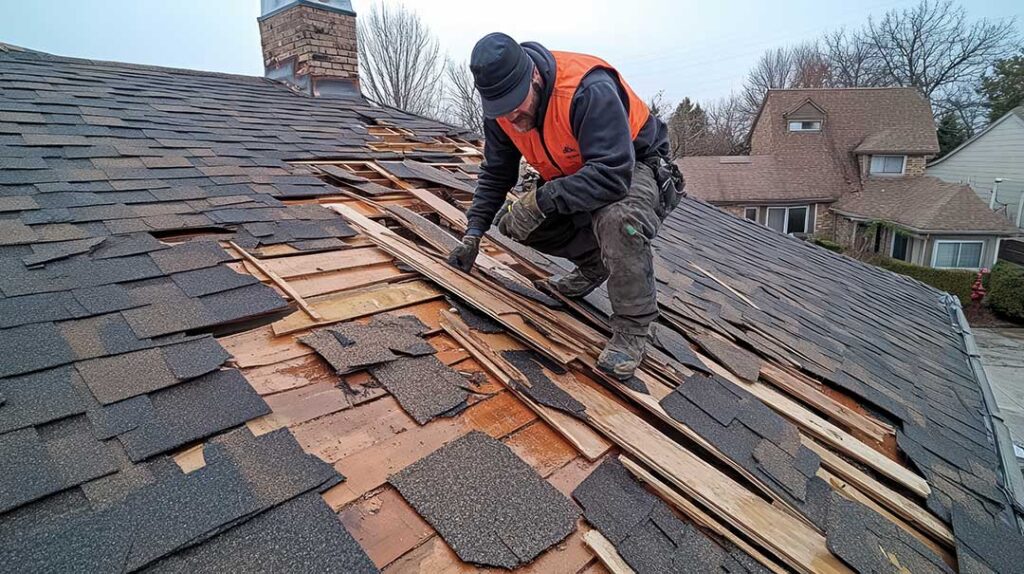
Is do-it-yourself roof work safe in Greene, NY?
Sometimes, but only for limited tasks performed from the ground or from a properly positioned ladder. Roof work becomes significantly more dangerous once a person must stand on the roof, work near an edge, carry materials, or move across sloped or wet surfaces.
A useful rule is this: If the task requires stepping onto the roof, safety equipment and conditions matter as much as the repair itself. A small mistake can result in a serious fall, damaged roofing, or water entering the home.
For many households, safe do-it-yourself roof care means inspection from the ground, clearing a reachable gutter, documenting a problem, or making a minor repair only when the roof is low-slope, dry, stable, and accessible. It does not usually mean climbing onto a steep roof to replace shingles or investigate a leak.
Which roof tasks are usually reasonable for a homeowner?
Low-risk work is generally limited to activities that do not require walking on the roof.
Examples include:
- Looking at shingles, flashing, gutters, and vent pipes from the ground
- Photographing damaged areas from a safe location
- Removing leaves from a gutter while standing on level ground or a properly secured ladder
- Trimming nearby branches from the ground when no electrical lines are involved
- Replacing a missing gutter screen if it can be reached safely
- Checking the attic for daylight, damp insulation, staining, or active dripping
- Applying a temporary container or protective covering inside the attic to limit damage until conditions improve
A ladder can still be hazardous. It should stand on firm, level ground, extend above the roof edge when used for access, and be secured so it cannot slide or shift. The person using it should maintain three points of contact and avoid carrying bulky materials while climbing.
A ladder is not a substitute for a fall-protection system. If the job requires both hands for extended periods, moving sideways along the roof edge, or repeatedly climbing up and down with tools, the risk has increased beyond a simple household task.
What conditions make roof work unsafe?
Weather is one of the most overlooked factors. A roof that seems manageable in dry conditions can become dangerous after a short period of rain, frost, or morning dew.
Do not climb onto a roof when it is:
- Wet, icy, snow-covered, or visibly slick
- Windy enough to affect balance or move loose materials
- Hot enough that shingles or metal surfaces become difficult to touch
- Near active thunderstorms or lightning
- Covered with loose granules, moss, algae, or debris
- Partially damaged, sagging, or soft underfoot
Seasonal conditions in Greene can create additional hazards. Freeze-thaw cycles may loosen shingles, open small gaps around flashing, and leave shaded roof sections icy after other areas appear clear. Snow can conceal weak decking, skylights, roof edges, and uneven surfaces. Heavy snow or ice should not be removed by walking across the roof unless the person has the right equipment and training.
Snow also adds weight to the structure. A roof that has already experienced water damage, deflection, or framing problems should not be treated as a routine do-it-yourself project.
How high is too high for homeowner roof work?
There is no single height at which every roof becomes unsafe, because slope, surface condition, edge protection, access, and the worker’s experience all matter. However, a fall from even a one-story roof can cause broken bones, head injuries, or worse.
Construction safety standards generally treat work six feet or more above a lower level as requiring fall protection for workers. Homeowners are not automatically covered in the same way as employees on a construction site, but the hazard does not change because the work is being done privately.
A person should not rely on:
- A garden hose or rope tied to a chimney
- A ladder resting against gutters
- A harness clipped to an unknown anchor
- A short step ladder placed on a slope
- A second person casually holding the ladder
- A warning that says “be careful”
A personal fall-arrest system must be correctly selected, anchored, fitted, and used. An improperly placed anchor can fail, and a fall-arrest setup may still allow a person to strike the ground, a lower roof, or nearby structures. Training and planning are necessary before such equipment is used.
Can a homeowner replace a few shingles?
Replacing a few shingles may be technically simple, but reaching the damaged area can make the project unsafe. The repair may involve steep slopes, brittle roofing, hidden rot, loose decking, or the need to carry tools while climbing.
A small repair is more reasonable when:
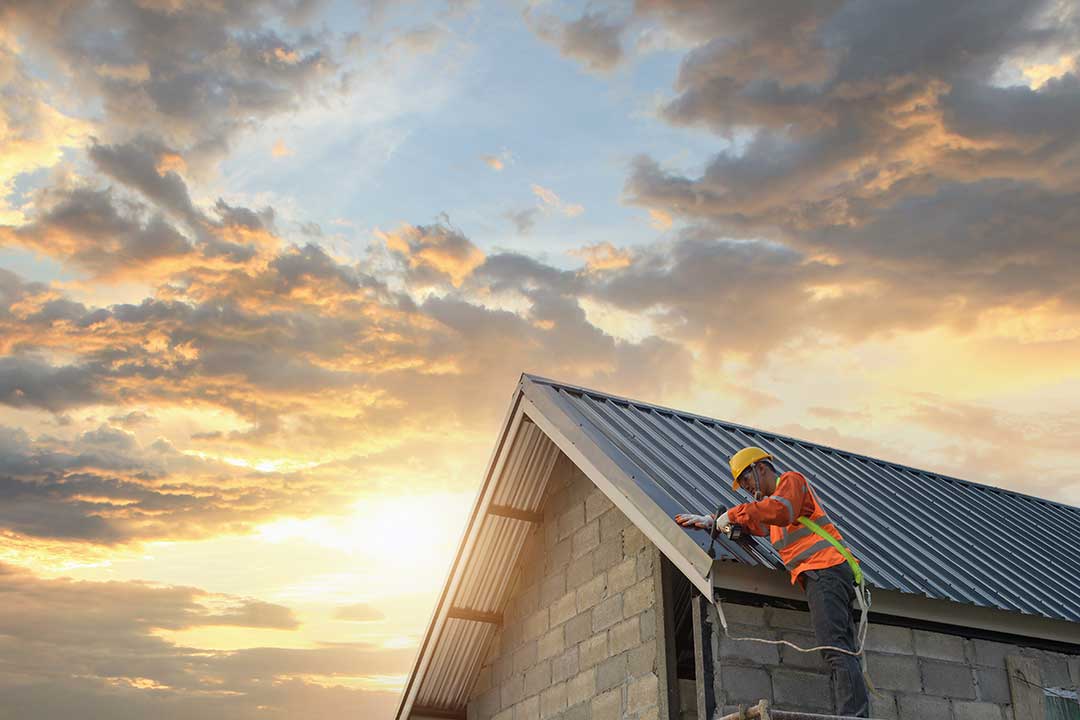
- The damaged area is reachable without walking on a steep roof
- The roof is dry and free of ice, frost, and loose debris
- The decking feels solid and shows no sagging
- The ladder can be secured correctly
- There are no overhead electrical hazards
- The repair can be completed without working near an unprotected edge
If shingles are missing because of wind, it is also worth checking nearby flashing, ridge caps, vents, and underlayment. Replacing one visible shingle may not address the actual path water is taking.
Roof leaks can travel along rafters and sheathing before appearing inside. A ceiling stain does not necessarily identify the exact location of the roof defect.
When should roof work stop immediately?
Stop and move to a safe location if the roof feels soft, shifts underfoot, or produces cracking sounds. Other warning signs include exposed decking, sagging areas, large sections of missing shingles, damaged trusses, active electrical problems, or water entering near light fixtures.
A roof should also be treated as unsuitable for do-it-yourself work when it has:
- A steep pitch that requires specialized footing
- Multiple levels or sharply changing slopes
- A fragile surface such as old slate, brittle cement-based material, or deteriorated roofing
- Skylights or other openings that may be hidden by snow or debris
- Significant storm damage
- Ice dams that require work near the roof edge
- Structural damage or long-term leakage
Fire, wind, and storm damage can create hidden hazards that are not obvious from the yard. Entering the attic may also be unsafe if insulation, wiring, or ceiling materials have been affected by water.
Are permits or code requirements involved?
Some roof repairs may be treated differently from a full replacement or structural alteration. Requirements can depend on the scope of work, whether roof decking or framing is changed, and local enforcement practices.
Before changing structural components, adding roof penetrations, or undertaking extensive replacement work, check the applicable building requirements for the property. Roofing assemblies also need to remain compatible with the home’s design, ventilation, drainage, and snow-load conditions.
Code compliance is not only paperwork. Incorrect installation around chimneys, walls, valleys, vents, and eaves can cause concealed moisture damage that may not appear until months later.
What is the safest decision for a homeowner?
The safest do-it-yourself roof work is usually observation, documentation, and maintenance performed from stable surfaces. If the job requires walking on a steep, wet, icy, damaged, or high roof, the danger is no longer minor.
A homeowner can make a useful assessment without climbing: inspect from the ground, look in the attic, record the location of stains, note recent weather, and identify whether the problem is active. That information helps determine whether the issue is a simple maintenance concern or a condition involving fall, structural, electrical, or water-intrusion hazards.
