
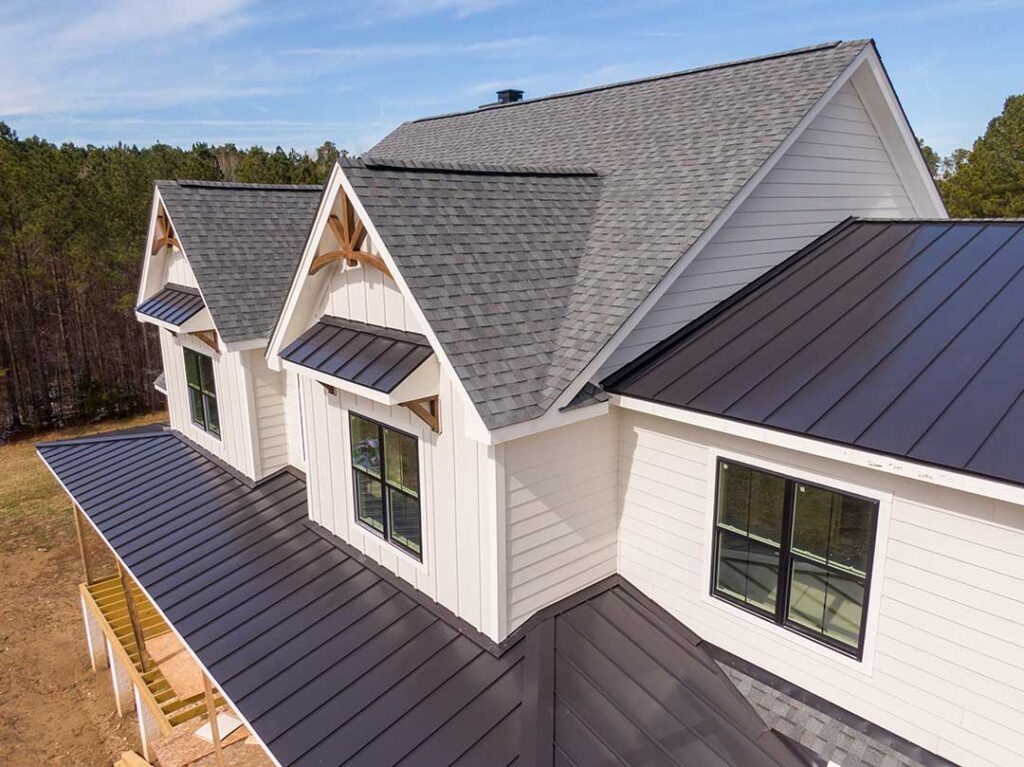
Roof flashing is the thin, shaped material installed around roof edges, joints, openings, and changes in direction to keep water from reaching the building’s interior. It is one of the roof’s less visible components, but it plays a major role in preventing leaks, wood rot, insulation damage, and mold.
What does roof flashing do?
Roof coverings shed most rainfall, but water can still collect or change direction where two surfaces meet. Flashing creates a controlled path for that water, directing it over the roof covering and away from vulnerable seams.
Without properly installed flashing, water may enter through:
- Roof-to-wall intersections
- Chimneys and masonry features
- Plumbing vent pipes
- Skylights and roof windows
- Valleys where two roof slopes meet
- Dormers and other roof projections
- Eaves, rakes, and roof edges
- Areas where a roof changes slope or direction
Flashing is not intended to replace shingles or other roof coverings. Instead, it works beneath, beside, or above those materials to protect the places where a continuous roof surface is not possible.
Where is flashing found on a typical roof?
Different parts of a roof require different flashing details. The name and design may vary depending on the location.
Step flashing is used where a sloped roof meets a vertical wall. Individual pieces are layered with the roofing material so water is directed downward rather than behind the wall covering. This is common around sidewalls, dormers, and additions.
Counterflashing is placed over or into masonry, such as a chimney. It works with the base flashing below it to cover the joint between the chimney and the roof. If counterflashing becomes loose, cracked, or poorly sealed, water can enter even when the chimney itself appears sound.
Valley flashing protects the inside angle where two roof slopes meet. Valleys can carry a large volume of water, especially during heavy rain. Leaves, pine needles, ice, or poorly aligned roofing materials can interfere with drainage in these areas.
Drip edge flashing runs along roof edges. At the eaves, it helps move water into the gutter or away from the fascia. Along rakes, it helps protect the roof edge from wind-driven rain and reduces the chance of water reaching exposed wood.
Pipe flashing seals around plumbing vent pipes. This component usually includes a flexible or molded collar that fits around the pipe and a flange that lies beneath or over the roofing materials. The seal can deteriorate as the roof ages.
Why does flashing matter in Greene?
Greene experiences conditions that repeatedly test roof details: freezing temperatures, snow, spring rain, summer storms, wind, and repeated cycles of thawing and refreezing. These changes can cause roofing materials and flashing components to expand, contract, shift, or lose their seal.
Older homes and houses with multiple roof additions may have especially complicated flashing layouts. A roof that includes dormers, porches, attached garages, chimneys, or several changes in slope has more transition points where water must be managed carefully.
Snow and ice can also expose weaknesses that are not obvious during a dry inspection. Ice may form near eaves when heat escapes into the attic and melts snow higher on the roof. Water can then back up beneath roofing materials. Although flashing cannot solve every ice-related problem, sound flashing and proper roof drainage are important parts of the overall weather barrier.
What are common signs of flashing problems?
A flashing failure does not always produce an immediate ceiling stain. Water may travel along rafters, roof decking, insulation, or wall cavities before becoming visible inside the house.
Possible warning signs include:
- Brown or yellow stains on ceilings or upper walls
- Damp areas near chimneys, skylights, or roof-wall joints
- Peeling paint or wallpaper near the top of a wall
- Soft, swollen, or discolored trim
- Rusted, bent, or lifted metal around roof details
- Cracked sealant at exposed joints
- Missing pieces after strong wind
- Shingles that are loose or unusually raised near valleys and walls
- Drips or damp insulation in the attic after rain
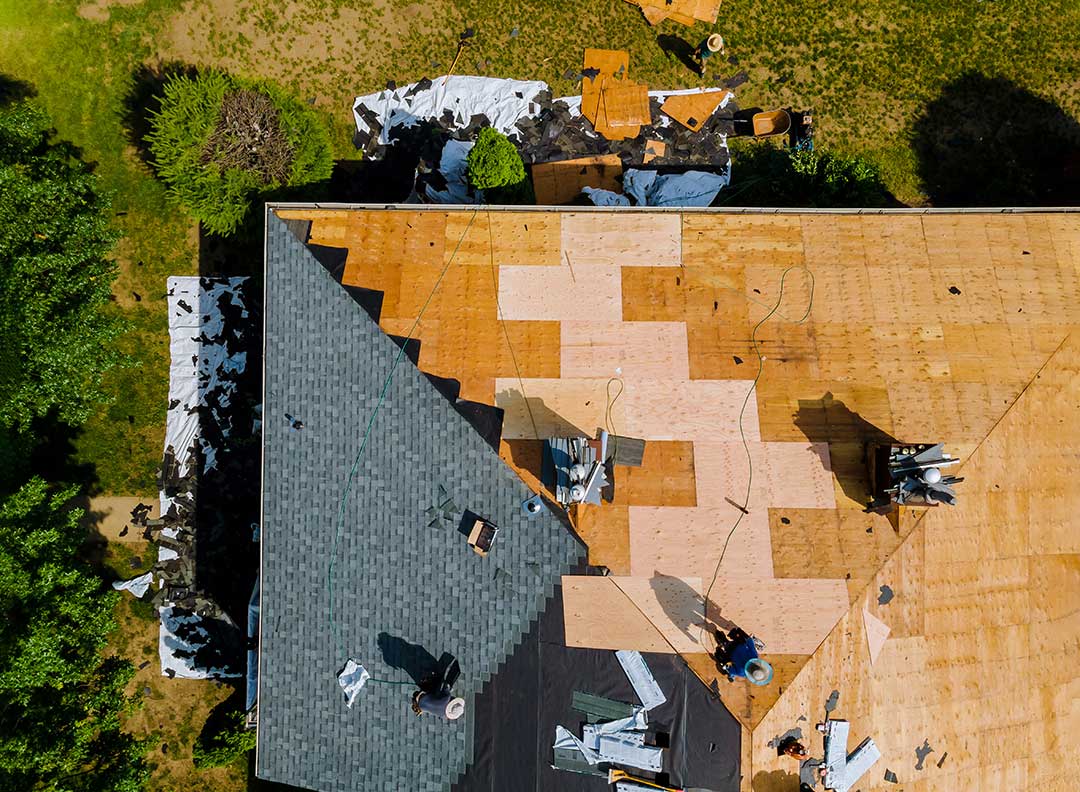
A musty odor or recurring moisture in one area can also point to a flashing or ventilation problem. The location of an interior stain may not match the exact location where water enters, so tracing the path can be difficult.
Does sealant fix damaged flashing?
Sealant can help close a small gap in an appropriate location, but it is not a substitute for correctly installed flashing. Exposed sealant eventually becomes brittle, separates from some surfaces, or cracks as materials move.
Painting over rust, adding roofing cement around a loose piece, or applying more caulk may provide a short-term reduction in water entry, but these methods can hide the underlying problem. If the metal is corroded, improperly lapped, or installed behind the wrong building layer, the durable repair usually involves correcting the flashing arrangement rather than covering it.
Flashing should be integrated with the roof covering and nearby wall materials so that water is shed by overlapping layers. The exact method depends on the roof design, materials, slope, and location of the joint.
What materials are used for roof flashing?
Flashing may be made from aluminum, galvanized steel, stainless steel, copper, or other corrosion-resistant materials. The right choice depends on the surrounding roofing and wall materials, exposure, movement, appearance, and compatibility.
Material compatibility matters. Certain metals can corrode when they remain in contact with incompatible materials or runoff from another metal. Fasteners also need to be suitable for the flashing and the conditions around it.
Thin metal is easier to shape but may dent or distort. Heavier materials can be more durable but require suitable forming and fastening. Flexible membranes and specialty products may be used around complex penetrations, but they still need proper integration with the rest of the roof system.
Can flashing be inspected safely?
Some flashing can be viewed from the ground with binoculars, especially along eaves, rakes, valleys, and roof-wall intersections. From the attic, residents may be able to look for daylight, stained wood, damp insulation, or water trails after precipitation.
Walking on a roof is hazardous, particularly when surfaces are wet, icy, steep, mossy, or covered with debris. Chimneys, skylights, and roof edges also create fall hazards. Inspection or repair that requires climbing should be treated as a safety issue rather than a routine household task.
Interior checks are useful, but dry conditions do not prove that flashing is sound. A leak may occur only during wind-driven rain, melting snow, or a particular direction of runoff.
How long does roof flashing last?
Flashing life depends on its material, exposure, installation quality, roof movement, and nearby maintenance. It may last as long as the roof covering when properly installed, but individual pieces can fail earlier because of corrosion, storm damage, settlement, or repeated repairs.
Gutters should be kept clear so water does not overflow against fascia, walls, or roof edges. Nearby branches should not rub against flashing or deposit heavy debris in valleys. After major wind, fallen branches, or winter ice, a visual check from the ground can help identify obvious displacement.
New York’s residential code requires flashing at roof intersections, changes in roof slope or direction, and around roof openings because these areas are especially vulnerable to moisture entry. Existing homes may reflect older construction practices, so the condition and arrangement of the actual roof matter more than age alone.
Understanding flashing makes roof problems easier to interpret. A leak near a chimney, wall, valley, skylight, or vent is often a water-management problem at a transition point—not simply a matter of a missing shingle.
