
Which tools are actually useful for routine roof maintenance?
For most homeowners in Greene, NY, roof maintenance does not require a large collection of specialized equipment. A small set of reliable tools can help with visual inspections, gutter care, minor surface cleanup, and documentation. The main purpose is to identify changing conditions early—not to perform dangerous repairs from a ladder.
The right tools depend on the type of roof, the height and slope of the building, and whether the work can be completed safely from the ground. Asphalt-shingle roofs are common in residential areas, but metal roofing, low-slope sections, garages, porches, and additions may require different inspection methods.
What should be included in a basic roof inspection kit?
A basic kit should support observation, measurement, safe access, and recordkeeping. Useful items include:
- Binoculars: These allow inspection of shingles, flashing, vents, ridge areas, and chimney edges from the ground. They are especially useful when snow, wet surfaces, or steep slopes make roof access unsafe.
- A bright flashlight or headlamp: Helpful for checking attic spaces, roof penetrations, and areas beneath eaves. A headlamp keeps both hands available.
- A tape measure: Useful for documenting damaged areas, estimating the size of a sagging section, or recording the distance between stains and nearby roof features.
- A camera or phone: Photos taken from the same locations each season make it easier to compare conditions. Images can also show whether a suspected stain is spreading.
- A notepad or digital checklist: Maintenance is easier to track when observations include the date, weather conditions, location, and changes since the previous inspection.
- Work gloves: Gloves protect hands from rough shingle edges, metal flashing, fasteners, and debris. They should not be used as a substitute for careful handling.
- A dust mask or respirator suitable for the task: Attic dust, insulation fibers, mold, and animal debris can irritate the lungs. Poorly ventilated attic spaces require extra caution.
A tool kit should also include a first-aid kit and a charged phone, particularly if attic or ladder access is involved.
What tools help with gutters and roof drainage?
Gutters and downspouts are among the most accessible parts of a roof drainage system. Leaves, seed pods, twigs, and ice-related debris can restrict water flow and cause overflow near fascia boards, siding, windows, and foundations.
For basic gutter cleaning, homeowners may use:
- A stable extension ladder with slip-resistant feet
- A ladder stabilizer or stand-off attachment
- A small plastic scoop
- A bucket secured to the ladder or lowered by rope
- A garden hose with a spray nozzle
- A plumber’s hand snake or flexible cleaning tool for blocked downspouts
- A soft brush for removing packed sediment
Never rest a ladder directly against a gutter. The gutter is not designed to support the combined weight of a person and ladder. The ladder should stand on firm, level ground, remain clear of overhead wires, and be repositioned rather than leaned sideways.
In Greene, seasonal leaf fall, freeze-thaw cycles, and winter precipitation can make roof drainage problems more noticeable. Cleaning is often most useful after major leaf drop and again before periods of freezing weather. If a downspout discharges beside the foundation, a simple extension can help move water farther away from the structure.
What tools are useful for attic inspections?
An attic inspection can reveal roof problems before they are visible from outside. The most useful tools are simple:
- A flashlight or headlamp
- A tape measure
- A moisture meter used according to its instructions
- A small mirror for viewing the underside of difficult roof penetrations
- A thermometer or humidity meter
- Protective clothing, gloves, and eye protection
Look for darkened wood, damp insulation, rusted fasteners, water trails, daylight around roof penetrations, and compressed or displaced insulation. A moisture meter can help identify areas that deserve closer observation, but readings can be affected by the type of material, temperature, salts, and the device’s calibration. It should support visual inspection rather than replace it.
Roof leaks do not always appear directly below the damaged shingle or flashing. Water may travel along rafters, roof decking, insulation, or framing before leaving a visible stain. For that reason, the location of an interior mark should not automatically be treated as the exact location of the exterior defect.
Are roof repair tools safe for homeowners to use?
Some tools are appropriate for ground-level maintenance but become hazardous when used on a roof. Roofing surfaces may be slick from dew, frost, moss, rain, or loose granules. A modest slope can still create a serious fall risk.
Tools that require extra caution include:
- Extension ladders
- Roof harnesses and anchors
- Roofing knives
- Pry bars
- Hammer tackers
- Caulking guns
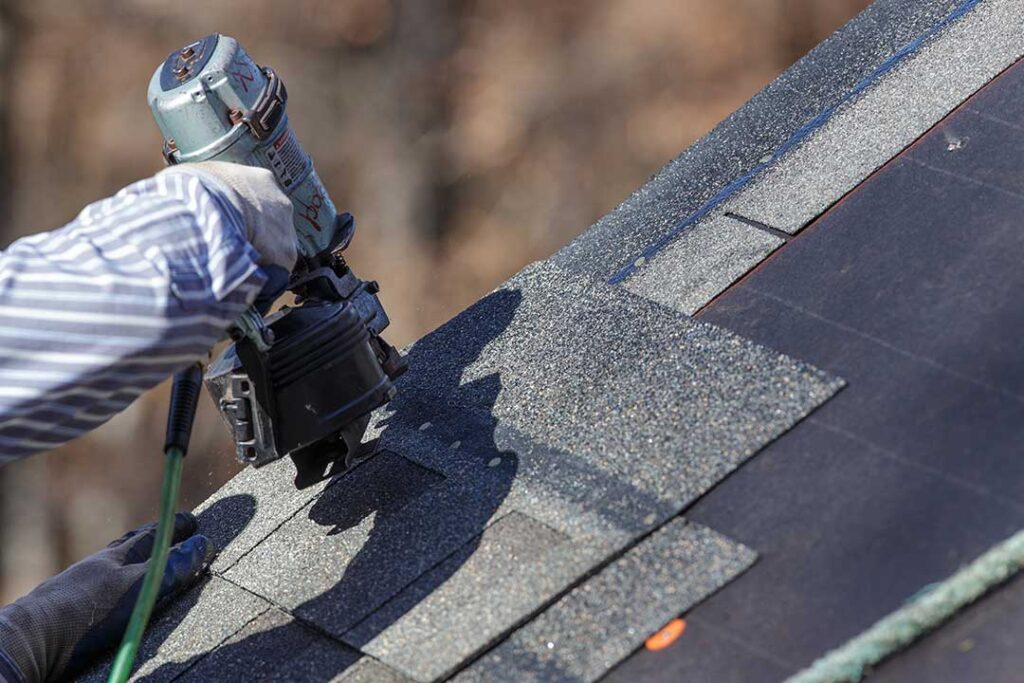
- Nail guns
- Pressure washers
- Snow rakes
A pressure washer is generally a poor choice for asphalt shingles. High-pressure water can remove protective granules, force water beneath roofing materials, and damage flashing or seals. Moss and algae should also not be scraped aggressively because the surface can be torn.
Snow rakes may help remove limited snow from a roof edge or low-slope section, but pulling heavy snow from above can damage shingles, gutters, flashing, or landscaping. Standing beneath falling snow and ice is dangerous.
Harnesses, anchors, and fall-protection equipment must be selected, installed, and used correctly. Improperly positioned equipment can create a false sense of security. Roof access should be avoided when conditions are wet, icy, windy, or otherwise unstable.
Which tools help with minor roof-related maintenance?
Homeowners can often handle tasks that do not require stepping onto the roof. These may include trimming branches that rub against roofing, clearing debris near downspout outlets, replacing a missing gutter strap, or documenting a suspected leak.
Useful ground-level tools include:
- Pruning shears or a pole pruner
- A soft-bristled broom
- A plastic roof rake for reachable debris
- A caulking gun for approved exterior sealants around non-roof surfaces
- Replacement gutter hardware
- A level for checking gutter slope
- A hose for testing downspout flow
Sealant should not be used as a universal fix for missing shingles, open seams, failed flashing, or widespread deterioration. Some roof materials require compatible products, and an incorrect sealant may trap moisture or fail during temperature changes.
Do not nail, drill, or puncture roofing materials simply to secure a loose object. Even small holes can allow water entry and may be difficult to locate later.
What should not be treated as a DIY roof-maintenance task?
Certain conditions call for professional evaluation because the risk or complexity is too high. These include:
- Active leaks during rain
- Sagging roof decking or framing
- Large areas of missing or lifted shingles
- Damage after a fallen tree or severe wind
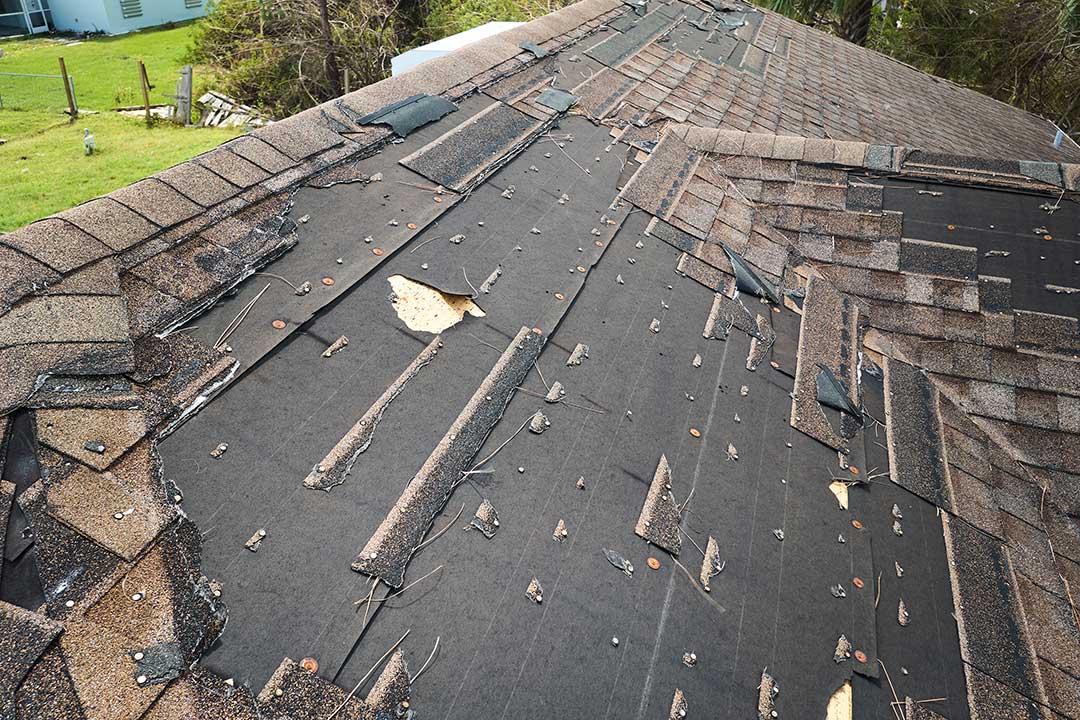
- Exposed underlayment or roof sheathing
- Electrical equipment near wet areas
- Suspected structural weakness
- Significant ice buildup or ice dams
- Mold, animal waste, or extensive attic contamination
- Any situation requiring repeated movement across a steep or slippery roof
The tools themselves are not the main safety issue. Falls, hidden structural damage, electrical hazards, and changing weather conditions create the greatest risks. A homeowner may safely document a problem from the ground without attempting to reach it.
How should roof-maintenance tools be stored?
Tools should be cleaned, dried, and stored where they will not corrode or become damaged. Wet ladders, extension cords, metal tools, and gutter equipment should not be left exposed through winter.
Keep sharp tools covered, inspect ladder feet and locks before use, and replace damaged equipment rather than improvising repairs. Moisture meters and electronic devices should be stored within their recommended temperature range. A dated maintenance checklist, paired with photos from the same viewpoints, is often as valuable as any physical tool.
For local households, a practical maintenance kit is less about owning every roofing tool and more about having safe ways to observe, document, and maintain drainage. Knowing when a task exceeds those limits is part of responsible roof care.
