

Rain on a roof can be calming for some households, but heavy showers may create a surprisingly loud drumming sound indoors. The noise is usually strongest beneath lightweight or poorly insulated roof sections, but several practical changes can reduce it without replacing the entire roof.
Why does rain sound loud on some roofs?
Rain noise travels through the roof covering, underlayment, roof framing, insulation, and ceiling materials before reaching the living space. If those layers are thin, loose, or poorly connected, sound can move indoors more easily.
Metal roofing is often associated with rain noise, but it is not automatically louder than every other roof type. A metal roof installed over solid decking, underlayment, insulation, and a finished ceiling may be relatively quiet. A metal roof installed over open framing or a thin structure can sound much louder.
Other factors that affect indoor noise include:
- The size and shape of the roof surface
- Whether the attic is insulated
- The type of roof decking
- Gaps around attic access panels, vents, and recessed fixtures
- Loose gutters, flashing, or downspouts
- Rain striking nearby siding, skylights, porches, or window trim
- The room’s ceiling height and interior finishes
In Greene, NY, seasonal weather can make this issue more noticeable. Spring rain, summer thunderstorms, and late-season storms may produce different sound levels depending on rainfall intensity, wind direction, and whether leaves or debris are collecting on the roof and in drainage areas.
Can attic insulation reduce the sound of rain?
Yes. Adding or improving attic insulation is often among the most effective ways to reduce roof noise because insulation absorbs some sound before it reaches the ceiling below.
Loose-fill or batt insulation can help, but installation quality matters. Insulation should be evenly distributed and should not block required ventilation channels near soffit vents. Compressed, damp, or missing insulation will not perform as well.
A well-insulated attic can also improve temperature control. That makes this approach useful for more than sound reduction, particularly in homes with cold winters and warm, humid summers.
Before adding insulation, check for:
- Water stains or damp areas
- Mold or musty odors
- Compressed sections
- Uncovered areas around the attic perimeter
- Blocked soffit or ridge ventilation
- Gaps around pipes, wiring, and ceiling penetrations
Moisture problems should be corrected before insulation is added. Covering a leak can hide evidence of damage and reduce the effectiveness of the insulation.
Does roof decking make a difference?
Roof decking provides a solid surface beneath the roof covering and can reduce vibration compared with an assembly that has large unsupported gaps. Plywood or oriented strand board decking, combined with underlayment and insulation, generally creates a more substantial barrier against sound.
If a roof has loose decking, damaged sheathing, or fasteners that have backed out, rain may be accompanied by rattling, tapping, or creaking. Those sounds are different from the steady sound of rainfall and may indicate a maintenance issue.
Signs that roof decking or related components may need attention include:
- A sudden change in roof noise after a storm
- Visible sagging from inside the attic
- Nail pops or ceiling cracks
- Water staining
- Rattling that continues after the rain stops
- Sounds concentrated in one small roof area
Roof work can involve steep surfaces, fragile materials, and hidden electrical or structural hazards. Inspection and repairs should not be attempted during wet, icy, or windy conditions.
Can a ceiling be treated for better sound control?
A ceiling assembly can be improved from below, especially when the attic is difficult to access. Adding a second layer of ceiling board, using sound-dampening materials, or separating finish materials from framing can reduce the transfer of vibration.
These changes are more practical during remodeling than as a quick adjustment. They may also affect ceiling height, lighting, trim, and the location of electrical fixtures.
Interior furnishings can provide a smaller but noticeable improvement. Carpeting, area rugs, upholstered furniture, curtains, and fabric wall treatments absorb reflected sound. Rooms with hardwood, tile, bare walls, and minimal furniture tend to make rainfall sound sharper because sound bounces across hard surfaces.
This does not stop rain from vibrating the roof, but it can reduce the echo that makes the noise seem louder.
What parts of the roof may be mistaken for rain noise?
Sometimes the roof covering is not the main source of the sound. Water moving through gutters and downspouts can create loud dripping, splashing, or rushing noises near bedrooms and exterior walls.
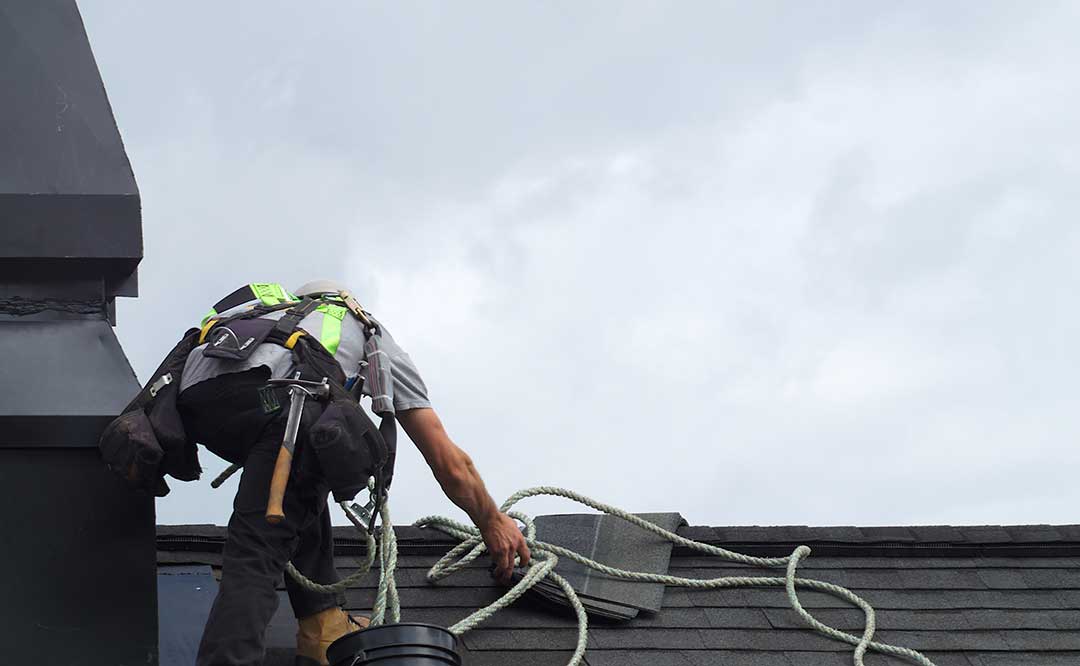
Check whether the sound is strongest:
- Beneath a gutter outlet
- Near a downspout connection
- Where water falls onto a porch roof
- Beside a metal flashing edge
- Around a skylight or roof window
- Near a dormer or roof valley
Loose gutters may vibrate during rainfall. Downspouts can also amplify water movement when they are poorly secured or partially blocked. Cleaning drainage paths and tightening loose connections may reduce noise, but work from ladders or roofs becomes hazardous during wet conditions.
Water striking a lower roof, deck, or window ledge may also be responsible. Redirecting drainage or adding a properly designed splash-control feature can help, provided it does not interfere with drainage or create ice hazards.
Do sound-deadening roof coatings work?
Roof coatings are not a universal solution for rain noise. Some coatings may slightly change the surface characteristics of a roof, but they generally do not provide the same sound reduction as insulation, solid decking, or ceiling improvements.
A coating also cannot correct loose panels, damaged flashing, poor ventilation, or inadequate drainage. Applying a material that is not compatible with the roof covering may shorten its service life or complicate future repairs.
Noise problems should therefore be diagnosed before any coating or surface treatment is considered.
What is the most practical approach for an existing home?
Start by identifying the type of sound and the location where it is loudest. A steady, uniform drumming usually points to rain striking the roof surface. Rattling, ticking, or isolated tapping may indicate a loose component. Gurgling or splashing may come from gutters or downspouts.
For many homes, the practical order is:
- Inspect the attic for moisture, gaps, loose materials, and missing insulation.
- Check gutters, downspouts, flashing, and roof penetrations for movement.
- Improve attic insulation without blocking ventilation.
- Seal appropriate air and sound gaps around the attic access panel and ceiling penetrations.
- Add rugs, curtains, and furnishings in rooms where sound echoes.
- Consider ceiling or roof assembly improvements during planned remodeling.
A roof should not be altered solely for noise reduction if the change could interfere with ventilation, drainage, ice control, fire safety, or the manufacturer’s installation requirements. In older homes, especially those with several roof additions or remodeled attic spaces, the roof and ceiling may not have a simple, continuous assembly. Understanding how the layers were built is essential before adding materials.
When does rain noise suggest a roof problem?
Rain noise by itself does not mean a roof is failing. However, a new or sharply increasing sound, especially when combined with staining, drafts, damp insulation, or visible movement, deserves attention.
After severe weather, look from the ground or from a safe attic location for missing roof materials, displaced flashing, blocked drainage, and water entry. Avoid climbing onto a wet or snow-covered roof. If water is entering near electrical wiring, light fixtures, or ceiling openings, shut off power to the affected area only if it can be done safely and arrange for qualified assistance.
Reducing indoor rain noise is usually a matter of improving the complete roof-and-ceiling assembly rather than relying on one product. Insulation, solid construction, secure drainage components, and thoughtful interior sound control work together to make a home quieter during the storms common to the region.
