
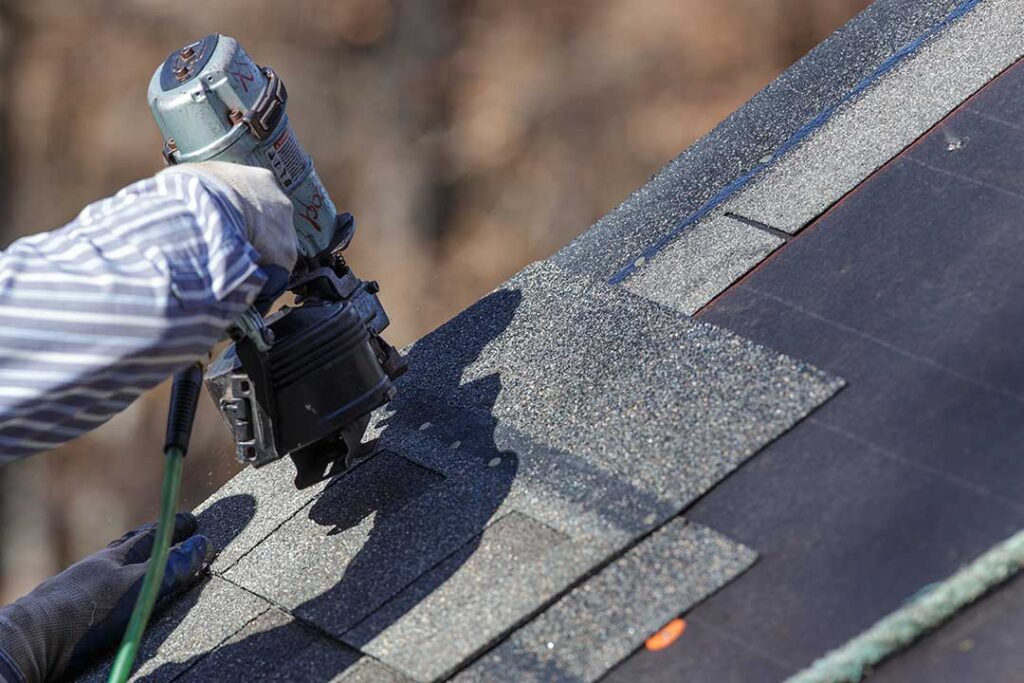
Hanging seasonal lights along a roofline can be done safely when the work is planned around fall hazards, electrical protection, and winter weather. The safest approach is to keep feet on the ground whenever possible, attach lights to approved supports rather than roofing materials, and avoid working on wet, icy, windy, or snow-covered surfaces.
Should lights be attached directly to the roof?
Lights should generally be attached to the roof edge, fascia, soffit, gutters, or other stable trim—not punctured through shingles or roofing membranes. Nails, staples, and screws can create openings that allow water to reach roof decking and interior areas.
Use plastic clips or hooks designed for outdoor decorative lighting. Choose a fastening method that matches the surface:
- Gutter clips can hold lights along the outer lip without crushing the gutter.
- Shingle-tab clips can support lightweight strings without driving hardware into the roof.
- Fascia clips may work where the roof edge has accessible, solid trim.
- Siding or masonry clips can be used on walls instead of placing lights on the roof itself.
Do not place clips where they block drainage, pinch the light cord, or interfere with gutters, downspouts, vents, flashing, or roof drainage paths. Leave enough slack for normal movement, but avoid large loops that can catch wind or collect ice.
Is it safe to climb onto the roof to hang lights?
For most homes, climbing onto the roof is unnecessary and adds more risk than benefit. A ladder can often reach the lower roof edge, while extension poles or light-hanging tools can place clips higher without requiring a person to walk on the roof.
If roof access is unavoidable, the surface must be dry, stable, and free of frost, snow, ice, dew, and loose debris. Asphalt shingles can become slippery, especially after cold overnight temperatures or light moisture. Steep roof pitches, fragile roofing, moss, and roof edges without dependable footing are reasons to avoid the task.
Never place a ladder on snow, ice, loose gravel, a sloped lawn, or an unstable surface. The ladder should rest on firm, level ground, be inspected before use, and be positioned away from overhead electrical lines. Keep three points of contact while climbing, and do not carry a bundle of lights in one hand while ascending.
A second person should steady the ladder and pass up materials. Do not stand on the highest permitted step, overreach sideways, or move a ladder while someone is on it. If the work requires stepping onto a roof edge, leaning beyond the ladder, or carrying bulky decorations, stopping is the safer choice.
What should be checked before installing outdoor lights?
Inspect every light string before it goes outside. Do not use strings with cracked sockets, exposed wire, melted insulation, loose connections, broken plugs, or missing parts. Damaged lights can create shock and fire hazards, particularly when exposed to rain, melting snow, or ice.
Use lights specifically marked for outdoor use. Indoor-only light strings and extension cords are not designed for repeated exposure to moisture and temperature changes. Look for products tested by a recognized safety testing laboratory and follow the manufacturer’s instructions for connecting strings.
Check the electrical load before plugging anything in. Do not exceed the number of connected strings or wattage listed by the manufacturer. Older incandescent strings generally produce more heat and may have stricter connection limits than newer low-wattage designs.
Outdoor decorations should be connected to a ground-fault circuit-interrupter, commonly called a GFCI, because it can shut off power when electricity begins to travel through an unintended path. If an outdoor receptacle repeatedly trips, do not bypass the protection or keep resetting it. The fault may involve damaged equipment, water intrusion, or a circuit problem.
How should extension cords be used?
Use an outdoor-rated extension cord that is long enough to reach the receptacle without being stretched tightly. Do not connect multiple extension cords in a chain or run cords beneath rugs, mats, snow, or standing water.
Keep plug connections elevated and protected from direct runoff, but do not seal them inside airtight containers where moisture can collect. Avoid placing connections in gutters, beside downspouts, or where melting snow will drain across them.
Route cords where they will not become trip hazards or be damaged by doors, vehicle tires, snow shovels, pets, or foot traffic. Never use nails, metal staples, or sharp fasteners to hold an electrical cord in place.
How can lights withstand local winter weather?
In Greene, NY, roofline decorations may face freezing temperatures, snow, ice, strong wind, and repeated freeze-thaw cycles. These conditions can pull on light strings, loosen clips, and add weight to gutters or trim.
Install lights before snow and ice arrive, and choose calm, dry weather for the work. Fasten strings at regular intervals so wind cannot whip them against the siding or roof edge. Do not hang heavy decorations from gutters, which are designed to manage water rather than support substantial loads.
After a storm, inspect the installation from the ground. Look for sagging strings, detached clips, exposed wiring, bent gutters, or decorations resting on the roof surface. Do not climb onto an icy roof to make adjustments. Wait for safe conditions or use a ground-based tool.
Icicles and roof-edge ice can also fall unexpectedly. Keep people away from areas below large icicles, sagging decorations, or snow sliding from a roof. Light strings should never be installed where they could be buried by falling snow or struck by sliding ice.
Should roofline lights stay on overnight?
Turn off decorative lights before going to bed or leaving the home. A timer or listed outdoor control can reduce the chance that lights remain on during unattended hours, but the equipment still needs to be rated for outdoor use and protected from moisture.
Remove temporary lights after the season rather than leaving them exposed year-round. Extended exposure to sunlight, water, ice, and temperature changes can deteriorate insulation and clips. Take down decorations carefully, without pulling on the cord, and store them loosely in a dry location to prevent kinks and damage.
When should the project be stopped?
Do not continue if conditions change during installation. Stop when the ladder becomes wet or unstable, wind makes the light strings difficult to control, visibility drops, or snow and ice begin to form.
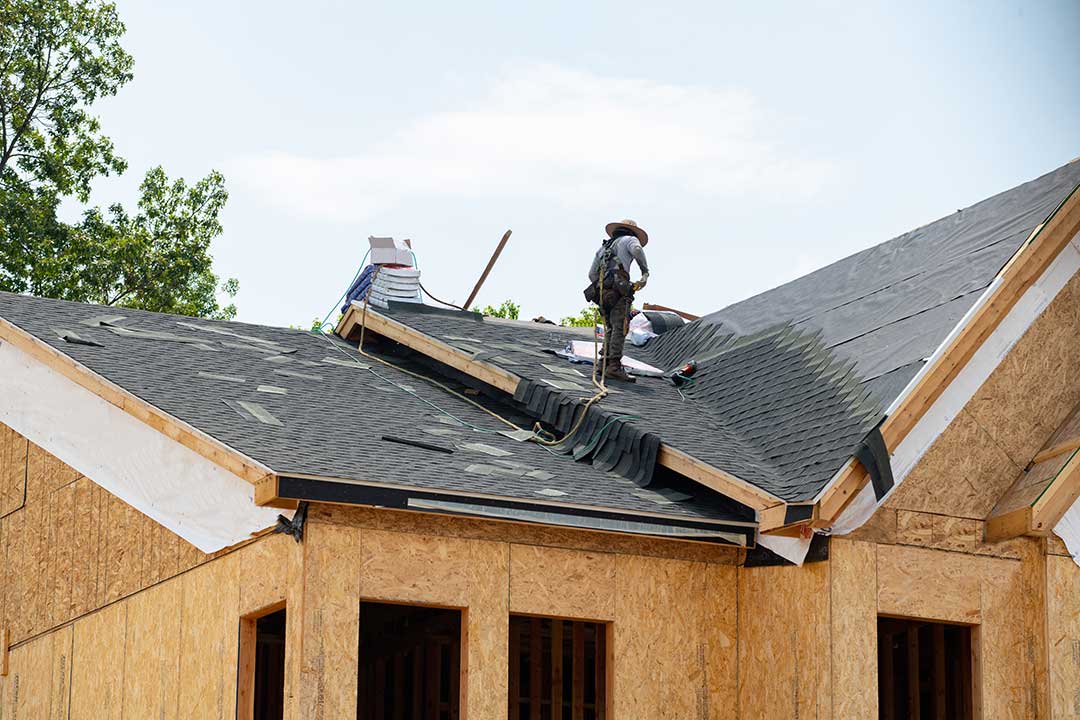
Extra caution is needed around overhead power lines, damaged roofing, steep slopes, skylights, chimneys, loose gutters, and unfamiliar electrical systems. A fall from even a one-story roof can cause serious injury. If safe access, fall protection, or electrical troubleshooting is beyond the available equipment and experience, the task should not be attempted as a do-it-yourself project.
A well-installed display does not require walking across the roof, drilling into roofing materials, overloading circuits, or accepting icy conditions. The safest installation is one that protects the roof, keeps electrical connections dry, and allows the lights to be removed without damage.
