
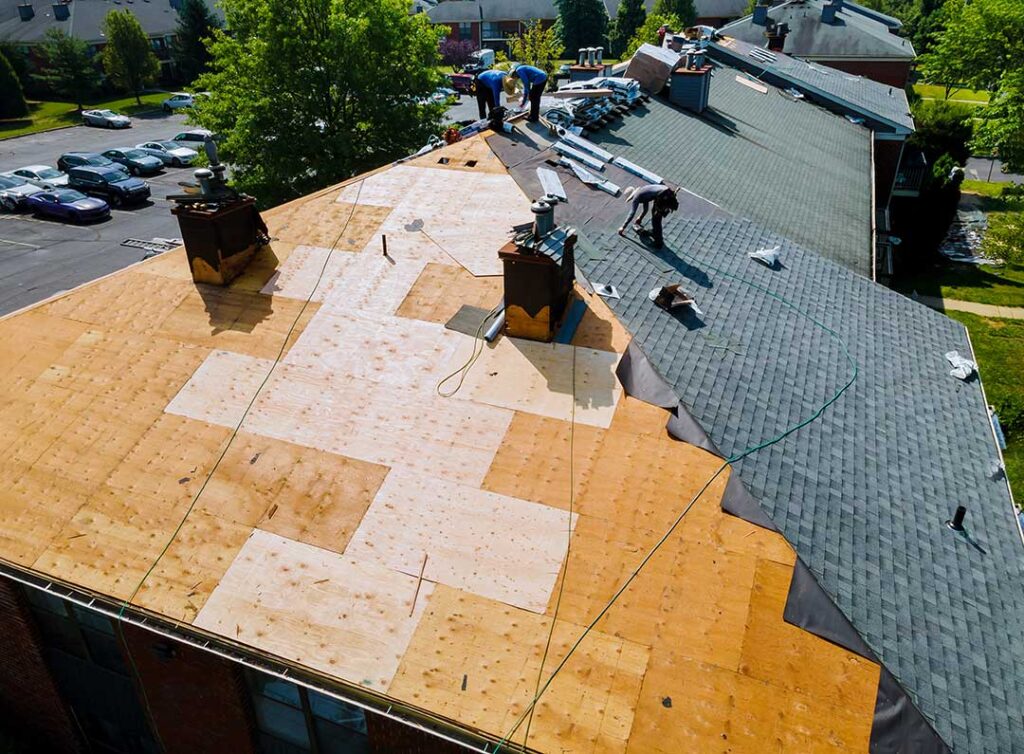
Rain tapping on a roof can be relaxing at first, but heavy rainfall may become loud enough to interrupt sleep, conversations, or work. The noise is usually caused by rain striking a hard roof surface and transferring vibration through the roof assembly, attic, ceiling, and interior walls.
For households in Greene, NY, the problem may be most noticeable during spring storms, summer downpours, and periods of changing weather when roofs, gutters, and attic spaces are exposed to repeated moisture and temperature shifts. Reducing the sound usually requires looking at the entire roof-and-ceiling system rather than focusing only on the outside roofing material.
Why does rain sound so loud on some roofs?
Rain noise is affected by the roof covering, the space beneath it, and the way the roof is connected to the rest of the house. A thin roof surface with little insulation or backing tends to transmit more sound indoors than a roof assembly with multiple dense layers.
Several conditions can increase the noise:
- Metal roofing can produce a sharper, more noticeable sound when installed over open framing or a lightly insulated attic.
- Low-slope sections may collect and channel water in ways that create concentrated tapping or drumming.
- Loose gutters, downspouts, flashing, or vent covers can rattle during rainfall.
- An unfinished attic may allow sound to pass directly through the ceiling below.
- Rain striking skylights, roof windows, or nearby metal surfaces may sound louder than rain hitting the main roof.
- Hard interior surfaces can reflect sound, making a room seem noisier than it actually is.
The roof covering itself is only one part of the explanation. Two homes with similar roofing materials can have very different indoor sound levels because of differences in insulation, ceiling construction, attic ventilation, and roof framing.
Does attic insulation reduce rain noise?
Yes. Adding or improving attic insulation is often one of the most effective ways to reduce rain noise, especially when the ceiling below the attic is not well insulated.
Insulation helps by absorbing some airborne sound and reducing the amount of vibration that reaches the ceiling surface. Fiberglass, mineral wool, and other properly installed insulation materials can contribute to sound reduction, although their primary purpose is usually temperature control.
The result depends on how the insulation is installed. Gaps around recessed lights, attic access panels, plumbing penetrations, and electrical fixtures can allow sound to pass through. Compressing insulation, blocking required ventilation paths, or covering heat-producing fixtures can create safety and moisture problems.
In a vented attic, insulation generally belongs at the attic floor rather than directly against the underside of the roof deck. The ventilation path from soffit areas toward ridge or other approved exhaust vents should remain open. Blocking that airflow can contribute to condensation and roof deterioration.
Can a finished ceiling make a roof quieter?
A finished ceiling can reduce the amount of rain noise entering a room, particularly when it includes several layers and well-sealed joints. Drywall, resilient channels, and dense insulation can help limit sound transmission, but changes to a ceiling should account for moisture, fire safety, lighting, and ventilation requirements.
A simple improvement may be sealing gaps around an attic hatch or replacing a lightweight, poorly fitting access panel. Weatherstripping around the hatch can reduce both air leakage and sound leakage. A heavier hatch cover with insulation attached to the upper side may also help, provided it remains safe to operate and does not interfere with attic access.
If the ceiling has water stains, sagging, cracking, or signs of movement, noise control should not be the first priority. Those conditions may indicate moisture intrusion or a structural concern that needs attention before adding materials.
What can be done without replacing the roof?
Several smaller improvements may reduce rattling, dripping, or vibration without changing the main roof covering.
Secure loose exterior components
Gutters, downspouts, metal edging, pipe collars, vent caps, and flashing can make more noise than the roof itself when they are loose. During rain or wind, these pieces may vibrate against the roof or siding.
A visual inspection from the ground can reveal:
- Sagging gutter sections
- Downspouts pulling away from the wall
- Missing or raised fasteners
- Bent metal flashing
- Loose vent covers
- Debris trapped beneath roof-edge components
Roof surfaces should not be walked on casually, especially when wet, icy, steep, or covered with moss. A ladder also presents fall hazards and should not be used without proper setup.
Inspect the attic after rainfall
A safe view from the attic can sometimes identify the source of a repetitive drip or tapping sound. Look for damp insulation, darkened wood, water marks, or daylight around penetrations. Not every wet spot appears directly below the entry point, because water can travel along roof decking or framing.
Rain noise by itself does not prove that a roof is leaking. However, noise combined with staining, musty odors, damp insulation, or peeling interior finishes deserves prompt investigation.
Reduce noise from attic access points
Attic hatches are often thinner and less insulated than the surrounding ceiling. Adding appropriate weatherstripping and insulation can make a noticeable difference in rooms below. The hatch must still close securely and must not be sealed permanently if attic access is needed for inspection or maintenance.
Is metal roofing always noisier?
No. Metal roofing may sound louder during rain when it is installed over open framing with little insulation, but a properly designed roof assembly can be relatively quiet. Solid roof decking, insulation, underlayment, and a finished ceiling can all reduce sound transmission.
The same principle applies to other roofing materials. Asphalt shingles, composite products, and membrane roofs are not automatically silent. Sound can still travel through roof decking, framing, skylights, gutters, and poorly insulated ceilings.

A roof replacement made solely to reduce rain noise may not produce the expected result if the real source is an open attic, a loose gutter, or a vibrating vent cover. Identifying the path of the sound first is more reliable than assuming the roof covering is responsible.
Do underlayments help with rain noise?
Roof underlayments can provide some sound reduction, but they are not usually a complete acoustic solution. Their main functions involve moisture protection and helping protect the roof deck during installation and weather exposure.
Some heavier or specialized underlayments may dampen vibration more than very light materials. Even so, the amount of noise heard indoors is strongly influenced by the roof deck, attic insulation, ceiling layers, and interior room construction.
Underlayment should never be added in a way that blocks drainage, traps moisture, interferes with ventilation, or conflicts with applicable installation requirements. Roof systems in a cold, snowy climate must be designed to manage both rain and seasonal moisture conditions.
Could gutters be causing the sound?
Yes. A drip falling into a metal gutter can create a repetitive, amplified sound, especially near a bedroom or living area. Water may also strike a gutter elbow, downspout connection, splash block, or lower roof edge.
Possible ways to reduce this type of noise include:
- Securing loose gutter sections and brackets
- Correcting poor slope or standing water
- Cleaning blockages that cause overflow
- Adding a suitable splash-control detail at the bottom of a downspout
- Checking whether water is dropping from an upper roof onto a lower metal surface
Gutter adjustments should not redirect water toward foundations, walkways, neighboring property, or areas where winter icing could create a hazard.
When does rain noise suggest a roofing problem?
Rain noise alone is usually a comfort issue, not proof of damage. It becomes more concerning when accompanied by signs such as:
- Water stains on ceilings or walls
- Damp attic insulation
- Peeling paint or bubbling drywall
- Rotting or soft roof decking
- Persistent dripping after rainfall ends
- Loose exterior metal or exposed fasteners
- A new change in sound after severe wind or hail
In Greene, NY, freeze-thaw cycles and heavy seasonal precipitation can place repeated stress on flashing, sealants, gutters, and roof edges. Any suspected leak should be addressed before adding insulation or interior sound-control materials, because covering damp areas can conceal damage and encourage mold growth.
The most practical approach is to trace the sound: determine whether it comes from the roof surface, a gutter, a vent, an attic opening, or the ceiling itself. Once that path is understood, targeted repairs and properly installed insulation can often make rainy nights considerably quieter without unnecessary changes to the entire roof.
