
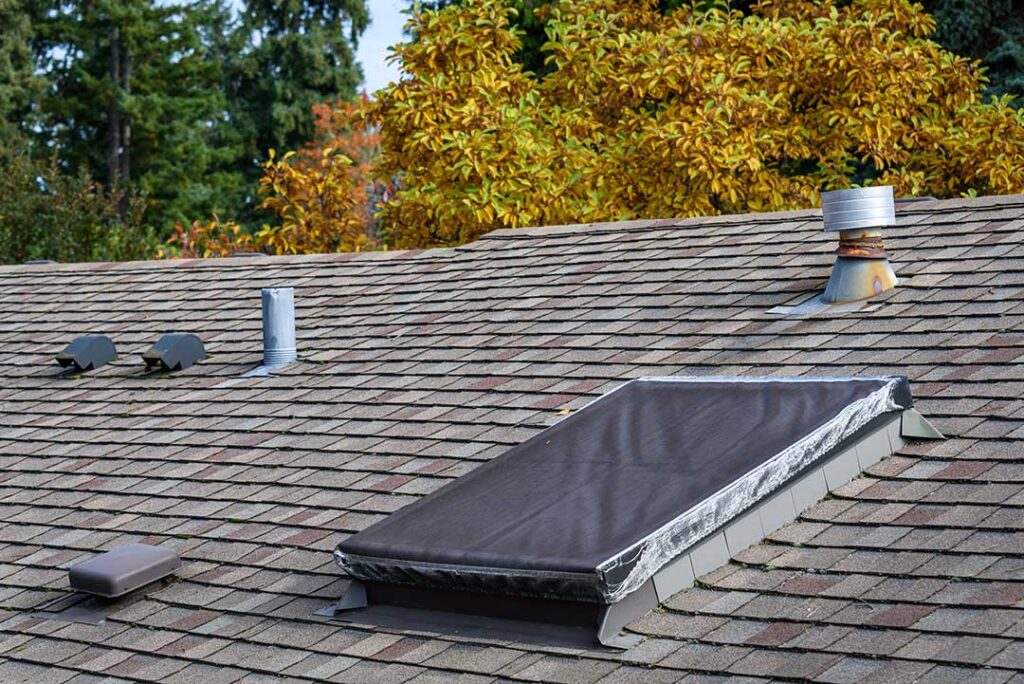
Roof problems do not stop during a pandemic, severe storm, power outage, or other community emergency. A small leak can quickly damage ceilings, insulation, wiring, and framing, especially during the wet and freeze-thaw conditions common in the region.
The safest approach is to separate urgent protection from nonessential work. Stop active water entry, reduce health risks, document the condition, and delay work that can safely wait until conditions are more stable.
Which roof problems need immediate attention?
Active leaks, structural damage, and exposed openings generally require prompt action. Cosmetic issues or minor wear can often be monitored temporarily.
Treat the problem as urgent if:
- Water is entering living areas, electrical fixtures, or mechanical spaces.
- A tree limb, wind event, or falling debris has punctured the roof.
- Shingles, flashing, or roof sections are missing.
- The roof is visibly sagging.
- Water is pooling in an attic or near ceiling framing.
- Ice, snow, or debris is creating a risk of collapse or falling objects.
- A temporary covering has shifted and no longer keeps water out.
Move people away from affected areas. Place containers under drips, but do not stand beneath a sagging ceiling. If water is near electrical equipment, avoid touching switches, outlets, or fixtures and follow appropriate emergency safety procedures.
A leak that appears small from inside may be larger above the ceiling. Water can travel along rafters, insulation, and wiring before it becomes visible.
What should homeowners do before anyone arrives?
The first priority is to limit damage without climbing onto the roof. Roof surfaces can be especially dangerous during rain, wind, snow, ice, or low temperatures.
From the ground, look for missing materials, loose sections, or obvious openings. Take photographs from a safe location and write down:
- When the damage was first noticed
- Whether weather or falling debris caused it
- Which rooms are affected
- Whether water is still entering
- Any visible ceiling, wall, insulation, or electrical damage
Inside the home, move furniture and household items away from the leak. Use plastic sheeting or containers only where doing so can be done safely. Do not cut into a bulging ceiling unless directed by emergency personnel or a qualified building specialist; hidden water and electrical hazards may be present.
Avoid walking on the roof to place a tarp. Temporary coverings installed from the ground are rarely secure enough for serious damage and may create additional hazards in windy conditions.
Can roof repairs continue during COVID-19 or another health emergency?
Many roof repairs can be performed with limited indoor contact, but the work should be organized around current public-health conditions and the health needs of the household.
Roofing is primarily exterior work, so a repair may be possible while residents remain indoors. However, roofers may still need access to attics, upper floors, utility areas, or rooms below the leak. A clear plan should be established before anyone enters the property.
Useful precautions include:
- Share information about illness, recent exposure, or medically vulnerable household members before work begins.
- Use phone or electronic communication instead of in-person discussions when practical.
- Keep indoor doors closed and limit access to the work area.
- Improve ventilation when weather and safety conditions permit.
- Maintain distance between residents and workers.
- Use well-fitting masks during unavoidable indoor interaction, particularly when respiratory illness is circulating.
- Avoid handshakes and shared food or drinks.
- Clean frequently touched surfaces after indoor work.
- Ask that anyone who is sick postpone nonemergency work.
Current public-health guidance generally emphasizes staying away from others while sick and taking added precautions after returning to normal activities. Those precautions may include cleaner indoor air, masking, improved hygiene, distancing, and testing around people at higher risk of severe illness.
Emergency roof protection may still be necessary when someone in the home is ill. In that situation, explain the circumstances before arrival so the work can be planned with as little indoor contact as possible.
What if a household member has COVID-19 symptoms?
If a repair is not urgent, postponing indoor access is usually the safer choice. Active symptoms can include fever, chills, fatigue, cough, runny nose, and headache, although symptoms vary.
For an urgent leak, keep the sick person separated from the work area. Place one household member in charge of communication, provide clear instructions from a distance, and keep windows open when conditions allow. Workers should not enter occupied rooms unnecessarily.
Residents with trouble breathing, chest pain, confusion, severe weakness, or other emergency warning signs should seek immediate medical care rather than focusing on the roof problem first.
How should roof work be handled during severe weather or supply disruptions?
A crisis may affect more than health. Storms, transportation interruptions, utility outages, and material shortages can delay permanent repairs.
A temporary repair may be appropriate if the roof can be made weather-resistant without creating danger. Temporary measures should be inspected after strong wind, heavy rain, or snow because coverings can loosen and allow water to enter again.
During Greene winters, freeze-thaw cycles can enlarge small openings. Water may enter beneath damaged shingles, freeze overnight, and widen the affected area. Snow and ice can also conceal weak surfaces and make roof access unsafe.
If permanent materials are unavailable, document the temporary condition and monitor ceilings, attic spaces, and insulation for new moisture. Do not seal wet insulation or close up damp framing before the area has had a chance to dry; trapped moisture can contribute to mold and wood deterioration.
Should nonessential roof repairs be delayed?
Repairs that do not affect weather protection can often wait. Examples include isolated discoloration, worn sealant with no active leak, minor cosmetic damage, or planned upgrades that are not needed for immediate safety.
Work should not be delayed when postponement could cause:
- Increasing water damage
- Damage to structural framing
- Mold growth from persistent moisture
- Loss of insulation performance
- Damage to electrical systems
- Larger openings caused by wind, ice, or repeated freezing
A useful distinction is whether the roof is still protecting the building. If it is, monitoring and documentation may be reasonable. If it is not, temporary protection becomes more important.
What records should be kept?
Keep photographs, written notes, repair communications, receipts for emergency materials, and records of dates when the damage was observed or temporarily protected.
Insurance policies differ in how they address storm damage, maintenance issues, temporary repairs, and access restrictions. Avoid throwing away damaged roofing materials before documenting them unless they pose an immediate safety hazard. Keep receipts for reasonable emergency measures, and read the policy’s requirements for reporting damage.
A crisis can make normal scheduling and communication difficult, but clear records help explain what happened, what was done to limit further damage, and which work remains unfinished.
How can households prepare before the next emergency?
A basic roof emergency plan can reduce confusion. Know where to find flashlights, plastic sheeting, buckets, towels, and basic protective equipment. Keep tree limbs trimmed away from the roof where permitted and safe, and inspect attic areas periodically for staining, damp insulation, daylight, or musty odors.
Before winter, check that gutters and drainage paths are not blocked. After major wind or snow, inspect the roof from the ground rather than climbing onto it.
The goal during any crisis is not to complete every roofing project immediately. It is to prevent avoidable injury, stop active water intrusion, protect vulnerable household members, and preserve enough information to make sound repair decisions when conditions improve.
