
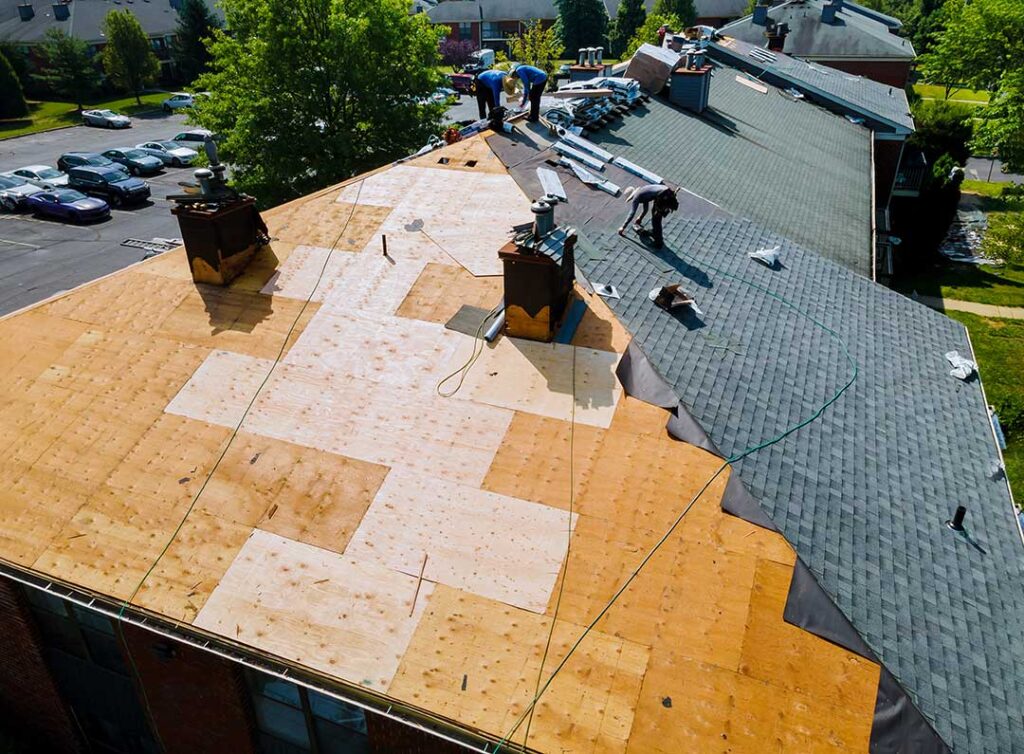
Replacing a few damaged shingles sounds simple, but matching them closely can be difficult. Asphalt shingles change color over time, product lines are discontinued, and roof sections can weather differently depending on their exposure to sunlight, wind, snow, and moisture.
For homeowners in Greene, NY, the goal is usually not just to cover a missing spot. A good match should protect the roof, blend reasonably with the existing surface, and avoid creating a patch that stands out more than necessary.
Can replacement shingles be matched exactly?
An exact match is possible only when the replacement shingle has the same manufacturer, product line, color, profile, and installation pattern as the existing shingle—and even then, weathering may make the new material look different.
The most useful information is found on:
- Leftover bundles stored in the garage, attic, or shed
- Roofing receipts or installation records
- Product labels attached to unused shingles
- Documents from a previous roof replacement
- The underside or back of an intact shingle, if it can be removed safely
A shingle’s color name alone is usually not enough. Two shingles may both be described as gray, brown, or weathered wood but have different blends, thicknesses, shadow lines, and granule patterns.
What information should be identified before buying shingles?
Before searching for a replacement, identify the basic characteristics of the existing roof. The most important details include:
- Shingle type: Most homes use asphalt shingles, but some roofs use wood, composite, metal, slate, or other materials.
- Profile: Determine whether the roof has traditional three-tab shingles or thicker architectural shingles.
- Color blend: Look for the overall color as well as the distribution of light, dark, warm, and cool tones.
- Exposure: This is the visible portion of each shingle between horizontal courses.
- Dimensions: Shingle length, width, and tab layout can vary.
- Age: A roof installed many years ago may use a product that is no longer manufactured.
- Installation pattern: Notice whether the shingles are aligned in regular rows or installed with a staggered pattern.
Photographs can help with identification, especially if they show the entire roof area and a close-up of several shingles. A close-up taken in indirect daylight is generally more useful than one taken in strong sunlight, which can distort the appearance of color.
Why do new shingles look different from old ones?
Even the correct product can appear noticeably different when placed next to older shingles. Sunlight gradually fades some pigments, while airborne dirt, algae growth, pollen, and weather exposure can change the surface appearance.
Roof sections may weather unevenly. A south-facing slope may fade faster than a shaded slope. Areas beneath trees may collect more organic debris, while sections near roof edges may experience more wind-driven moisture. Snow, ice, and repeated freeze-thaw cycles can also affect the surface over time.
A new shingle may look darker, brighter, or more sharply defined than surrounding material. In many cases, the difference becomes less noticeable after the replacement has been exposed to normal weather, but it should not be assumed that aging will produce a perfect blend.
Is it better to match by color or by shingle design?
The shingle design and profile should be matched before color. A close color with the wrong thickness or shape can create an obvious raised or recessed patch. Differences in shadow lines may be visible from the ground even when the color seems similar.
A practical order of priority is:
1. Match the material type.
2. Match the profile and thickness.
3. Match the size and exposure.
4. Match the color blend.
5. Match the installation pattern.
Architectural shingles are especially difficult to match with three-tab shingles because they have a more dimensional surface. Installing a flat three-tab shingle into a field of architectural shingles can create a visible low spot and may not fit the surrounding layout properly.
What if the original shingle is discontinued?
Discontinued shingles are common on older homes. In that situation, the closest available match should be selected based on profile, dimensions, color family, and texture rather than color alone.
There are several possible approaches:
- Search stored materials for unused shingles from the original installation.
- Compare samples outdoors under overcast and direct-light conditions.
- Check whether an older product has a current successor with a similar profile.
- Use shingles salvaged from a less visible roof area, if removal can be done without causing additional damage.
- Replace a larger, naturally defined section when a single-shingle patch would be too noticeable.
A larger repair may blend better than a tiny patch, but it also creates more work and may disturb surrounding shingles. The decision depends on the location, roof condition, and extent of the damage.
Where should replacement shingles be compared?
Samples should be compared on the roof itself whenever possible. A shingle viewed on a store shelf, in a photograph, or under indoor lighting may look different once installed beside weathered material.
Compare samples:
- In daylight rather than under artificial lighting
- From ground level and from a short distance
- Near the damaged area
- On more than one roof slope if the roof has different exposures
- With the sample held at the same angle as the existing shingles
Color can change substantially when shingles are wet, dusty, or viewed in shadow. A sample that appears suitable during a rainy afternoon may look noticeably different after drying in bright summer sun.
Can a damaged shingle be replaced without disturbing nearby shingles?
Often, a single shingle can be replaced, but the work may involve loosening the adhesive strips and removing roofing nails that overlap surrounding shingles. Older shingles can become brittle, particularly after years of sunlight and seasonal temperature changes.
In Greene, winter cold can make asphalt shingles less flexible, while hot summer conditions can make adhesive strips stick firmly. Attempting a repair in unsuitable weather may cause cracking, torn tabs, or lifted neighboring shingles.
Roof work also becomes hazardous when surfaces are wet, icy, steep, or covered with loose granules. If the repair requires walking on the roof, working near an edge, or disturbing multiple courses, safety becomes a central concern rather than a minor consideration.
Does a matching shingle solve the entire repair?
No. A matching shingle covers the visible surface, but the underlying cause of the damage must also be considered.
A missing or torn shingle may result from:
- Wind uplift
- A fallen branch
- Improper fastening
- Deteriorated flashing
- Ice or snow movement
- Worn-out sealant
- Aging roof sheathing or underlayment
- Repeated water exposure
The replacement should be checked along with nearby flashing, valleys, roof penetrations, ridge areas, and the condition of adjacent shingles. If several shingles are cracked or losing granules, replacing only the most visible one may postpone rather than solve the larger problem.
When is spot matching no longer practical?
Spot matching becomes less practical when the roof has widespread wear, multiple missing shingles, brittle tabs, or visible leaks in more than one location. It can also be difficult when the roof has several additions or slopes built at different times.
A small repair is generally easier to blend when:
- The surrounding shingles are still flexible
- The damage is limited to a small area
- Spare shingles are available
- The original product is still identifiable
- The roof has relatively consistent color and weathering
If the roof is near the end of its serviceable life, a patch may still be useful for temporary protection, but matching appearance becomes less meaningful than evaluating the condition of the entire roof system.
