
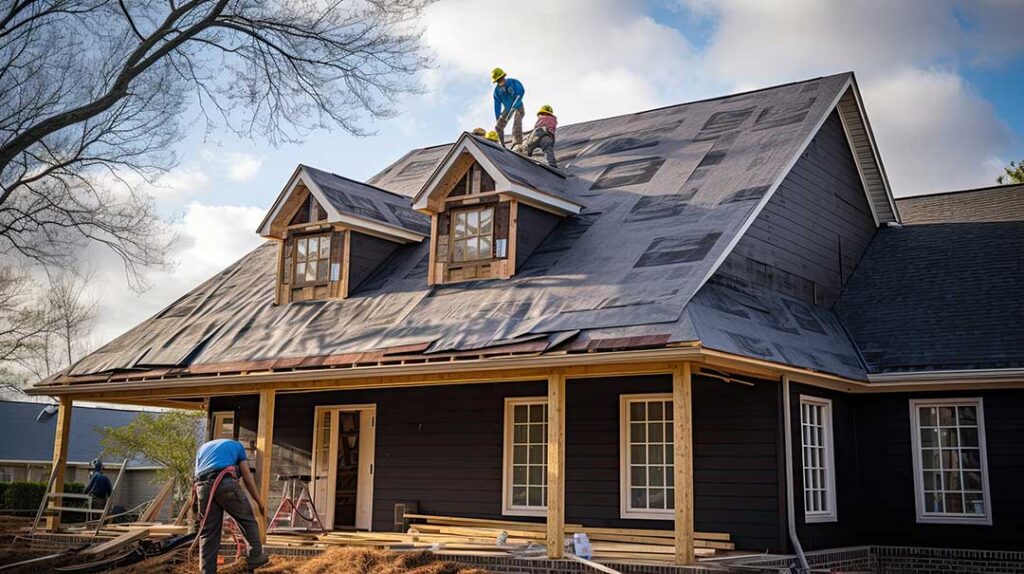
Why roof protection should be part of every renovation plan
Roof damage during a home renovation often happens because the roof is treated as background rather than as an active part of the work area. Open roof sections, dropped tools, loose materials, temporary penetrations, and blocked drainage can allow water into the attic, walls, insulation, and finished rooms.
In Greene, NY, renovation planning also has to account for changing weather. Rain, snow, wind, freeze-thaw cycles, and wet autumn conditions can quickly expose weaknesses in temporary coverings. A roof that appears protected from the ground may still have gaps, loose edges, or water channels that fail during the next storm.
Roof protection should be planned before materials are delivered or demolition begins.
Which renovation activities create the greatest roofing risks?
Projects that disturb the roof directly present the highest risk, but work below the roof can also cause damage. Common examples include:
- Adding or enlarging a dormer
- Building an addition that connects to the existing roof
- Replacing siding near roof edges
- Installing skylights, vents, solar equipment, or satellite equipment
- Removing chimneys, walls, or framing connected to the roof
- Using ladders, scaffolding, lifts, or hoists near shingles
- Storing lumber, flooring, tools, or debris on the roof
- Replacing attic insulation or ventilation components
- Opening ceilings beneath a roof area that may already have a leak
Even routine exterior work can loosen shingles, bend flashing, crush gutters, or puncture underlayment. Foot traffic is especially hard on older asphalt shingles, brittle ridge caps, slate, and low-slope roof surfaces.
Before work begins, identify the roof sections that will be walked on, used for access, covered temporarily, or exposed by demolition.
How should an exposed roof be covered during construction?
A temporary covering must shed water, resist wind, and avoid trapping moisture against the roof deck. A loose sheet thrown over an opening is not a reliable weather barrier.
For a small, short-term opening, protection may include a properly secured reinforced tarp or temporary roofing membrane designed for construction use. The covering should extend beyond the opening, direct water downslope, and be fastened in a way that does not create new leak points. Wind can lift an unsecured tarp and allow water underneath, while excessive fastening can damage the deck or framing.
Larger or longer-lasting openings require a more deliberate temporary roof system. The protection may include:
- A framed temporary cover with adequate slope
- Water-resistant sheathing
- Self-adhering or mechanically fastened underlayment
- Properly lapped seams and sealed transitions
- Flashing where the temporary work meets the existing roof
- Protected edges that cannot catch wind
Do not rely on plastic sheeting placed directly over exposed insulation or unfinished framing. It may collect water, sag into the opening, tear against sharp edges, or create condensation problems.
What should happen before shingles or roofing materials are removed?
A weather check should be part of the daily work plan. Roofing removal should not begin simply because the calendar allows it. The forecast should be reviewed for rain, snow, high winds, freezing temperatures, and rapid temperature changes.
Materials should be staged so that the roof can be made watertight before workers leave for the day. This is particularly important if the roof deck, flashing, or underlayment will be exposed.
A practical sequence is:
1. Remove only as much roofing as can be protected that day.
2. Inspect the exposed deck for rot, soft areas, open joints, and damaged framing.
3. Replace or reinforce deteriorated materials before covering the area.
4. Install temporary or permanent underlayment promptly.
5. Secure edges, valleys, penetrations, and transitions.
6. Check the attic and interior ceilings after the first rainfall.
Leaving a broad section of roof uncovered overnight increases the chance of water intrusion, even if the sky appears clear at the end of the workday.
How can homeowners prevent damage from ladders, scaffolding, and materials?
Access equipment should be positioned so that it does not rest directly on fragile roof coverings. Ladder feet, scaffold components, and planks can crack shingles, scrape protective granules, bend metal panels, or damage gutters.
Use designated walk paths and protective boards where foot traffic is unavoidable. Boards should distribute weight rather than concentrate it at a few points. They must also be secured against sliding and arranged so water can still drain.
Roof materials should not be piled near valleys, gutters, eaves, or roof edges. Concentrated weight can stress framing, deform gutters, and obstruct drainage. Loose scraps are also a concern during windy weather. Nails, screws, metal cutoffs, and broken shingles can puncture membranes and become hazards in yards, driveways, and gardens.
At the end of each workday, inspect for:
- Loose tarps or underlayment
- Exposed fasteners
- Shingle fragments and sharp debris
- Blocked gutters or downspouts
- Materials left near roof edges
- Damage around vents, chimneys, skylights, and wall intersections
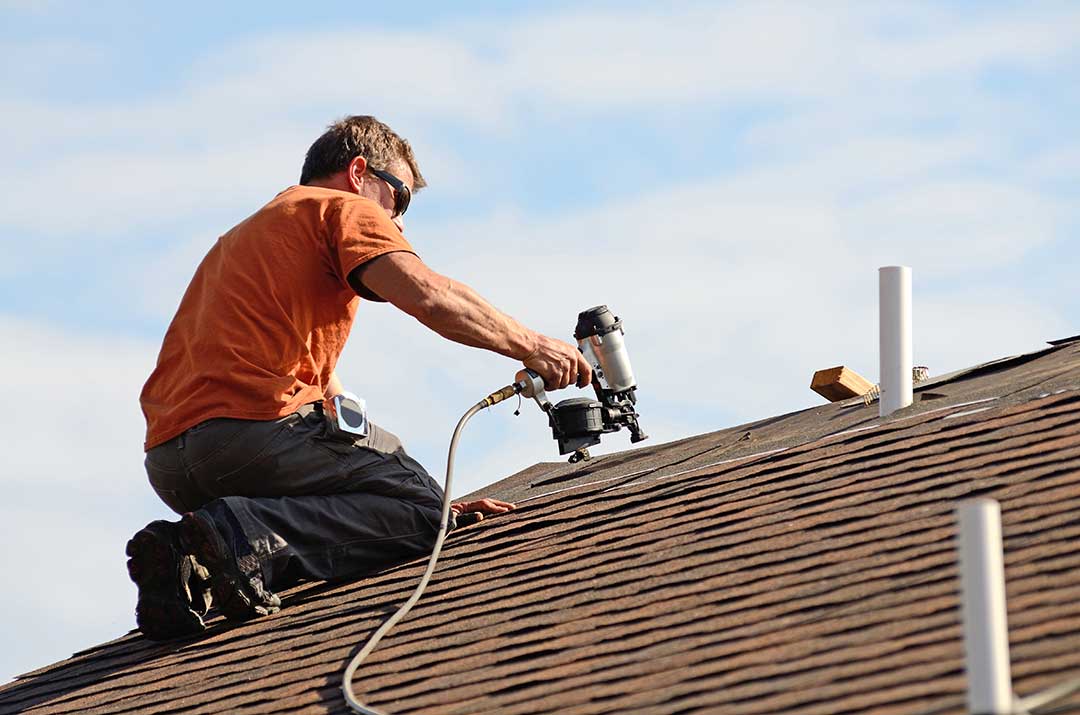
How should gutters, flashing, and roof penetrations be protected?
Gutters should be protected from falling debris but not sealed in a way that prevents water from entering them. Temporary gutter guards, plywood shields, or other protective methods may be useful during demolition, provided they do not redirect water toward the siding or foundation.
Flashing deserves special attention because it protects the most vulnerable roof transitions. Renovation work can disturb flashing at:
- Chimneys
- Sidewalls
- Valleys
- Dormers
- Skylights
- Plumbing vents
- Roof-to-addition connections
- Roof edges and eaves
Never cover a flashing problem with a new layer of roofing material. Water may continue moving behind the surface and cause concealed damage. Any new roof penetration should be planned, flashed, and sealed as part of the roof assembly rather than treated as a final patch.
What indoor protections help limit renovation damage?
Roof protection also includes the rooms below the work. Before demolition, move furniture and electronics away from ceilings and exterior walls. Use plastic sheeting carefully, leaving enough space for inspection and ventilation. Containers placed under known leak points can help temporarily, but they should not replace a roof covering or repair.
Check attic insulation after any suspected leak. Wet insulation can conceal moisture against the roof deck and framing. Look for darkened wood, damp insulation, water trails, peeling paint, musty odors, and staining around ceiling fixtures.
If water reaches electrical wiring, lighting, smoke alarms, or outlets, turn off the affected circuit only if it can be done safely and arrange for the condition to be assessed. Water and electrical systems should not be treated as a minor cleanup issue.
Do renovations require permits or code review?
Some renovation work requires a building permit, code review, or inspection under New York State requirements. The answer depends on the project, the structural changes, and the local authority responsible for reviewing the work.
Roof alterations, structural openings, additions, changes to roof framing, and new penetrations may involve requirements for weather protection, structural strength, drainage, insulation, and flashing. Permit questions should be settled before demolition begins, not after the roof has been opened.
Keep approved plans, inspection information, and product instructions available at the site when required. A temporary cover may protect against rain, but it does not replace compliant permanent construction.
When is roof work unsafe to continue?
Stop work when wind makes materials difficult to control, rain reaches an exposed roof deck, ice creates a slipping hazard, or snow conceals roof edges and openings. Roof surfaces may remain slick after precipitation even when they look dry.
Extra caution is needed around power lines, unstable ladders, damaged framing, skylights, and roof areas with uncertain structural support. Homeowners should not enter an exposed or damaged roof area simply to inspect it during a storm.
The safest renovation plan allows enough time to secure the roof before bad weather arrives. In a four-season community such as Greene, that preparation can prevent a manageable construction interruption from becoming interior water damage, mold growth, damaged insulation, or costly structural repairs.
