
What should be documented before filing a roof damage claim?
The strongest insurance documentation connects the roof damage to a specific event, shows the condition of the property, and records what was done to prevent further loss. In Greene, NY, that may involve wind, hail, fallen branches, heavy snow, ice, or freeze-thaw conditions.
Begin documenting as soon as it is safe. Do not climb onto a wet, icy, steep, or visibly unstable roof. Roof damage can be difficult to see from the ground, and walking on damaged roofing can create additional problems or cause injury.
Start with a written record that includes:
- The date and approximate time the damage was discovered
- The date and type of severe weather, if known
- What was happening at the time, such as strong wind, hail, falling branches, or heavy snow
- The rooms or areas affected inside the house
- Any water entry, stains, dripping, drafts, or ceiling damage
- Temporary steps taken to protect the home
- Names, dates, and details of conversations with the insurance company
A simple timeline is often more useful than scattered notes. Keep it with copies of photographs, receipts, emails, and claim information.
How should roof damage be photographed?
Take photographs from several distances and angles. Begin with wide images that show the entire property and roof area, then take closer photographs of individual problems.
Useful exterior photographs may show:
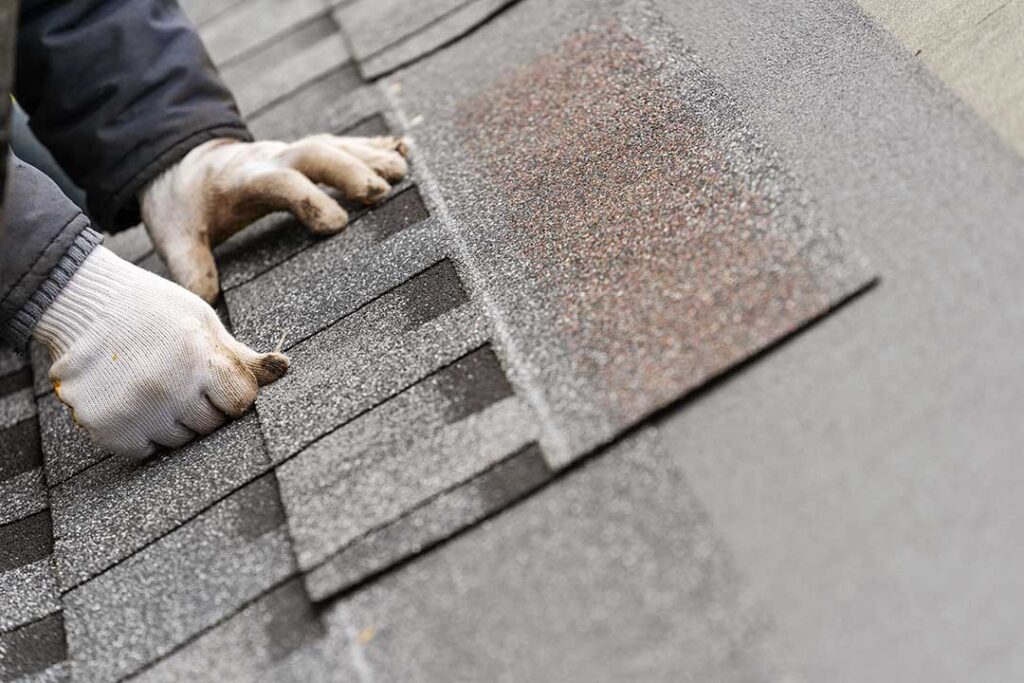
- Missing, lifted, cracked, or displaced shingles
- Damaged flashing around chimneys, vents, skylights, and roof edges
- Dented metal components or gutters that may indicate hail
- Fallen limbs or other objects that struck the roof
- Torn underlayment or exposed roof decking, if visible from a safe location
- Sagging roof sections
- Damaged soffits, fascia, gutters, downspouts, or siding
- Debris patterns around the house
Include a fixed reference point in close-up photographs when possible. A vent, chimney, gutter, window, or roof edge can help show where the damage is located. Avoid placing objects on the roof for scale, and do not move roofing materials merely to create a clearer picture.
Photograph the same areas from different angles and in good lighting. If the roof is covered with snow, wait until conditions improve rather than disturbing the surface. Snow, ice, and shadows can conceal damage or make photographs difficult to interpret.
What interior evidence should be saved?
Interior damage can help show how a roof problem affected the home. Photograph ceilings, walls, insulation, attic areas, flooring, furniture, and personal belongings that were affected by water or debris.
Take both wide and close-up images. A wide photograph can show the room and location of the damage, while a close-up can show staining, bubbling paint, damaged drywall, or wet materials.
Do not discard damaged belongings immediately unless they create a health or safety hazard. If something must be removed, photograph it first and preserve a small sample or other identifying information when practical. Make a written list that includes the item, its approximate age, condition before the loss, and estimated value.
For appliances, electronics, tools, furnishings, and other possessions, record model numbers, serial numbers, receipts, warranties, or prior photographs if available. Insurance documentation does not always require an original receipt, but proof of ownership and value can make the process easier.
What should be done to prevent additional damage?
Homeowners generally have a responsibility to take reasonable steps to limit further damage after a covered loss. That does not mean making permanent repairs before the insurer has had an opportunity to inspect the property.
Reasonable temporary measures may include placing containers under active leaks, moving belongings away from water, covering a small opening from a safe ground-level position, or arranging emergency drying for soaked interior materials.
Keep receipts for tarps, plastic sheeting, emergency materials, cleanup, temporary lodging, or other necessary expenses. Write down what each expense was for and the date it was incurred.
Do not make unsafe repairs, remove large sections of roofing, or authorize extensive replacement work before documenting the condition and understanding the insurer’s inspection process. Emergency work may be necessary, but the original damage should be preserved in photographs and written records as much as possible.
Does roof age affect an insurance claim?
Roof age can affect how an insurer evaluates damage, but an older roof is not automatically excluded from every claim. Coverage depends on the policy language, the cause of loss, exclusions, deductibles, and the condition of the roof before the event.
Insurance is generally intended for sudden and accidental damage, not ordinary deterioration. Worn shingles, long-term leakage, poor maintenance, algae growth, and gradual moisture intrusion may be treated differently from damage caused by a particular windstorm or falling tree.
Document the roof’s condition before and after the suspected event if possible. Previous inspection reports, maintenance records, closing documents, repair invoices, and dated photographs may help establish whether the damage appeared suddenly or developed over time.
Avoid stating a cause as a certainty unless it is directly observable. A factual description such as “several shingles were found in the yard after strong wind” is more useful than an unsupported conclusion about exactly how the roof failed.
What policy details should be checked?
Before deciding how to proceed, review the declarations page and policy wording. Look for:
- The deductible that applies to wind, hail, or other storm damage
- Whether the policy uses actual cash value or replacement cost for roofing
- Exclusions for wear, neglect, ice, water, or repeated seepage
- Coverage limits for the dwelling, other structures, and personal property
- Requirements for prompt notice of a loss
- Coverage for temporary living expenses if the home becomes uninhabitable
- Any special conditions involving windstorms, hurricanes, or named weather events
A windstorm deductible may be different from the standard deductible. Flood damage is also commonly handled under a separate flood policy rather than a standard homeowners policy. Water entering through a damaged roof and water rising from outside the home may be treated differently, so the source and path of the water should be documented carefully.
Policy language controls the claim. Photographs and records support the facts, but they do not guarantee that a particular type of damage is covered.
How should communication with the insurer be recorded?
Notify the insurance company according to the policy’s instructions and keep the claim number in one place. After each phone call, write down the date, time, representative’s name, and a summary of what was discussed.
Save emails, letters, inspection notices, claim forms, photographs, videos, receipts, and repair documents in both digital and paper form when possible. Use clear file names such as “north roof slope,” “living room ceiling,” or “temporary tarp receipt,” along with the date.
After an inspection, compare the adjuster’s description with personal notes and photographs. If something appears incomplete or inaccurate, send a polite written clarification and retain a copy.
If there is a disagreement about the scope or value of damage, request an explanation in writing and review the policy’s procedures for appraisal, dispute resolution, or complaints. Serious losses, unsafe conditions, and complicated coverage disputes may require guidance from a qualified attorney or a licensed public adjuster.
What common documentation mistakes should be avoided?
Several mistakes can weaken an otherwise valid record:
- Taking only close-up photographs with no location context
- Failing to photograph the roof before temporary cleanup
- Throwing away damaged property without recording it
- Forgetting damage to gutters, siding, ceilings, insulation, or detached structures
- Guessing the age or value of belongings
- Starting permanent repairs before the inspection without documenting the original condition
- Ignoring small leaks that later become larger
- Relying on memory instead of keeping a written timeline
- Assuming every storm-related problem is covered
For homes in the area, seasonal conditions can complicate the picture. Snow accumulation, ice dams, freeze-thaw movement, and spring rain may reveal problems at different times. Record when each symptom first appeared and whether it changed after additional weather.
A complete claim file does not need to be complicated. Clear photographs, a dated timeline, itemized receipts, policy details, and careful communication can provide a reliable account of what happened and what was done afterward.
