
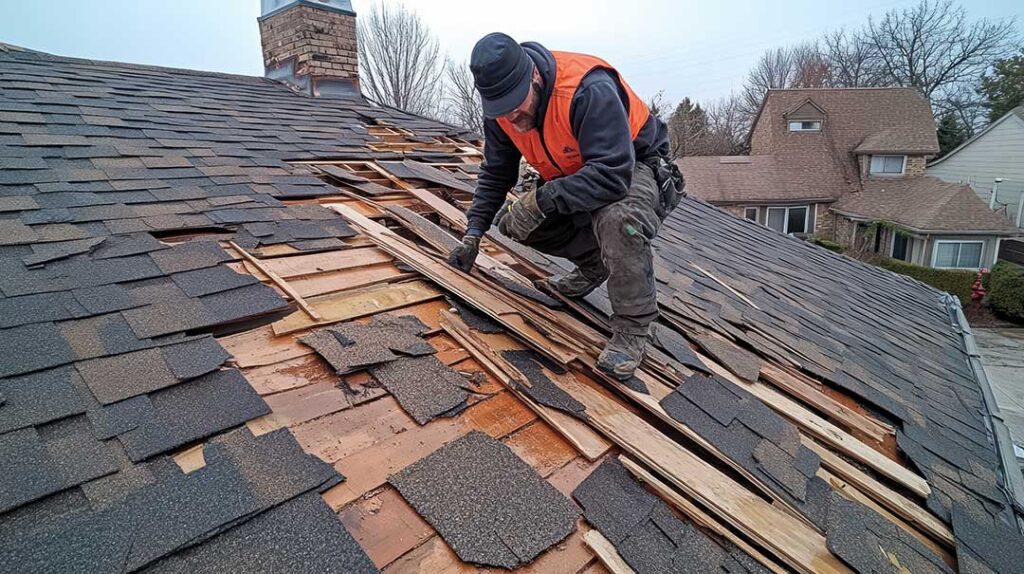
A roof leak rarely stays limited to the spot where water first appears. In homes in Greene, NY, repeated rain, snow, ice, wind, and seasonal temperature changes can allow a small opening in the roofing system to affect attic materials, ceilings, walls, insulation, framing, and sometimes the foundation.
The visible stain on a ceiling is often only the final sign of a problem that began above it.
What happens inside a home after a roof begins leaking?
Water usually travels farther than expected before becoming visible. It can move along roof decking, rafters, trusses, insulation, electrical wiring, plumbing lines, and the top plates of walls. A ceiling stain may therefore appear several feet away from the original roof entry point.
The damage often develops in stages:
- Roofing materials allow water into the attic or roof assembly.
- Sheathing and framing absorb moisture.
- Insulation becomes damp and loses effectiveness.
- Water reaches drywall, plaster, paint, or ceiling finishes.
- Continued moisture creates conditions for decay, mold growth, and fastener corrosion.
A leak may be active only during certain weather. Wind-driven rain, melting snow, ice buildup, or a particular wind direction can cause water to enter even when the roof appears dry during an inspection.
Can a roof leak weaken roof framing?
Yes. Persistent moisture can weaken wood roof framing by causing swelling, splitting, fungal decay, and loss of structural strength. Rafters, trusses, ridge boards, and roof decking are especially vulnerable when they remain damp for long periods.
Early damage may not be easy to see. Wood can look generally intact while becoming softer around fasteners, joints, roof penetrations, or areas where water collects. Over time, weakened framing may sag or shift, changing how roof loads are carried.
A roof that develops a dip, uneven line, or localized sag deserves prompt attention. Sagging can indicate deteriorated sheathing, overloaded materials, damaged framing, or a combination of these conditions. Heavy snow can add significant weight to an already weakened roof structure.
How does moisture affect ceilings and walls?
Roof leaks commonly damage ceiling finishes first because water collects above horizontal surfaces. Drywall may discolor, soften, bubble, crumble, or separate from fasteners. Plaster can crack or loosen from its supporting lath.
Walls can also be affected when water travels down framing cavities. Common signs include:
- Peeling paint or wallpaper
- Brown or yellow ceiling stains
- Soft areas around light fixtures
- Swollen trim or warped door casings
- Cracks that appear near ceiling corners
- Musty odors
- Blistering or loose sections of drywall
A ceiling stain that dries after a storm does not necessarily mean the problem has ended. Materials may retain moisture even after the surface feels dry.
Does wet insulation create structural problems?
Wet insulation can contribute to structural damage even though insulation itself is not a primary load-bearing component. Damp insulation holds moisture against wood framing and roof sheathing, slowing evaporation and increasing the chance of decay.
Fiberglass insulation can become compressed and less effective when wet. Loose-fill insulation may clump or settle. Some insulation types can also conceal damp wood, making it harder to recognize how far a leak has spread.
Reduced insulation performance may lead to colder ceilings, uneven indoor temperatures, and more condensation during winter. In a cold climate, a damp roof assembly can also make it more difficult for the attic to dry properly.
Can a roof leak cause mold or wood rot?
It can. Mold growth becomes more likely when building materials remain damp, especially in enclosed attic spaces with limited air movement. Mold may appear on roof decking, rafters, insulation facing, drywall, or stored belongings.
Wood rot is a more serious structural concern because it gradually breaks down the wood fibers that provide strength. Areas around roof valleys, chimneys, vents, skylights, wall intersections, and clogged drainage paths can be particularly vulnerable because water may remain concentrated there.
Not every dark mark is mold, and not every stain indicates structural decay. However, musty odors, soft wood, fuzzy growth, crumbling materials, and repeated moisture are reasons to treat the condition as more than a cosmetic issue.
What role do winter conditions play in roof damage?
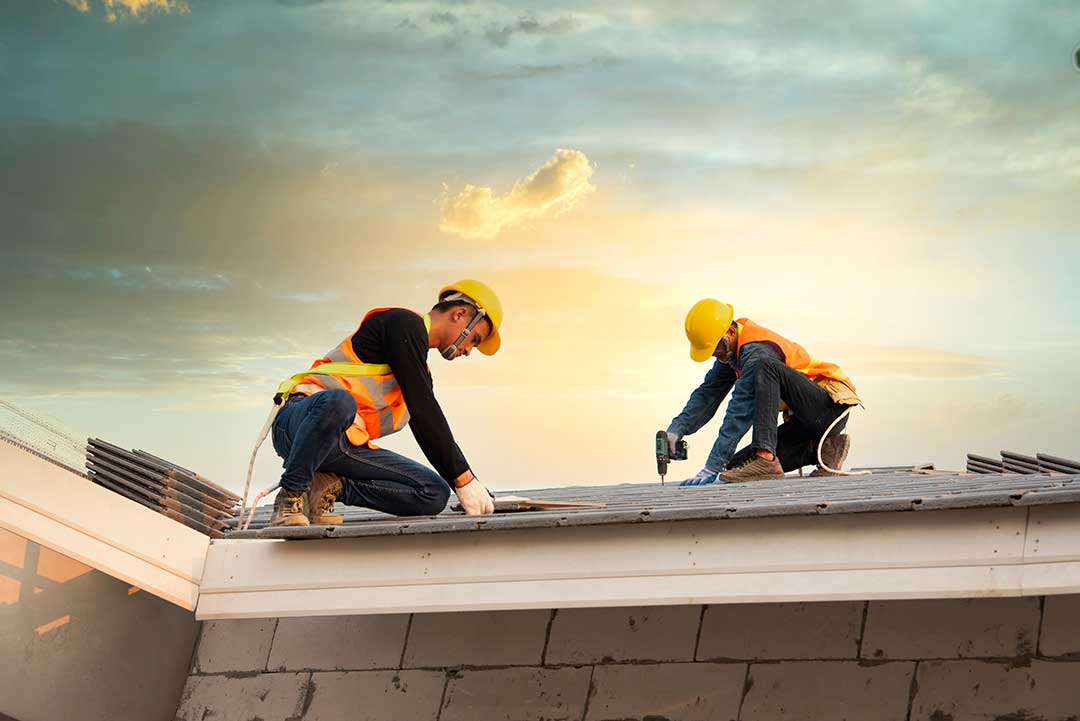
Snow, ice, and freeze-thaw cycles can extend the effects of a leak. Water may enter through damaged shingles, exposed fasteners, deteriorated flashing, or gaps around roof penetrations. When temperatures fall, trapped moisture can freeze and expand, widening small openings.
Ice buildup near roof edges can also interfere with drainage. Meltwater may back up beneath roofing materials rather than flowing into the intended drainage path. Even after the weather warms, moisture can remain in decking and insulation.
Winter conditions also make roof access hazardous. Walking on icy surfaces, climbing ladders in snow, or disturbing roof materials during freezing weather can create safety risks. Visual checks from the ground and inspection of attic spaces are generally safer than attempting rooftop repairs during poor conditions.
Can a roof leak affect electrical systems?
Yes. Water near wiring, junction boxes, recessed fixtures, fans, or electrical panels can create shock and fire hazards. A flickering light, tripped breaker, buzzing fixture, or water near an electrical component should be treated seriously.
Do not touch wet electrical equipment or stand in water while investigating a ceiling leak. Power may need to be turned off from a dry, safe location, but shutting off electricity is not a substitute for evaluating the affected system. Electrical hazards require qualified attention because moisture can remain inside components after visible water disappears.
How can homeowners tell whether damage is becoming structural?
The most concerning signs are changes in shape, softness, movement, or support rather than staining alone. Warning signs include:
- Sagging ceilings or roof lines
- Bowed walls
- Cracked or separated framing joints
- Doors or windows that suddenly stick near a leak
- Soft, crumbly, or split roof decking
- Exposed fasteners with rust or corrosion
- Repeated leaks in the same location
- Strong musty odors combined with visible moisture
- Large areas of insulation that are wet or compressed
These symptoms do not always mean a home is in immediate danger, but they indicate that the leak may involve more than a surface finish.
What should be done after discovering a roof leak?
First, limit additional interior damage if it can be done safely. Move furniture and belongings away from the affected area, place a container under active drips, and document visible staining or damaged materials. Avoid cutting into a bulging ceiling unless there is an immediate need to relieve trapped water and the area is clear of electrical fixtures.
The roof should not be assumed to be the only location requiring attention. The attic, insulation, roof decking, framing, ceiling materials, and electrical components may all need evaluation. Wet materials should be allowed to dry properly, and materials that have deteriorated may need removal rather than simply being painted or covered.
A small leak that is addressed before framing becomes weakened is usually easier to contain than one that has continued through multiple seasons. In older homes and houses with complex roof lines, water can follow concealed pathways for a considerable distance before damage becomes visible.
