
What do soffits and fascia do?
In Greene, NY, soffits and fascia form part of the roof’s edge system. They help protect the home from water, support proper attic ventilation, and provide a finished transition between the roof, exterior walls, and eaves.
Although these components are often noticed only after they become damaged, they perform several practical functions:
- Soffits cover the underside of the roof overhang.
- Fascia is the vertical board or trim along the lower edge of the roof.
- Eave and rake edges are the roof boundaries where these materials are installed.
- Gutters are commonly attached to or near the fascia.
Together, these parts help direct water away from the building and reduce exposure to wind, insects, and weather.
What is a soffit?
A soffit is the visible underside of a roof overhang. It may be made from aluminum, vinyl, wood, fiber cement, or another exterior-rated material. Many soffits include small vents that allow air to enter the attic.
The overhang itself helps keep rain and melting snow away from exterior walls and window openings. The soffit closes the open underside of that overhang while allowing the roof edge to remain ventilated.
A properly designed soffit typically serves two purposes:
1. Protection: It keeps birds, insects, wind-driven precipitation, and debris from entering the roof overhang.
2. Ventilation: Vented sections allow outdoor air to enter the attic at the lower edge of the roof.
Soffit vents work as part of a larger ventilation system. Air usually enters through the soffits and exits through higher roof or ridge vents. This movement helps reduce heat and moisture buildup in the attic.
Why is attic ventilation connected to soffits?
Soffit vents provide the intake side of attic ventilation. Without enough intake area, higher vents may not work as intended because there is not a steady supply of outside air entering at the eaves.
Adequate ventilation can help manage:
- Moisture from indoor air that reaches the attic
- Heat buildup during sunny weather
- Condensation on roof sheathing and fasteners
- Uneven roof temperatures that may contribute to winter ice formation
Ventilation does not replace attic air sealing or insulation. Warm indoor air escaping through ceiling penetrations can carry moisture into the attic even when soffits are properly vented. Bathroom fans, recessed lights, attic hatches, and plumbing penetrations should be sealed and directed outdoors where appropriate.
In cold-weather communities, blocked or poorly arranged ventilation can become more noticeable during winter. Frost or condensation in the attic may later contribute to staining, wood deterioration, or mold-like growth.
What is fascia?
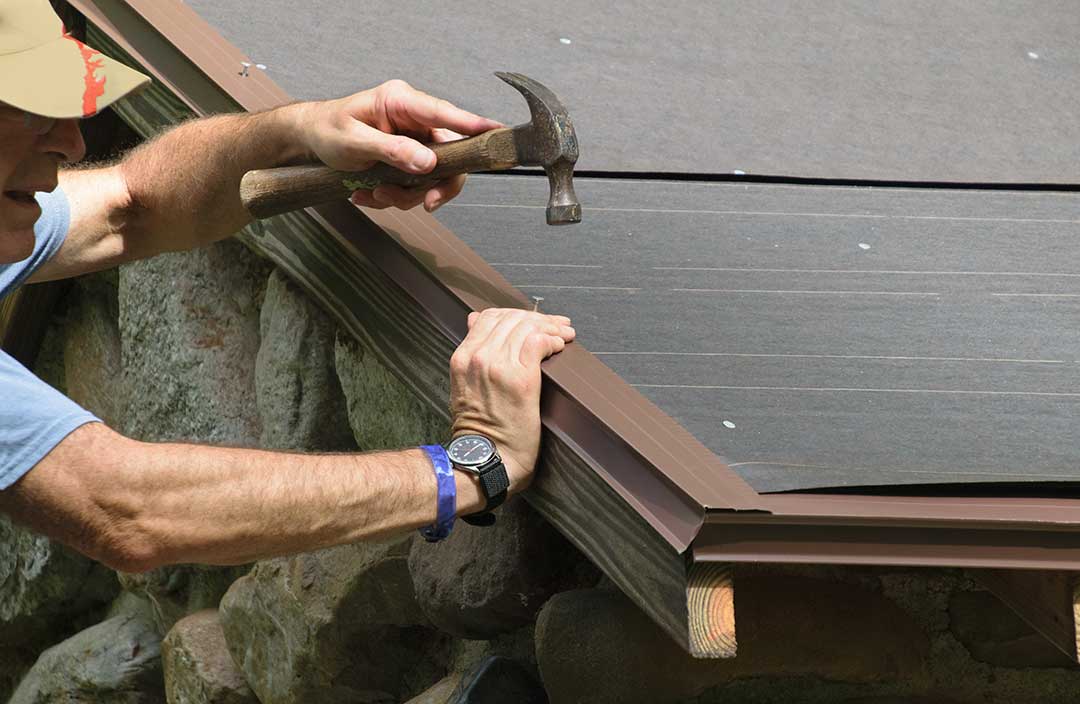
Fascia is the trim board running along the lower edge of a roof. It is usually installed behind the gutter and beneath the roof covering’s edge. Fascia may be made from wood, aluminum, composite material, or other products designed for exterior exposure.
Its functions include:
- Providing a secure mounting surface for gutters
- Covering the ends of roof rafters or trusses
- Helping shield the roof edge from rain and wind
- Creating a finished appearance along the roofline
Fascia is especially vulnerable to water because it is close to the gutter system. If gutters overflow, pull away from the roof, or develop leaks at joints, water can repeatedly wet the fascia. Over time, painted wood may soften, swell, or decay.
How do soffits and fascia work together?
The soffit protects the underside of the eave, while the fascia protects and finishes the outer edge. They meet near the roofline and help close off the space between the roof structure and the exterior wall.
This relationship matters because damage in one area can affect the other. For example, a leaking gutter may damage the fascia first and then allow moisture to reach the soffit, roof framing, or wall. Likewise, a failed soffit panel may expose the eave area to animals and wind-driven moisture.
Roof edge details also influence how water moves. Drip edge metal, underlayment, shingles, fascia, and gutters must work together. A problem with one component may not be visible from the ground but can still cause water to travel behind the trim.
What are common signs of soffit or fascia damage?
Some problems are easy to see, while others appear as secondary symptoms. Residents may notice:
- Peeling or blistering paint along the roof edge
- Soft, swollen, cracked, or discolored wood
- Sagging or separated soffit panels
- Open seams or missing trim pieces
- Gutter sections pulling away from the roof
- Water stains near the upper exterior walls
- Birds, squirrels, or insects entering the eave
- Peeling paint or moisture marks inside the attic
- Visible mold-like staining or damp insulation
- Ice buildup that repeatedly forms near the eaves
A small hole in a soffit is not always an emergency, but it should not be ignored. Openings can allow animals into the attic, where nesting material may block ventilation or damage wiring.
Do soffit vents need to be cleaned?
Soffit vents can become blocked by dust, insect nests, paint, insulation, or accumulated debris. In some homes, insulation shifts toward the eaves and covers the openings from inside the attic.
Cleaning alone may not solve the problem if the vent design is too small or if insulation is blocking the air channel. Attic insulation should not be packed tightly against the roof deck where it prevents airflow. Baffles or ventilation chutes may be needed to preserve a clear path from the soffit into the attic.
Any cleaning or inspection near the roof edge should account for ladder stability, electrical hazards, and fall risk. Damaged framing, steep roofs, and winter conditions create additional safety concerns.
Are soffits and fascia purely cosmetic?
No. They contribute to moisture control, ventilation, pest exclusion, gutter support, and protection of the roof structure. Their appearance can provide clues about underlying problems, but clean-looking trim does not guarantee that the roof edge is functioning properly.
For example, fascia may appear intact from the ground while the back side is deteriorating behind a gutter. Similarly, a soffit may look unbroken even though its vent openings are blocked by paint or insulation.
Cosmetic replacement without correcting the source of moisture can result in recurring damage. Common underlying causes include leaking gutters, missing drip edge, roof flashing defects, ice-related water backup, and poor attic air sealing.
What should homeowners check seasonally?
A basic visual inspection from the ground can identify changes before they become extensive. After heavy rain, strong winds, or winter freeze-thaw cycles, look for:
- Gutter overflow or water running behind gutters
- New staining beneath the eaves
- Loose or missing soffit panels
- Gaps where trim meets siding or masonry
- Sagging sections along the roof edge
- Animal entry points
- Icicles or ice buildup that repeatedly occurs in the same location
Avoid poking soft wood or climbing onto an icy roof. If the roof edge is unstable, water is entering the attic, or structural wood appears damaged, the condition involves more than exterior trim and may require a qualified inspection for safety and code-related reasons.
