

Why can a sports ball damage a roof?
A sports ball can damage roofing when it strikes with enough speed and force, especially if the roof is older, brittle, poorly supported, or already weakened by weather. The most common problems include cracked shingles, loosened tabs, dented metal, damaged flashing, and punctures around roof edges or fixtures.
In Greene, NY, outdoor play is common during the warmer months, but roof damage from a ball may not become noticeable until rain, wind, freezing temperatures, or snow expose the weak spot. A small impact mark can eventually become a leak if water gets beneath the roofing material.
The risk depends on several factors:
- The type and size of the ball
- How fast it was moving
- The distance from the roof
- The angle of impact
- The roofing material and its age
- Whether the roof already had weather-related wear
A foam practice ball usually has little effect on a roof. A baseball, softball, lacrosse ball, hockey ball, or hard soccer ball can deliver much more force.
Which parts of a roof are most vulnerable?
The most vulnerable areas are usually the roof edges, exposed shingles, flashing, vents, skylights, and gutters. A ball that lands on a broad section of newer asphalt shingles may leave no visible damage, while the same impact near a roof penetration can bend metal or break a seal.
Roof edges deserve special attention because wind can lift or loosen shingles there. If a ball strikes an already weakened shingle, it may tear the surface or break the adhesive bond. Damage around a vent, chimney flashing, or pipe boot can allow water to travel into the roof assembly.
Metal roofing can resist many impacts, but it is not immune. A hard ball may leave a dent, chip a protective coating, or damage a seam. The dent itself may be mostly cosmetic, but an affected seam or fastener can create a water-entry point.
Gutters and downspouts can also be hit. A bent gutter may drain poorly, while a loose downspout can separate from the wall or discharge water near the foundation.
What does sports-ball roof damage look like?
Some damage is easy to see, but other problems appear only after the next rainfall. Residents checking a roof from the ground may notice:
- A shingle that is cracked, split, lifted, or missing granules
- A dark or exposed mark on the roof surface
- A dented metal panel, flashing section, or gutter
- A displaced ridge cap or edge shingle
- Granules collected below a roof area where no damage existed before
- Water stains on an attic rafter, roof sheathing, ceiling, or upper wall
- Damp insulation or a musty odor in the attic
A roof does not need to be visibly punctured to leak. A ball can break the seal between shingle layers, loosen a fastener, or create a small opening beneath overlapping materials. Water may then follow the roof deck or framing before appearing indoors, making the interior stain appear far from the original impact.
Can a baseball or softball really break a shingle?
Yes. A baseball or softball can crack or dislodge an asphalt shingle, particularly when thrown hard or hit with a bat. The likelihood increases on older roofs because asphalt becomes less flexible over time. Cold weather can make some roofing materials more brittle, although impact damage often occurs during warmer outdoor seasons.
A ball may also strike with greater force than expected if it comes from a driveway, yard, or nearby field and reaches the roof at a steep angle. Hard rubber balls and lacrosse balls can cause similar damage. Even when the roof appears intact, a close inspection may reveal fractured granules or a broken seal strip.
A common misconception is that only a ball hit directly upward can cause damage. A ball thrown toward a roof, kicked from a slope, or deflected by a tree or play structure can also produce a damaging impact.
What should be done after a ball hits the roof?
Begin with a ground-level inspection from several angles. Look for displaced shingles, exposed underlayment, dents, or loose roof-edge components. Do not climb onto the roof simply to check a suspected impact, especially when the surface is wet, steep, icy, or covered with leaves.
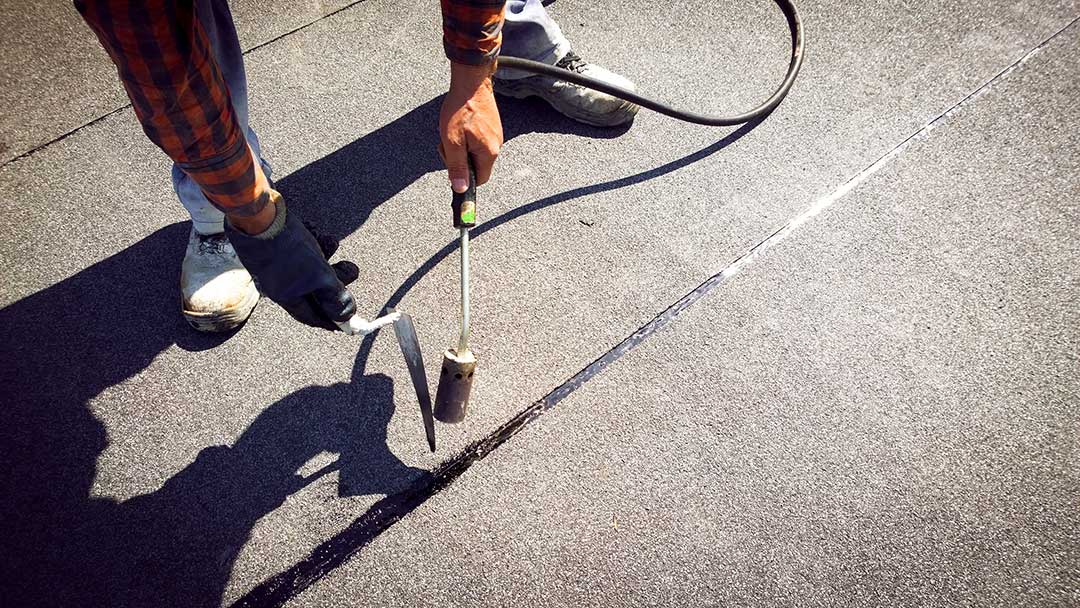
If safe access exists, inspect the attic rather than walking on the roof. Look for daylight through the roof deck, damp wood, water marks, wet insulation, or a fresh drip after rain. Place a container beneath an active leak and move valuables away from the affected area.
Photographs taken from the ground and inside the attic can help document the location and timing of the damage. It is also useful to record whether the impact happened before or after a rainfall, wind event, or freeze.
A roof that is leaking, has exposed underlayment, or contains loose material should not be left open to changing weather. Temporary protection may be necessary, but placing a ladder or walking on a roof can create additional hazards. Steep roofs, damaged edges, electrical equipment, and wet surfaces require particular caution.
How can homeowners prevent this type of damage?
Prevention starts with identifying where play and roof exposure overlap. In areas with children, neighborhood recreation, or sloped yards, a few changes can reduce repeated impacts:
- Position batting, hockey, and throwing areas away from the house.
- Use soft training balls when practicing near buildings.
- Keep portable goals and rebound nets pointed away from roof surfaces.
- Avoid placing ladders, play structures, or raised platforms beside the roof edge.
- Trim branches that deflect balls toward the roof.
- Teach children not to retrieve balls by climbing onto the roof.
- Check gutters and roof edges after an unusually hard impact.
These steps also reduce the chance of broken windows, damaged siding, and unsafe climbing. In a community with winter freeze-thaw cycles, preventing small roof defects is especially useful because water entering a crack can freeze, expand, and worsen the opening.
Does insurance cover damage caused by a sports ball?
Coverage depends on the policy, the cause of loss, the size of the damage, and the deductible. Some policies may cover sudden accidental impact damage, while exclusions, maintenance requirements, or deductibles may affect whether a claim is practical. Damage caused by a household member may be treated differently from damage caused by an unknown person.
Before assuming coverage, document the condition of the roof, the suspected impact area, and any related interior damage. Avoid making permanent repairs that could remove evidence before the insurer has provided instructions. Policy language is controlling, so general information cannot determine whether a particular loss is covered.
When is an inspection especially important?
An inspection is prudent when a ball strikes near flashing, a vent, skylight, chimney, roof edge, or visible crack; when shingles are missing or lifted; or when a ceiling stain appears afterward. It is also worth checking more carefully if the roof is older, has previously leaked, or has experienced recent wind or ice damage.
The key question is not only whether the ball left a mark. It is whether the impact changed the roof’s ability to shed water. A small defect found quickly may be limited to one component, while an unnoticed opening can allow moisture into insulation, sheathing, and framing over time.
For area households, a quick ground-level check after a hard impact—followed by an attic check during the next rain—can reveal problems before they become larger winter or spring repairs.
