
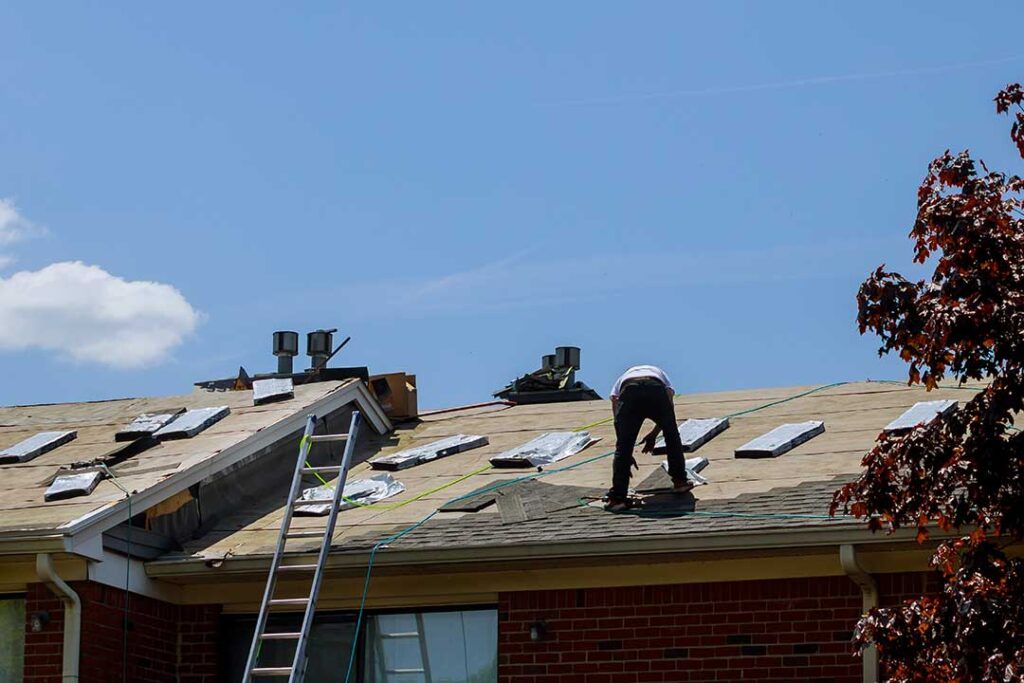
Soffits and fascia are exterior roofing components that help protect a home from moisture, pests, and weather while supporting proper attic ventilation. Although they are often viewed as trim, both parts play practical roles in how a roof and exterior wall system perform.
What are soffits and fascia?
A soffit is the underside of the roof’s overhanging edge. Standing on the ground, it is usually the visible horizontal surface beneath the eaves. Soffits may be made from aluminum, vinyl, wood, or other exterior materials.
Fascia is the vertical board or finished surface along the lower edge of the roofline. Gutters are commonly attached to the fascia, which means this component helps support the drainage system as well as protect the roof edge.
Together, soffits and fascia create a transition between the roof, attic, exterior walls, and gutters. They also cover exposed framing and help give the roofline a finished appearance.
Why are soffits important?
Soffits often provide the intake side of a roof ventilation system. Vented soffits allow cooler outdoor air to enter the attic, where it can move upward and leave through properly designed exhaust vents near the roof ridge or upper roof areas.
Balanced ventilation helps reduce moisture buildup and excessive heat. In a cold climate, warm indoor air can enter the attic through air leaks and condense on colder surfaces. Over time, that moisture may contribute to damp insulation, mold growth, wood decay, or frost accumulation.
During warmer weather, attic ventilation can help release heat that would otherwise raise temperatures beneath the roof covering. Ventilation does not replace insulation or air sealing, but it works alongside them as part of a complete attic system.
A soffit does not need to be visibly perforated to provide ventilation. Some homes use continuous vent strips, while others have individual vent panels. If insulation, paint, nesting material, or debris blocks the openings, the ventilation system may perform poorly even when the soffit itself appears intact.
What does fascia do?
Fascia protects the ends of roof rafters and the edge of the roof structure from direct exposure to rain, snow, ice, and wind. It also provides a stable surface for gutter fasteners.
This makes fascia especially vulnerable to water-related damage. Gutters that overflow, pull away, or develop leaks can repeatedly wet the fascia. Water may also reach the fascia from damaged shingles, deteriorated drip edge, ice buildup, or poorly sealed roof transitions.
Once the fascia begins to decay, gutter attachments may become loose. A gutter can then sag or separate from the roofline, allowing even more water to reach the wall, soffit, and foundation area.
How do soffits and fascia support roof drainage?
Roof drainage depends on more than the gutters themselves. Water must move from the roof covering to the roof edge, into the gutter, and through the downspouts without soaking the underlying wood or wall assemblies.
The fascia helps hold the gutter at the correct position. The soffit helps close off the underside of the eave, reducing the chance that wind-driven rain, insects, birds, or small animals can enter the roof overhang.
A properly installed drip edge also matters. This metal flashing directs water away from the roof edge and toward the gutter. If the drip edge, fascia, gutter, or soffit is installed incorrectly, water may follow the wrong path and damage hidden wood before visible signs appear.
What problems commonly affect these components?
The most common problems involve moisture, blocked ventilation, physical impact, and age. Warning signs may include:
- Soft, crumbling, or discolored fascia
- Peeling paint or swollen wood near the roof edge
- Sagging gutters or gutter fasteners pulling loose
- Staining on soffit panels
- Missing, cracked, or warped soffit sections
- Insect nests or animal entry holes
- Visible mold-like growth or persistent green discoloration
- Water dripping behind gutters
- Ice buildup along the roof edge during winter
- Vent openings covered by insulation or debris
Some damage is easy to see from the ground. Other problems develop behind the fascia or above the soffit, where they may remain hidden until a gutter loosens, paint fails, or interior moisture appears.
In Greene, NY, seasonal changes can place repeated stress on roof-edge materials. Freeze-thaw cycles may expand small cracks, while snow, ice, wind-driven rain, and summer humidity can expose weak joints or unfinished edges. Older homes may also have wood soffits and fascia that require more frequent painting and inspection than newer metal or vinyl systems.
Do all soffits need to be vented?
No. Not every roof design uses soffit ventilation, and not every roof has an overhang suitable for venting. Some attics use other intake methods, while certain roof assemblies are designed without a conventional vented attic.
The key issue is whether the roof’s ventilation system is intentionally designed and balanced. Adding random vents or blocking existing ones can interfere with airflow. For example, installing a new exhaust vent without enough intake ventilation may not improve attic conditions and can sometimes draw conditioned air from the living space through ceiling leaks.
If insulation has been added over the years, it may have been pushed into the eaves and covered soffit openings. Baffles or rafter vents can help preserve an open air channel, but they must be installed as part of the overall attic design.
Can damaged soffits or fascia be repaired?
The appropriate repair depends on the material, the extent of the damage, and whether moisture has reached the framing behind it.
A small hole in an aluminum or vinyl soffit may involve replacing a panel or securing a loose section. Wood fascia with limited surface deterioration may sometimes be repaired and protected, but wood that is soft throughout generally indicates deeper decay.
Before replacing visible trim, the source of the moisture should be identified. Otherwise, new material may deteriorate in the same location. Possible sources include overflowing gutters, roof leaks, failed flashing, missing drip edge, condensation, or water entering through an open joint.
Repairs involving ladders, steep roofs, unstable gutters, electrical hazards, or extensive rot should be treated cautiously. Roof-edge work can involve fall risks and hidden structural damage, especially after winter weather.
How often should soffits and fascia be checked?
A visual inspection twice a year is reasonable for many homes: once after winter and again before the wetter or stormier parts of the year. Additional checks are useful after strong winds, heavy snow, ice events, or gutter overflow.
From the ground, look along the roofline for uneven gutters, dark stains, gaps, loose panels, and areas where the trim no longer follows a straight line. During attic inspections, check whether daylight, damp insulation, staining, or blocked airflow is present near the eaves.
Keeping gutters clear, directing downspouts away from the foundation, maintaining exterior paint on wood trim, and avoiding blocked soffit vents can extend the service life of the entire roof edge.
Soffits and fascia are small parts of the building envelope, but they connect several important systems: roof drainage, attic ventilation, exterior protection, and gutter support. Understanding their roles makes it easier to recognize early problems before moisture reaches the roof structure, walls, or interior of the home.
