
What does an aging roof look like?
An aging roof usually shows several small changes before it develops an obvious leak. The most useful clues are material-specific: asphalt shingles may lose granules, metal panels may corrode around fasteners, and slate may develop isolated breaks while the rest of the roof still appears sound.
Residents in Greene, NY, should also account for repeated winter freezing, snow, ice, wind, spring rain, and summer heat. These seasonal changes can stress roofing materials and flashing even when damage is not visible from the ground.
A roof’s age is only one part of the evaluation. Installation quality, ventilation, roof slope, tree exposure, attic moisture, and the condition of flashing can all affect how quickly a roof wears out.
How can asphalt shingles be checked for age?
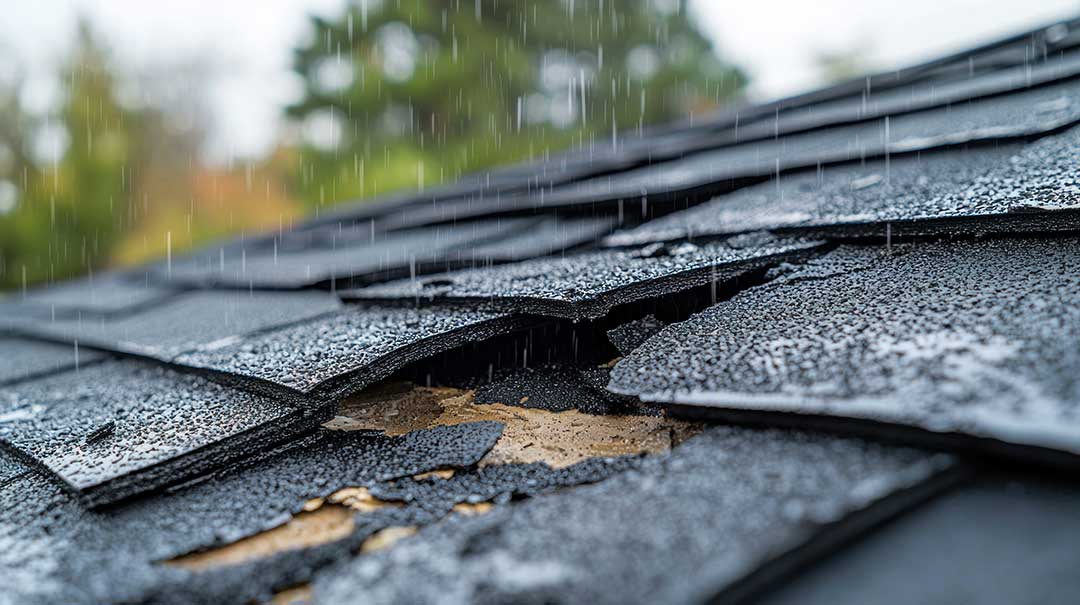
Asphalt shingles often show aging through surface loss, distortion, and reduced flexibility. From the ground or a safe window view, look for:
- Missing, cracked, split, or lifted shingles
- Areas where the shingle surface appears unusually smooth
- Granules collecting in gutters or at the base of downspouts
- Curled corners or raised edges
- Dark streaks, exposed fiberglass mat, or visible nail heads
- Uneven sections that may indicate movement or moisture below
Granule loss is not automatically a sign that the entire roof has failed. A small amount of loose material after installation or a severe storm can be normal. Widespread granule loss, bald patches, and brittle shingles are more meaningful signs of advanced aging.
Curling and buckling can result from age, poor attic ventilation, installation problems, or moisture in the roof assembly. If the roof surface is visibly uneven, the problem may involve more than the shingles themselves.
Architectural shingles and older three-tab shingles can age differently, so the installation date and product type matter. A roof that looks acceptable from the driveway may still have deteriorated flashing, underlayment, or roof decking.
What are the aging signs on a metal roof?
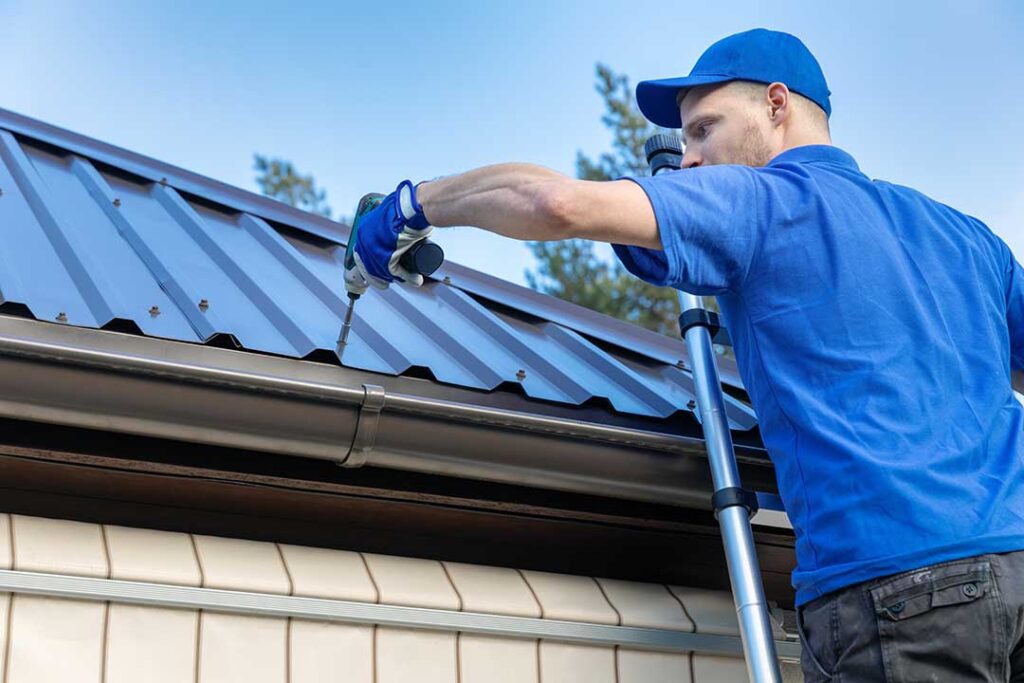
Metal roofs can remain serviceable for many decades, but their weak points are often connections and transitions rather than the broad panel surfaces.
Check for:
- Rust at exposed fasteners, seams, valleys, or roof edges
- Loose or missing screws
- Failed washers around fasteners
- Open seams or separated panel joints
- Dents that hold water
- Peeling or chalking protective finishes
- Corrosion around chimneys, vents, skylights, and wall intersections
Some older metal roofs are designed to develop a protective patina, so surface color change is not necessarily a failure. Active corrosion, pinholes, leaking seams, or rust that has penetrated the panel are more serious.
Snow and ice can also place stress on exposed fasteners and roof-edge components. Metal expands and contracts with temperature changes, which may gradually enlarge fastener holes or weaken sealants. Sealant that looks cracked, brittle, or separated should not be treated as a permanent repair.
How does an aging slate roof differ?
Slate can last much longer than many other roofing materials, but the slate itself is only one part of the system. Flashing, fasteners, underlayment, valleys, and the wood roof deck may age sooner.
Signs to watch for include:
- Slates that are cracked, broken, slipping, or missing
- Small piles of slate pieces near roof edges or downspouts
- Rust stains from deteriorated fasteners
- Sagging areas in the roof plane
- Open joints around chimneys, dormers, and valleys
- Deteriorated metal flashing
- Interior staining near upper walls or ceilings
A slate roof should not be judged by appearance alone. A roof with some broken slates may be repairable, while a roof that looks orderly may have widespread fastener corrosion or weakened decking.
Walking on slate can break sound pieces and create a fall hazard. Inspection from the ground, attic, or a properly positioned access point is safer than climbing onto the surface without suitable equipment and experience.
What should be looked for on wood shingles and shakes?
Wood roofing ages through moisture exposure, biological growth, splitting, and loss of thickness. Shingles and shakes should be examined for:
- Rotting or soft sections
- Deep cracks and splits
- Curling, cupping, or warped edges
- Moss or lichen that keeps the material damp
- Shingles that have become thin or brittle
- Dark staining near valleys and roof edges
- Gaps where daylight may be visible
A small amount of discoloration does not always mean structural failure. Persistent dampness, however, can speed decay, especially where leaves collect or airflow is poor. Overhanging branches can shade the roof, slow drying, and scrape the surface during wind.
Wood roofs also require attention to ventilation and spacing. If the underside remains damp, deterioration may continue even after visible surface growth is removed.
How can tile and low-slope roofing be evaluated?
Clay and concrete tiles often show age through cracks, broken pieces, displaced tiles, and deteriorated flashing. The underlayment beneath the tiles may fail before the tiles themselves. A few broken tiles do not necessarily mean the whole roof must be replaced, but they should not be ignored because water can reach the layers below.
Low-slope roofs, including older membrane and built-up systems, may show:
- Ponding water that remains after reasonable drying time
- Blisters, splits, or open seams
- Shrinkage around edges
- Exposed reinforcement or surface material
- Deteriorated roof-edge metal
- Interior stains below drains, scuppers, or seams
Standing water is especially significant because it adds weight and keeps roofing materials wet. Blocked drains and gutters can make an otherwise serviceable roof appear older than it is.
Which interior signs point to roof aging?
Interior evidence can reveal problems that are not visible from outside. In the attic or upper rooms, look for:
- Brown or yellow ceiling stains
- Damp insulation
- Musty odors
- Rusted nails or metal fasteners
- Darkened roof decking
- Daylight entering through the roof covering
- Peeling paint near upper walls or ceilings
- Sagging drywall or ceiling materials
Not every ceiling stain comes from the roof. Plumbing, condensation, ice dams, and poorly sealed vents can produce similar marks. The location and timing of the stain matter. A leak that appears only during wind-driven rain may involve flashing, while winter staining near the eaves may relate to ice buildup or attic heat loss.
Does roof age alone mean replacement is necessary?
No. Age is a screening tool, not a final diagnosis. A roof near the typical service range may still have useful life if its materials, flashing, drainage, and decking remain sound. A younger roof may have serious problems if it was damaged by wind, installed incorrectly, or exposed to persistent moisture.
A practical evaluation considers:
- The approximate installation date
- The type and condition of the roof covering
- The number and location of repairs
- Attic ventilation and insulation
- Flashing around penetrations and vertical walls
- Evidence of active leaks
- The condition of the roof deck
- Whether water drains properly
Safety changes the decision. Steep slopes, fragile slate, loose materials, hidden structural damage, and active electrical or water hazards are not appropriate for casual walking or do-it-yourself inspection. In those situations, a qualified inspection is warranted because the risk is greater than what can be determined from the ground.
How often should a roof be checked in this climate?
A basic visual check is useful at least twice a year and after unusually strong wind, heavy snowfall, falling branches, or severe storms. In the local seasonal pattern, spring is a good time to look for winter damage, while autumn inspection can identify blocked drainage and loose materials before snow and ice arrive.
Keep the inspection simple: view the roof from the ground, examine gutters for unusual granules or slate pieces, check attic areas for moisture, and watch for new ceiling stains. Do not climb onto an icy, wet, steep, or visibly damaged roof.
Aging is rarely represented by one dramatic symptom. More often, it appears as a pattern: repeated repairs, worsening surface wear, deteriorated flashing, damp attic materials, and changes that return after each storm. Recognizing that pattern early provides a clearer understanding of the roof’s condition and reduces the chance that a minor defect will become interior water damage.
