
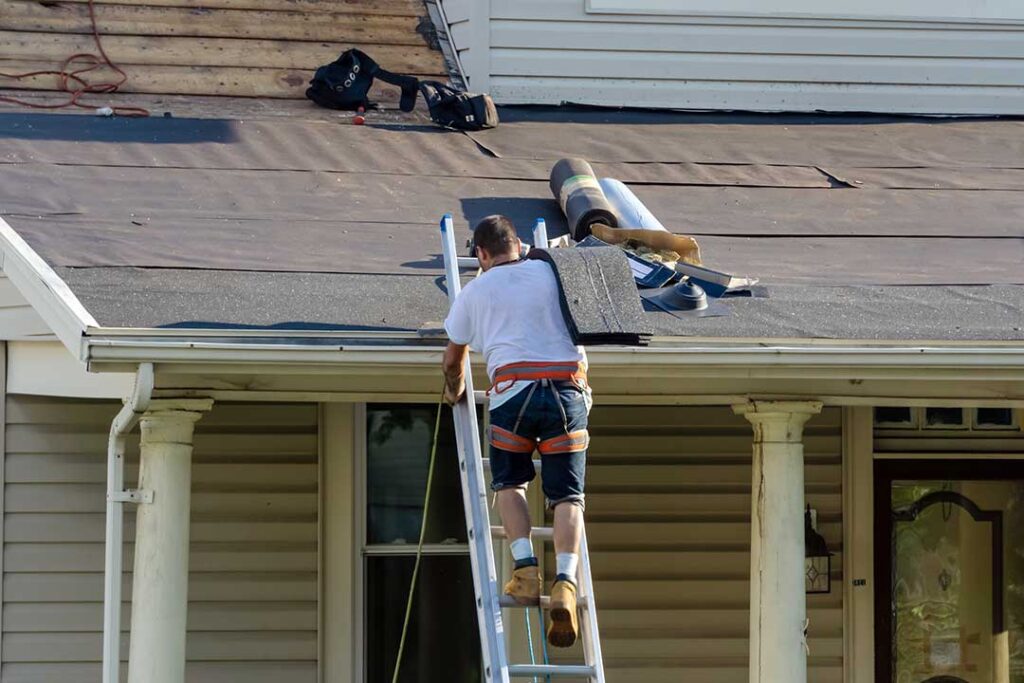
How can you tell whether a roof needs replacement?
A roof usually needs replacement when its age, condition, and repair history show that continued patching is no longer a dependable solution. For many homes in Greene, NY, the decision depends on more than one visible problem. Roof age, storm exposure, moisture damage, attic conditions, and the type of roofing material all matter.
A few missing shingles do not automatically mean the entire roof has failed. On the other hand, a roof can look acceptable from the ground while hidden deterioration is already affecting the roof deck, insulation, or interior ceilings.
The clearest signs of possible replacement include:
- Widespread curling, cracking, or missing shingles
- Repeated leaks in different areas
- Sagging along the roofline
- Granules collecting in gutters or downspouts
- Water stains on ceilings or upper walls
- Soft or damaged roof decking
- Persistent moss or moisture problems
- A roof that is near or beyond its expected service life
How old is too old for a roof?
Roof age is a useful starting point, but it is not an exact expiration date. A typical asphalt shingle roof may last roughly 15 to 30 years, depending on the shingle quality, installation, ventilation, slope, maintenance, and exposure to weather.
A roof installed more than 20 years ago deserves closer inspection, especially if it has already needed repairs. A newer roof may still require substantial work if it has suffered wind damage, poor ventilation, installation defects, or repeated ice and water intrusion.
Records can help clarify the roof’s age. Useful sources include closing documents, repair receipts, permit records when applicable, and information from previous owners. If the installation date is unknown, the condition of the shingles and roof structure becomes more important than an age estimate.
Which visible roof problems suggest replacement?
Some defects can be repaired locally. Others indicate that the roofing system is deteriorating across a broad area.
Shingles that are curling, cracking, or losing their surface
Shingles may curl at the edges, crack down the middle, or lose the protective granules embedded in their surface. When these conditions appear across multiple slopes, the roof may be approaching the end of its useful life.
A small number of damaged shingles can sometimes be replaced. Widespread deterioration often means that isolated repairs will only address symptoms temporarily.
Bald patches and heavy granule loss
Granules protect asphalt shingles from ultraviolet exposure and weathering. A small amount of granule loss is normal, particularly after installation, but large bare patches or repeated piles of granules in the gutters are warning signs.
Granule loss can make shingles more brittle and less effective at shedding water.
Missing or lifted shingles
Wind can loosen shingles, particularly around roof edges, ridges, valleys, and penetrations such as vents. A few missing shingles may be repairable, but recurring losses suggest that the roof may be aging or that the underlying fastening and flashing details need attention.
Temporary coverings may reduce immediate water entry but do not restore the roof’s long-term weather resistance.
Sagging or uneven roof sections
A sagging roofline is more serious than ordinary shingle wear. It may indicate weakened decking, framing problems, long-term moisture intrusion, excessive load, or inadequate drainage.
A noticeably sagging area should not be treated as a cosmetic issue. Walking on a weakened roof can be dangerous, and further evaluation may be needed before any repair decision is made.
Does a roof leak always mean the roof must be replaced?
No. A single leak does not automatically require a full replacement. Water may enter through damaged flashing, a failed vent seal, a loose pipe boot, or a small area of shingle damage.
However, repeated leaks or leaks in multiple locations are more concerning. Water can travel along roof decking and framing before appearing indoors, so the visible stain may not be directly below the original entry point.
Replacement becomes more likely when:
- Repairs have been made several times
- Leaks return after each repair
- The roof covering is already old
- The decking is soft, stained, or deteriorated
- Several roof components are failing at once
- Interior moisture damage is expanding
A ceiling stain should not be painted over until the source of the moisture has been addressed and the affected materials have dried properly.
How do Greene’s seasonal conditions affect roof life?
Greene experiences seasonal weather patterns that can place repeated stress on roofing materials. Freeze-thaw cycles can enlarge small cracks and openings. Winter snow and ice can add weight, while wind, heavy rain, and summer heat can accelerate surface aging.
Roof edges, valleys, flashing, chimneys, vents, and areas beneath overhanging trees deserve particular attention. Ice buildup near eaves can interfere with drainage and allow water to move beneath shingles. Debris can also hold moisture against the roof surface and block gutters.
Seasonal inspection is especially useful after major wind, rain, or snow events. Problems found early may remain limited to a small area rather than developing into widespread structural or interior damage.
Can attic conditions reveal that a roof is failing?
Yes. The attic often shows problems before they become obvious inside the living space. Look for daylight entering through the roof covering, damp insulation, water marks, rusted fasteners, mold-like growth, or wet wood.
Poor ventilation can also shorten shingle life by allowing excessive heat and moisture to build up beneath the roof. In winter, warm interior air entering a cold attic may contribute to condensation and frost. When that moisture melts, it can resemble a roof leak.
A roof replacement decision should consider the attic ventilation system as well as the exterior shingles. Replacing the roof without addressing persistent moisture or ventilation problems may allow the same damage to return.
Is repairing a roof better than replacing it?
Repair is usually more reasonable when the damage is limited, the roof is relatively young, and the surrounding materials remain in good condition. Replacement is generally more practical when deterioration is widespread, repairs are recurring, or the roof has reached the later part of its expected life.
Cost alone should not determine the decision. Repeated small repairs can become expensive, and ongoing moisture can damage insulation, drywall, framing, flooring, and personal belongings.
It is also wise to consider how long the household expects to remain in the home. A limited repair may make sense for a roof with many sound years remaining, while a replacement may provide better long-term protection for an older roof with several developing problems.
What should homeowners check before deciding?
A careful review should include the roof surface, attic, gutters, flashing, ventilation, and interior ceilings. From the ground, residents can look for uneven shingle patterns, exposed underlayment, damaged flashing, sagging, and debris accumulation.
Do not climb onto a roof that is wet, icy, steep, visibly damaged, or structurally uneven. Roofing work can involve fall hazards, hidden weak spots, electrical hazards, and unstable surfaces. Evaluation of suspected structural damage or hazardous conditions should be handled by someone qualified to work safely.
The most reliable decision combines the roof’s age with its actual condition. A roof that is old but dry and intact may still have useful service remaining. A younger roof with widespread leaks, sagging, or damaged decking may need immediate attention. The goal is to identify whether the problem is isolated and repairable or part of a broader failure of the roofing system.
