
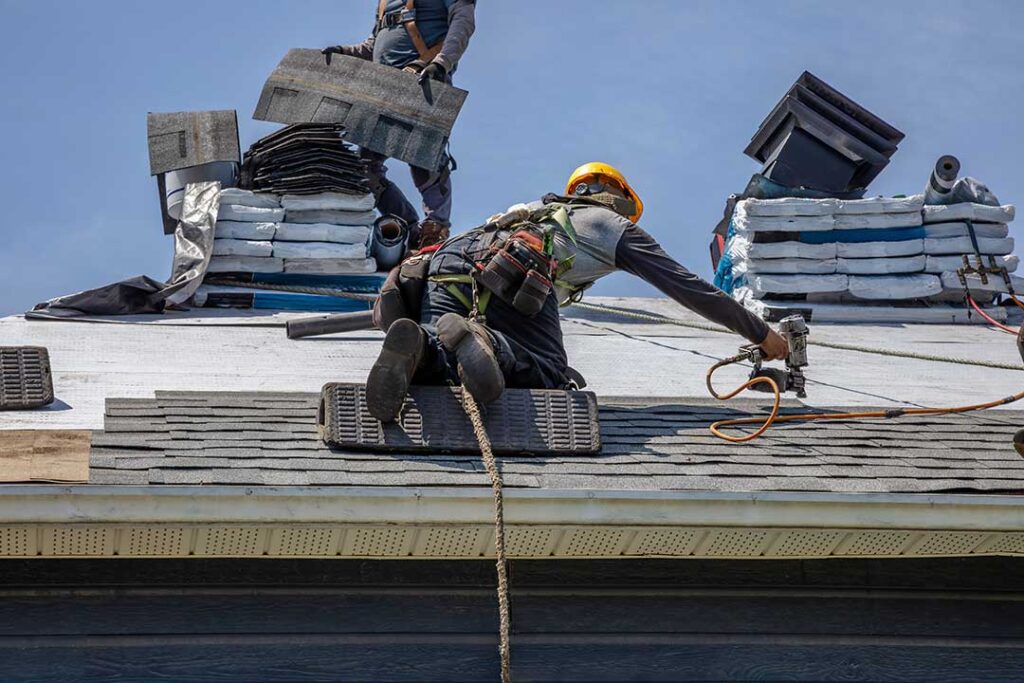
What is the safest way to clean a roof?
The safest approach is to remove loose debris from the ground or from a securely positioned ladder and avoid walking on the roof whenever possible. Roof surfaces become especially slippery when wet, and cleaning can loosen algae, moss, granules, or hidden debris.
For many homes, safe cleaning means using a soft brush or low-pressure rinse from a stable position rather than climbing onto the shingles. If the roof is steep, more than one story high, visibly damaged, wet, icy, or difficult to access, the safest choice is to avoid the work entirely.
Roof cleaning is not just a cosmetic task. Moss can hold moisture against shingles, while heavy debris can block drainage and hide damaged flashing or missing shingles.
Why can roof cleaning be hazardous?
Roof cleaning combines several hazards that are easy to underestimate:
- Falls from roof edges, ladders, or skylights
- Slippery shingles made wetter by water or cleaning solution
- Falling branches, tools, debris, and loosened roofing material
- Damage to shingles from pressure washing or aggressive scraping
- Chemical exposure to skin, eyes, plants, siding, and metal fixtures
- Electrical hazards near overhead service lines
- Unstable footing caused by frost, ice, wet leaves, or moss
A roof that appears only mildly sloped from the ground may be much more difficult to stand on. Asphalt shingles also lose some of their traction as they age. In Greene, NY, seasonal rain, snow, freeze-thaw cycles, and falling leaves can create conditions that change quickly from one day to the next.
Never clean a roof during rain, frost, snow, high wind, or temperatures near freezing. Morning dew can make shingles slick even when the weather appears clear.
Should you walk on asphalt shingles to clean them?
Usually, no. Walking on asphalt shingles can cause falls and may damage the roofing surface by removing granules, cracking brittle areas, or loosening tabs. Older shingles are particularly vulnerable during cold weather.
A safer sequence is:
1. Inspect the roof from the ground with binoculars if needed.
2. Clear reachable gutters and lower roof edges from a stable ladder or ground position.
3. Use a soft-bristled extension brush only where it can be controlled safely.
4. Rinse gently from the roof ridge downward, rather than forcing water underneath shingles.
5. Stop if the work requires stepping onto the roof.
Do not use a pressure washer on asphalt shingles. High-pressure water can strip protective granules, force water beneath the roofing material, and damage flashing or underlayment. It can also spread dirty runoff onto siding, windows, decks, and planted areas.
How should moss, algae, and lichen be removed?
Moss should not be aggressively pulled from shingles. Its roots or gripping structures may be attached to the surface, and pulling can remove granules or lift roofing tabs.
For light growth, a soft brush may loosen surface material without scraping. Work from the top of the growth downward and avoid prying beneath shingle edges. A roof-cleaning solution specifically labeled for the roofing material may help with algae or moss, but the label directions should be followed carefully.
Avoid mixing cleaning chemicals. Never combine chlorine bleach with ammonia, acids, or other cleaners because dangerous gases can form. Wear eye protection, gloves, long sleeves, and footwear with slip-resistant soles when handling any roof-cleaning product.
Protect nearby property before applying a solution:
- Wet plants with clean water beforehand.
- Cover delicate vegetation when practical.
- Direct runoff away from ponds, gardens, and storm drains.
- Rinse siding, windows, gutters, and metal surfaces afterward.
- Keep children and pets away from the work area.
A cleaning solution may kill visible growth without removing its stains immediately. Scrubbing harder is not necessarily safer or more effective.
How can leaves and branches be cleared safely?
Small amounts of leaves and twigs can often be removed from the ground with a roof rake designed for the purpose. Use a tool with a nonmetallic head when possible, and pull debris gently toward the roof edge.
Do not yank on branches caught under shingles or around flashing. A branch may be supporting damaged material that could fall unexpectedly. Large limbs, storm debris, or anything near a service line should not be handled from a ladder.
Gutters deserve attention because clogged drainage can send water behind fascia boards or against roof edges. However, gutter cleaning from a ladder also creates a fall hazard. Keep both hands available when climbing, and do not stretch sideways to reach another section. Move the ladder instead.
A ladder should stand on firm, level ground and be positioned according to the manufacturer’s instructions. It should not rest on loose soil, ice, wet leaves, or stacked materials.
What equipment is appropriate for a small cleaning job?
For ground-level or low-access work, useful equipment may include:
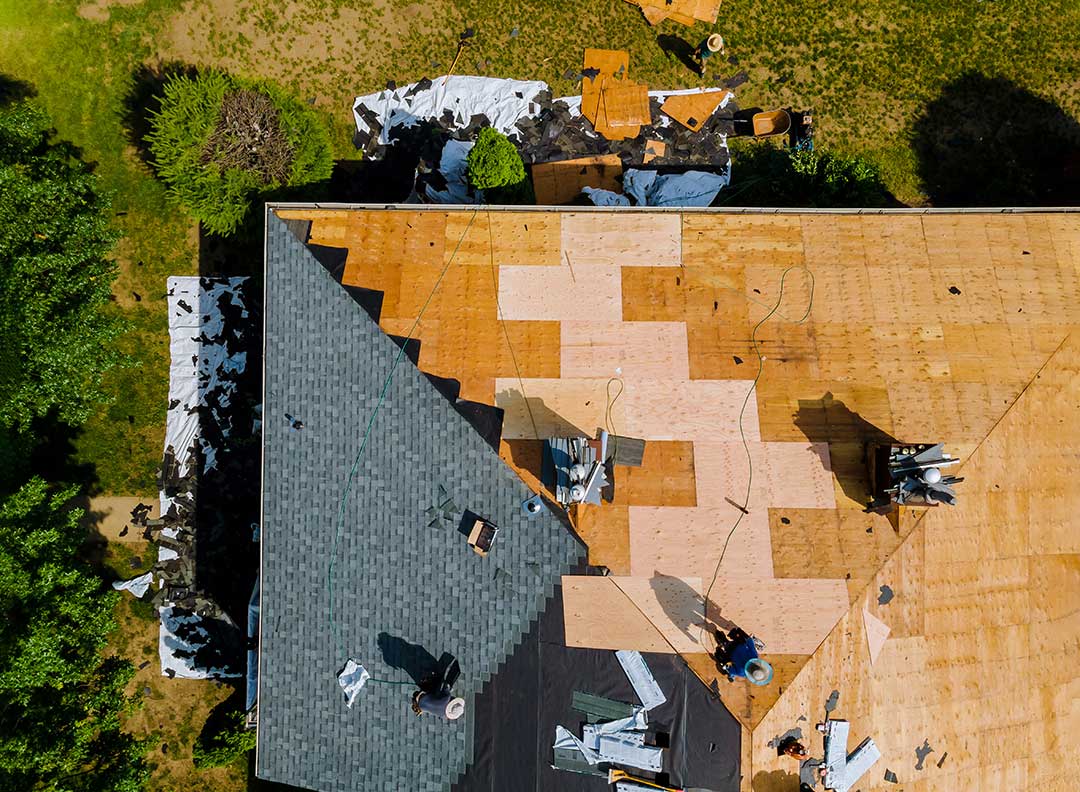
- Safety glasses and waterproof gloves
- A soft-bristled extension brush
- A garden hose with a gentle spray setting
- A roof rake for loose leaves
- A stable, properly sized ladder
- Ladder stabilizers or a second person to help secure the setup
- Tarps or plant coverings for runoff protection
Do not rely on ordinary sneakers, smooth-soled boots, improvised roof anchors, or a garden hose used as a climbing aid. A harness is not automatically a complete fall-protection system; it requires suitable equipment, a properly rated anchor, and knowledge of how to use it safely.
Keep tools and hoses from crossing walkways. Mark the drop zone below the work area so that nobody walks beneath falling debris.
When should roof cleaning be stopped?
Stop immediately if shingles begin to move, granules appear in large amounts, the ladder shifts, visibility worsens, or the roof surface becomes slippery. Also stop if you find:
- Exposed underlayment or roof decking
- Sagging areas
- Cracked or missing shingles
- Loose flashing
- Soft spots
- Water entering the attic or upper floors
- Moss covering a large portion of the roof
- Damage near a chimney, skylight, or vent
A roof with structural damage is not suitable for routine cleaning. Roof access should also be left to trained, properly equipped workers when the roof is steep, high, fragile, or surrounded by obstacles. Fall protection requirements can apply to elevated roofing work, and household ladders are not a substitute for a complete safety system.
How often should a roof be cleaned?
There is no universal schedule. A roof may need attention when leaves accumulate, gutters stop draining, moss remains damp for long periods, or dark algae streaks spread across the shingles.
In the local climate, inspect from the ground at least twice a year—often after leaf fall and again after winter conditions ease. Look for changes rather than trying to make the roof look perfectly new. Some discoloration is harmless, while thick moss, blocked drainage, or growth lifting shingles deserves closer evaluation.
Keeping nearby tree limbs trimmed, clearing gutters, improving roof ventilation, and reducing persistent shade can help limit recurring moisture problems without repeated aggressive cleaning.
