
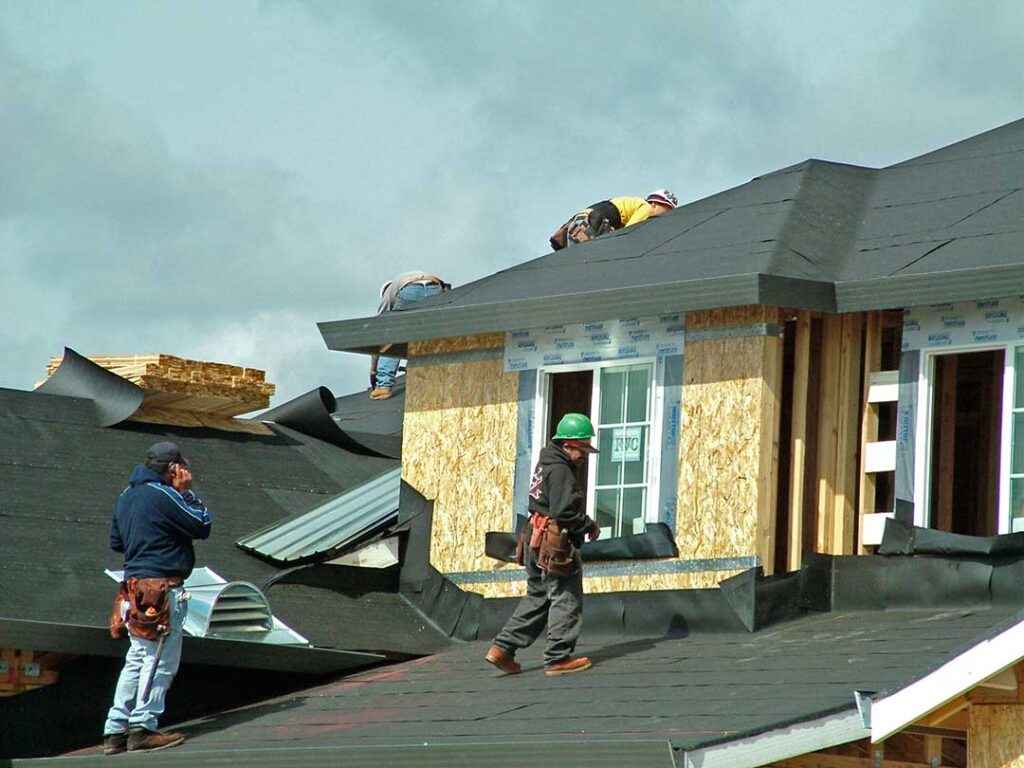
Roof decking is the structural layer beneath shingles, metal panels, or other roof coverings. It is commonly made from plywood, oriented strand board, or older solid wood boards. The decking supports the roof surface and helps transfer snow, wind, and maintenance loads to the rafters or trusses.
A roof can appear reasonably intact while the decking below has already been weakened by moisture. Residents in Greene, NY may notice the first clues indoors, in the attic, or along the roofline rather than from the ground.
What does damaged roof decking look like?
Damaged decking often shows signs of moisture, movement, or decay. The most reliable clues include sagging, soft areas, staining, and fasteners that no longer hold securely.
From inside the attic, look for:
- Dark stains or water marks on the underside of the roof
- Wood that appears swollen, delaminated, cracked, or crumbly
- Areas where daylight is visible through a seam or opening
- Rusted nails, damp insulation, or mold-like surface growth
- Roof sections that appear lower than the surrounding decking
A small stain does not always mean the entire roof deck needs replacement. However, a stain that returns after rain, snow, or an ice event suggests that the moisture source may still be active.
Can a roof look fine from the outside but have bad decking?
Yes. Shingles and underlayment can conceal deteriorated wood for a long time. The upper surface may continue to shed water even after the decking underneath has begun to soften.
This is especially possible when water enters through:
- Failed flashing around chimneys, walls, skylights, or roof penetrations
- Missing, cracked, or wind-damaged shingles
- Ice dams that force water beneath the roof covering
- Blocked drainage paths or overflowing gutters
- Long-term condensation caused by poor attic ventilation
- Repeated leaks that were temporarily covered but not fully corrected
A roof covering that looks acceptable from the yard does not confirm that the structural layer below is dry and sound.
Which indoor signs suggest a decking problem?
Ceiling stains are one of the most familiar warning signs, but they are not the only ones. Changes in the upper floors can indicate that moisture is reaching the roof assembly.
Watch for:
- Brown or yellow discoloration on ceilings and upper walls
- Peeling paint, bubbling drywall, or loose wallpaper
- Damp insulation in the attic
- A musty smell that becomes stronger after precipitation
- Drips or wet spots around roof penetrations
- Repeated repairs in the same ceiling location
Water does not always appear directly beneath the damaged decking. It may travel along rafters, roof boards, insulation, or framing before becoming visible indoors. For that reason, the location of a ceiling stain may not match the exact location of the roof defect.
What does roof decking damage look like from above?
Some warning signs are visible without walking on the roof. A wavy or uneven roof plane may indicate that the decking has absorbed water, lost its stiffness, or shifted under load.
Other exterior clues include:
- Depressions between rafters or trusses
- Shingles that appear uneven because the surface below has moved
- Areas that feel soft or springy underfoot
- Exposed wood at damaged roof edges
- Nail heads that are backing out repeatedly
- Roof sections that remain damp or dark long after nearby areas dry
Walking on a questionable roof can worsen damage and create a fall hazard. A soft area may not be obvious until weight is placed on it, and weakened decking may not safely support a person.
How do Greene’s seasonal conditions affect roof decking?
Freeze-thaw cycles, snow, wind-driven rain, and prolonged dampness can expose weaknesses in a roof assembly. Snow that melts during daytime temperatures and refreezes near the eaves can contribute to ice dams, especially when heat escapes into a poorly ventilated or insufficiently insulated attic.
Seasonal moisture can also enter through small gaps that are easy to overlook. Once water reaches wood decking, repeated wetting and drying may cause swelling, warping, delamination, or decay. Older homes may also contain solid wood roof boards with uneven gaps or previous repairs, making the roof assembly more vulnerable to localized leaks.
The concern is not simply the amount of snow on the roof. A roof with sound framing and properly attached decking may handle normal seasonal loading, while a roof with wet or weakened wood may have less reserve strength.
Is a small soft spot serious?
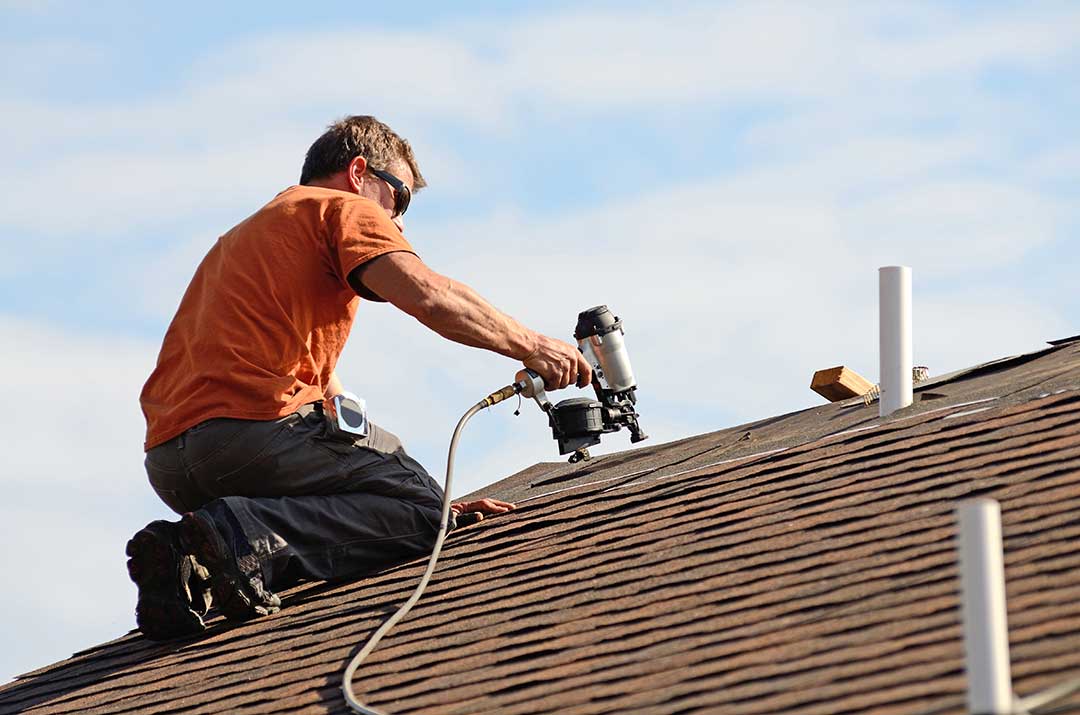
A small soft spot should not be dismissed, particularly if it is near a roof edge, valley, chimney, or other area exposed to concentrated water flow. It may represent a localized repair, but it can also be the visible portion of a larger area of decay.
The extent of damage depends on:
- How long the decking has been exposed to moisture
- Whether the leak has been corrected
- The type and thickness of the decking
- The spacing and condition of the rafters or trusses
- Whether fasteners still hold the roof covering securely
- The presence of mold, rot, or separated wood layers
A limited area may sometimes be repaired without replacing the entire roof deck. Widespread softness, repeated leaks, or significant sagging generally requires a more thorough structural assessment.
Can roof decking be repaired without replacing the whole roof?
Sometimes. Roof decking is often replaced in sections when deterioration is clearly localized and the surrounding wood remains dry, flat, and structurally sound.
Replacement is more likely to be considered when:
- A leak has caused rot around a penetration
- A section has become delaminated
- A damaged roof edge no longer holds fasteners
- A past opening or repair was improperly supported
- The decking is structurally sound everywhere else
Full or extensive replacement may be necessary when moisture has spread across multiple roof slopes, the roof surface is broadly uneven, or the existing material cannot reliably hold new fasteners. The roof covering may need to be opened carefully so the underlying condition can be evaluated.
Repairs should also account for current New York State requirements, including provisions governing roof sheathing, underlayment, and ice-barrier protection. Code requirements can vary depending on the work being performed and the condition of the existing assembly.
When does damaged decking become a safety concern?
Immediate caution is appropriate when the roof is visibly sagging, when large areas are soft, or when water is entering near electrical equipment, ceiling fixtures, or attic wiring. Keep people away from areas beneath active leaks and avoid entering an attic if the floor or roof framing appears unstable.
A qualified roofing or structural professional may be necessary when:
- The roof has a pronounced sag
- Decking is soft over a broad area
- Rafters or trusses appear cracked, shifted, or split
- There has been major water intrusion
- A storm has removed roof coverings
- The roof cannot be inspected safely from the ground or attic
Roof decking is not merely a surface beneath shingles. It is part of the roof’s structural system, and concealed deterioration can worsen even when the visible covering looks serviceable. Early attention to stains, uneven roof lines, damp insulation, and recurring leaks can help distinguish a limited repair from a larger problem before the damage spreads.
