

A roof inspection is most useful before small problems become interior leaks, structural concerns, or emergency repairs. For most homes in Greene, NY, the most practical routine is an inspection once a year, with additional checks after severe weather, visible damage, or major changes to the home.
How often should a roof be inspected?
Most residential roofs benefit from a yearly inspection. An annual review helps identify damaged shingles, deteriorated flashing, blocked drainage, loose components, and early signs of moisture intrusion.
The most useful timing depends on the roof’s condition and the season:
- Late spring: Checks for damage from snow, ice, freezing temperatures, and winter wind.
- Late summer or early fall: Finds problems before the roof faces another winter cycle.
- After severe weather: Identifies storm damage that may not be visible from the ground.
- Before buying or selling a home: Documents the roof’s apparent condition and remaining concerns.
- After interior warning signs appear: Investigates possible leaks or ventilation problems.
A newer roof in good condition may only need a routine annual inspection. An older roof, a roof with a history of leaks, or a home with large surrounding trees may require more frequent monitoring.
Why is spring a good time for an inspection?
Spring inspections reveal how well the roof handled winter conditions. In Greene, snow, ice, freeze-thaw cycles, and strong winds can affect shingles, flashing, gutters, roof edges, and penetrations around chimneys or vents.
Winter damage is not always obvious. A roof may look acceptable from the yard while still having:
- Lifted or cracked shingles
- Missing granules in roof valleys and drainage paths
- Bent or loosened metal flashing
- Damaged gutter attachments
- Ice-related wear near eaves
- Small openings around vents or plumbing pipes
- Water staining in the attic
Spring is also a useful time to check attic insulation and ventilation. Moisture that formed during winter can contribute to damp insulation, stained wood, mold-like growth, or rust on fasteners. These conditions may indicate a ventilation or condensation issue rather than a simple roof leak.
Should a roof be inspected before winter?
Yes. A late-summer or early-fall inspection gives homeowners time to address defects before snow and ice make access more difficult.
Before winter, attention should be given to the roof surface, valleys, flashing, chimney areas, gutters, downspouts, and attic. Small defects can become more serious when water freezes and expands inside cracks or under roofing materials.
A pre-winter inspection is especially sensible if:
- The roof is more than 15 years old
- Shingles show curling, blistering, cracking, or widespread granule loss
- A previous leak was repaired but not recently reevaluated
- Gutters overflow during rain
- Trees overhang the roof
- The home has experienced ice buildup along the eaves
- Attic insulation or ventilation has recently been changed
- The property has a low-slope roof section or an addition
A roof does not need to be visibly leaking to have a winter-readiness problem. Drainage issues, loose materials, and weak flashing can remain hidden until several freeze-thaw cycles occur.
When is an inspection needed after a storm?
A roof should be checked after severe wind, hail, heavy rain, fallen branches, or unusually heavy snow and ice. Storm damage can affect roofing materials without creating an immediate leak.
After a storm, look from the ground for:
- Shingles on the lawn or in gutters
- Uneven or lifted sections
- Exposed underlayment
- New dents, dark marks, or broken roofing material
- Bent vents, flashing, or gutters
- Branches resting on the roof
- Water stains on ceilings or upper walls
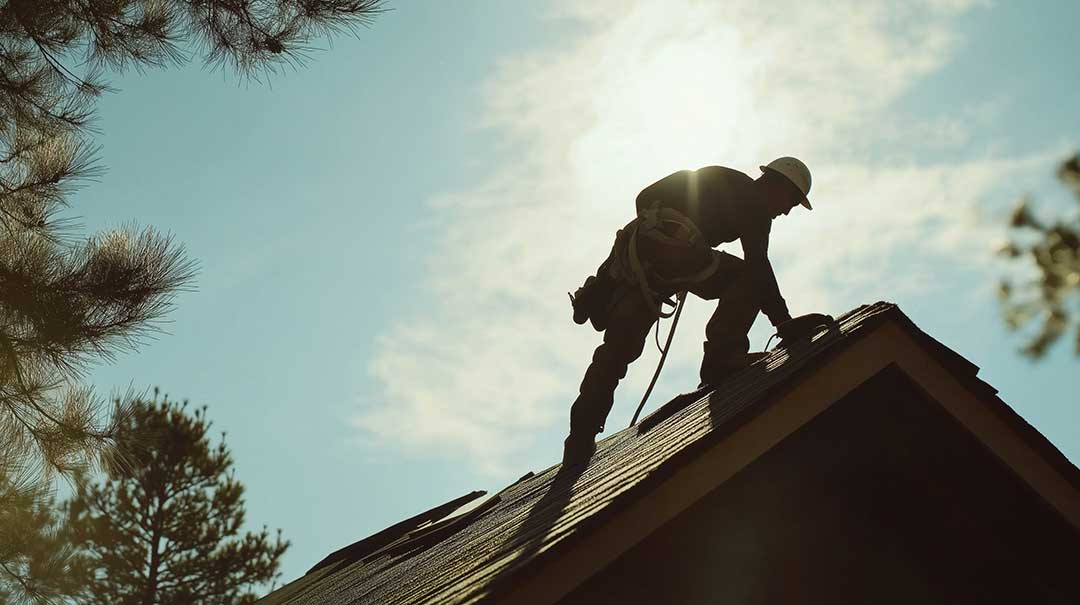
Do not climb onto the roof to inspect it during wet, icy, windy, or unstable conditions. Ground-level observations and an attic check are safer starting points. If there is active leaking, a sagging ceiling, exposed electrical equipment, or a visibly unstable roof area, the issue should be treated as urgent.
Heavy snow also deserves attention. Snow loads can become more concerning when snow is wet, when drifting concentrates weight in one area, or when ice and snow accumulate unevenly. Warning signs include unusual roof deflection, cracking sounds, doors or windows that suddenly bind, and new interior wall or ceiling cracks.
What signs mean an inspection should happen sooner?
A scheduled annual inspection should not replace a prompt evaluation when warning signs appear. Water may travel along rafters and decking before it becomes visible inside the living space.
Arrange an earlier inspection when there is:
- A ceiling stain, bubbling paint, or peeling wall finish
- Dampness or musty odor in the attic
- Daylight visible through the roof deck
- Missing, cracked, or displaced shingles
- Rust or separation around flashing
- Granules collecting heavily in gutters
- Persistent gutter overflow
- A sagging roofline or soft decking
- Sudden increases in attic moisture
- Evidence of animals entering through the roof
A stain that dries after a storm still deserves attention. The absence of current dripping does not prove that the underlying opening has sealed.
How does roof age affect inspection timing?
Roof age is a useful guide, but it is not a guarantee of remaining service life. Installation quality, ventilation, roof slope, shade, tree exposure, maintenance, and repeated weather events all influence performance.
As a roof gets older, inspections should focus more closely on patterns rather than isolated defects. One missing shingle may be a limited repair issue, while widespread curling, brittle material, exposed fasteners, or repeated leaks may indicate broader aging.
Homeowners should also keep records of repairs, leaks, storm events, and inspection findings. A simple dated record can help distinguish a new problem from a recurring one and can be useful when planning maintenance.
Can homeowners inspect a roof themselves?
Homeowners can perform a safe visual review from the ground and inside the attic, but roof-surface inspections carry fall risks. Walking on shingles can also cause damage, especially when materials are cold, brittle, wet, or steeply pitched.
From the ground, binoculars can help reveal missing shingles, damaged flashing, sagging areas, and clogged drainage paths. In the attic, look for daylight, damp insulation, water marks, rusted nails, and darkened wood.
A person should not climb onto a roof during unsafe weather or attempt to investigate structural sagging. Roofing materials can conceal weak decking, and ladders become particularly hazardous on wet or icy surfaces.
What is the most practical inspection schedule?
For many households, the following schedule is reasonable:
1. Inspect visually in spring after the main winter season.
2. Check the roof again in late summer or early fall before winter weather.
3. Inspect after significant storms or falling branches.
4. Investigate promptly whenever leaks, sagging, damaged materials, or attic moisture appear.
5. Increase inspection frequency as the roof ages or if the home has recurring problems.
The right timing is less about choosing one perfect month and more about matching inspections to local weather, roof age, and visible conditions. In a community that experiences snowy winters, wet seasons, strong storms, and repeated freeze-thaw cycles, regular observation can identify roof problems while they are still limited and easier to understand.
