

What can homeowners safely do to maintain a roof?
Residents in Greene, NY can handle several basic roof maintenance tasks without climbing onto the roof. The safest routine includes ground-level inspections, gutter cleaning, attic checks, and prompt attention to small signs of moisture or damage.
Roof maintenance is less about making repairs and more about finding problems early. A few minutes of observation after heavy rain, strong wind, or a winter storm can help prevent concealed damage from spreading into roof decking, insulation, ceilings, and walls.
For most homes, a practical maintenance routine includes:
- Inspecting the roof from the ground several times a year
- Cleaning gutters and downspouts in spring and late fall
- Checking attic spaces for moisture, daylight, and poor ventilation
- Trimming branches that rub against or hang over the roof
- Looking for missing, cracked, curled, or loose shingles
- Keeping records of leaks, repairs, and storm damage
How often should a roof be inspected?
A roof should receive a basic visual inspection at least twice a year, with additional checks after severe weather. Spring and fall are useful times because winter conditions, summer storms, wind, and falling leaves can all reveal different types of damage.
A ground-level inspection should examine:
- Shingles that appear darker, lifted, broken, or missing
- Exposed underlayment or roof decking
- Bent or loose flashing around chimneys, vents, and roof edges
- Sagging areas or uneven roof lines
- Granules collecting near downspouts
- Moss, algae, or plant growth in shaded areas
- Damaged gutters, downspouts, soffits, and fascia
Binoculars can provide a closer view without the risks of walking on a sloped, wet, icy, or brittle surface. Roof surfaces become especially hazardous after rain, frost, or snow.
Why are gutters part of roof maintenance?
Gutters protect the roof edge, siding, foundation, and soil around the house by directing water away from the building. When gutters are blocked, water can back up beneath shingles, overflow onto fascia boards, or collect near the foundation.
Clean gutters in late spring after seeds and blossoms have fallen, and again in late fall after leaves have accumulated. Homes near mature trees may need additional checks.
While cleaning, look for:
- Sagging sections
- Separated seams
- Loose hangers
- Rusted or cracked areas
- Downspouts that discharge too close to the foundation
- Water stains beneath the roof edge
- Ice buildup or deformation from winter conditions
Downspouts should remain securely connected and direct water away from the foundation. Extensions can help prevent repeated saturation near basement walls and crawl spaces.
Use a stable ladder on firm, level ground, and do not lean beyond a safe position. If the work requires reaching over a steep slope, handling ice, or accessing a high roof edge, it is safer to avoid the task.
How should homeowners check the attic?
The attic often shows roof problems before they become visible inside living areas. Check the space during daylight and after heavy rain if possible.
Warning signs include:
- Damp insulation
- Water stains on roof sheathing or rafters
- Mold-like growth
- A musty smell
- Rust around nails or metal fasteners
- Frost on the underside of the roof deck
- Daylight visible through areas that should be sealed
- Compressed or displaced insulation near the eaves
A small ceiling stain does not always appear directly below the leak. Water can travel along rafters, insulation, wiring, or plumbing before entering a room. The location of an interior stain may therefore be different from the location of the roof defect.
Do not cover wet insulation or paint over a ceiling stain before the source has been identified. Concealing the evidence can allow moisture damage to continue unnoticed.
What should Greene homeowners know about snow and ice dams?
Cold winters, repeated freeze-thaw cycles, and snow accumulation can place additional stress on roof systems in the area. An ice dam forms when heat escaping into the attic melts snow on the warmer upper roof, allowing water to run toward colder eaves where it refreezes.
Ice dams can force water beneath shingles and into attic insulation or wall assemblies. They are usually related to heat loss, air leakage, insulation gaps, and ventilation—not simply to the presence of snow.
Homeowners can reduce risk by:
- Keeping attic insulation evenly distributed
- Making sure bathroom and kitchen exhaust vents discharge outdoors
- Preventing warm indoor air from leaking through attic hatches, recessed lights, and wiring openings
- Keeping soffit and ridge ventilation pathways clear
- Removing heavy snow only with methods designed for roof use
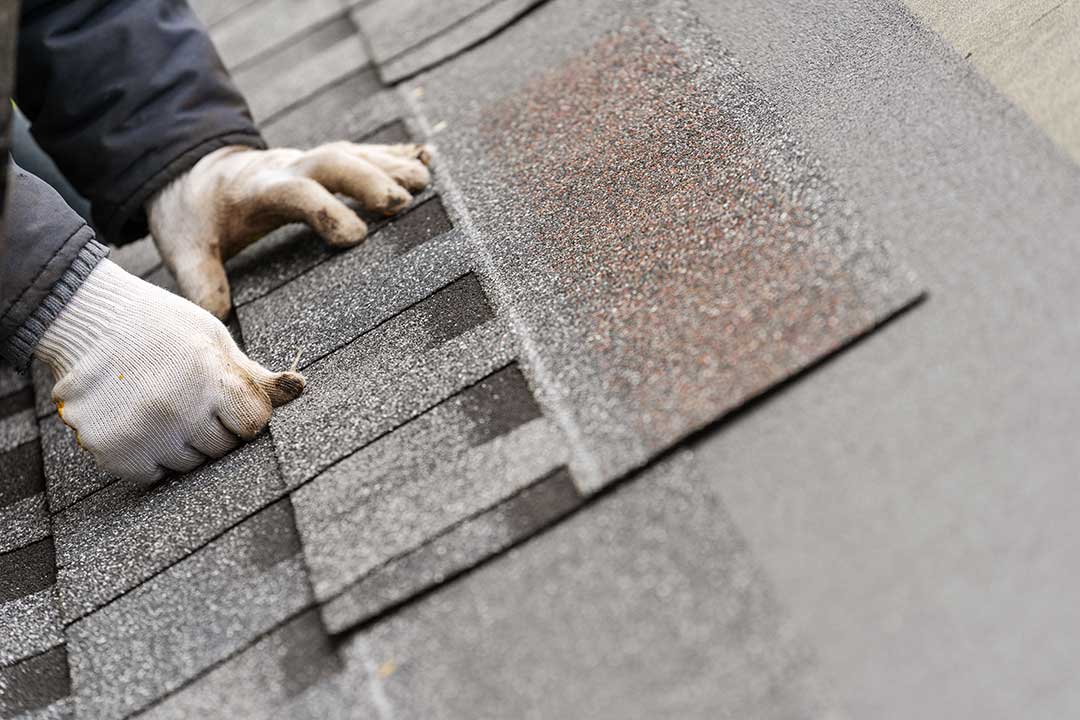
Do not chop ice dams with an axe, shovel, or other sharp tool. This can damage shingles and create additional leaks. Do not climb onto an icy roof or pull snow toward walkways, doors, vehicles, or utility equipment.
Large snow loads, visible sagging, cracking sounds, or doors and windows that suddenly become difficult to operate can indicate structural stress. Leave the building if conditions appear unsafe and seek emergency assistance.
Is moss on a roof a serious problem?
Moss is not automatically a sign that a roof needs replacement, but it should not be ignored. Moss retains moisture and can lift or loosen shingles over time, especially in shaded areas where the roof remains damp.
Avoid pressure washing, scraping aggressively, or pulling moss from shingles. These methods can remove protective granules and shorten the roof’s service life.
Instead, observe whether moss is spreading, lifting shingles, blocking drainage, or growing around flashing. Improving sunlight and airflow by trimming nearby branches may help keep the surface drier. Any treatment should be compatible with the roof material and handled according to safety instructions.
Which roof problems require more than DIY maintenance?
Some conditions are not appropriate for do-it-yourself work. Stop and seek qualified assistance when there is:
- A roof leak during active rain or melting snow
- Missing shingles across a broad area
- Damaged flashing around a chimney or roof penetration
- Structural sagging
- A hole in the roof
- Significant storm or fallen-tree damage
- Electrical equipment near a wet area
- A steep, slippery, or difficult-to-access roof
- Suspected mold or extensive wet insulation
Roof work also becomes more complicated when repairs involve ventilation changes, structural framing, insulation, or code requirements. New York residential standards address roof drainage, attic ventilation, and weather protection, so a repair should not create a new moisture or ventilation problem.
What maintenance mistakes should homeowners avoid?
The most common mistake is treating a visible symptom without finding the underlying cause. Replacing one stained ceiling tile, adding caulk around a vent, or covering a leak with a temporary patch may not stop water entering the roof system.
Other mistakes include:
- Walking on shingles unnecessarily
- Using a pressure washer on roofing materials
- Blocking soffit vents with insulation
- Discharging bathroom exhaust into the attic
- Ignoring loose gutters
- Leaving branches in contact with the roof
- Removing ice with sharp tools
- Assuming a newer roof cannot leak
- Waiting until interior damage appears before inspecting the roof
A simple written record can help. Note the date of each inspection, areas observed, photographs taken, and any changes after storms. Patterns—such as repeated staining near one roof penetration or recurring ice at one eave—can make later diagnosis more accurate.
