
Holiday decorations are easy to overlook once they are packed away, but poor storage can contribute to roof damage, attic moisture, blocked ventilation, and unsafe roof loading. In Greene, NY, where winter snow, freezing temperatures, wind, and repeated thawing can affect homes, careful storage helps protect both the decorations and the roof system.
Can holiday decorations be stored in the attic?
They can be stored in an attic only if the space is designed or clearly suitable for storage. Many attics are intended to provide insulation and ventilation rather than support heavy household contents.
Before placing bins in the attic, check whether the floor has stable decking, whether the framing appears sound, and whether the storage area leaves insulation and ventilation paths undisturbed. Do not assume that a few plastic containers are harmless simply because they are lightweight when empty. Several filled containers, a tree, wreaths, lights, and seasonal furniture can create a concentrated load in one small area.
Avoid storing items directly on ceiling drywall or between ceiling joists unless the space was specifically built for that purpose. Stepping between joists can damage drywall below, insulation, wiring, or ductwork.
If the attic has sagging, cracked framing, water stains, soft decking, visible mold, or limited access, use another storage area rather than adding weight.
What is the safest place to store decorations?
The safest storage location is generally a dry, stable area below the roof, such as a closet, basement, interior storage room, or properly protected garage area. Keeping decorations off the roof and away from attic insulation reduces the chance of moisture problems and accidental structural loading.
Choose a location that is:
- Dry throughout the year
- Away from active plumbing leaks and foundation seepage
- Protected from freezing if decorations contain liquids, batteries, or delicate materials
- Clear of furnace equipment, electrical panels, and other heat sources
- Easy to access without leaning ladders against walls or roof edges
In a garage or shed, keep containers on shelving or pallets rather than directly on a concrete floor. Seasonal temperature changes can cause condensation beneath boxes, especially when warm, humid air meets cold surfaces.
How should decorations be packed to prevent moisture damage?
Decorations should be clean and completely dry before they are boxed. Artificial greenery, outdoor ornaments, extension cords, and light strands may carry melted snow, rainwater, mud, or plant debris into storage.
Allow damp items to dry indoors or in a protected area before packing them. Do not seal wet decorations in airtight containers. Trapped moisture can produce mildew, corrosion, musty odors, and deterioration of cardboard or fabric.
For better protection:
- Use sturdy plastic containers for items that may be exposed to humidity.
- Place tissue paper or clean packing material around fragile ornaments.
- Avoid newspaper around light-colored fabrics because ink can transfer.
- Keep batteries out of lighted decorations unless the manufacturer specifically allows storage with batteries installed.
- Store electrical cords loosely rather than wrapping them tightly around sharp objects.
- Label each container by season or room to reduce unnecessary unpacking and rearranging.
Cardboard boxes are acceptable in a consistently dry interior space, but they are less suitable for basements, garages, and attic areas that experience temperature swings.
Can storage block roof ventilation?
Yes. Boxes, bags, and insulation can block airflow at the eaves, soffits, or attic roofline. This can raise attic humidity and temperature, interfere with drying, and increase the risk of condensation on cold roof surfaces.
Keep stored items away from:
- Soffit and eave ventilation openings
- Ridge or gable vents
- Bathroom and kitchen exhaust fan discharge points
- Recessed light fixtures unless they are approved for contact with insulation
- Chimneys, flues, furnaces, and other heat-producing equipment
- Electrical junctions and wiring that require access
Do not push bins into the narrow edges of an attic simply because those spaces appear unused. Those areas may be part of the roof’s ventilation path. Blocking them can contribute to frost, damp insulation, peeling paint, or moisture damage during the heating season.
Should decorations be stored near roof leaks or water stains?
No. Water stains, darkened sheathing, damp insulation, peeling materials, or musty odors indicate that the area should not be used for storage until the cause is understood.
A roof leak may not drip continuously. Water can enter around flashing, roof penetrations, valleys, or ice-related trouble spots and travel along framing before becoming visible. A dry-looking area in summer may still be vulnerable during winter snow, wind-driven rain, or freeze-thaw cycles.
Keep containers away from any questionable area and avoid covering stains with boxes. Storage can hide new signs of leakage and make it harder to identify whether a problem is getting worse.
Can holiday lights or decorations damage shingles?
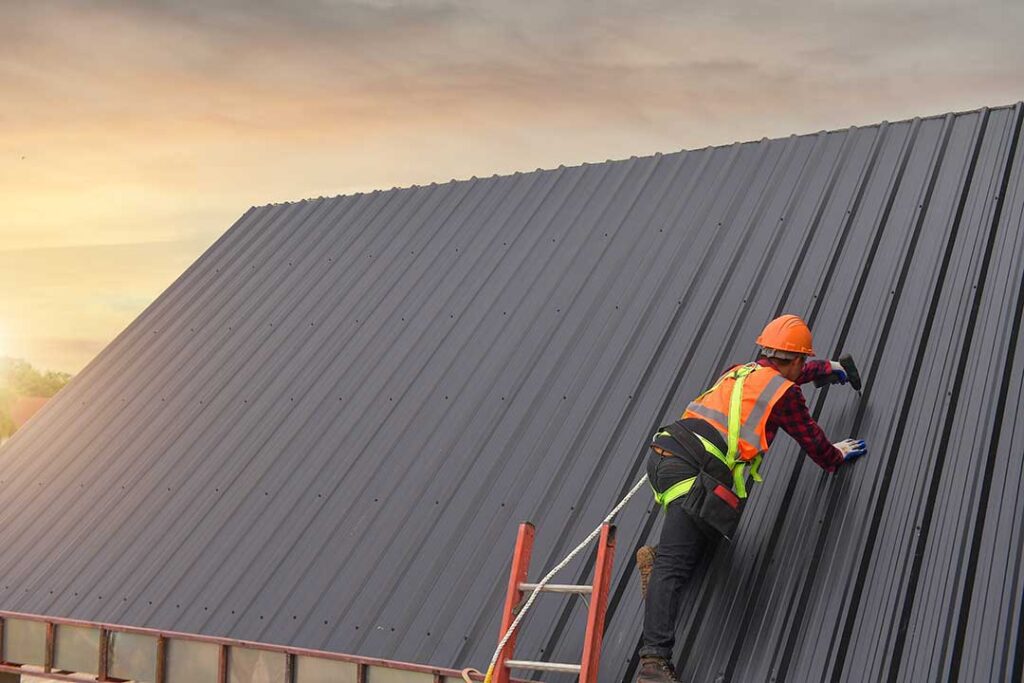
Decorations should never be attached to shingles, flashing, gutters, ridge caps, or roof penetrations with nails, staples, screws, or adhesives that can pull on the roof covering. Even small punctures may allow water to reach underlayment or roof decking.
Do not place decorations on the roof itself. Walking on shingles can loosen granules, damage brittle areas, bend flashing, and create slip hazards, particularly when surfaces are cold, wet, icy, or snow-covered.
If outdoor decorations need to be installed, use locations and attachment methods intended for exterior use without penetrating the roof. Keep cords away from sharp edges and avoid routing them beneath shingles or through areas where water drains.
How should an artificial tree be stored?
An artificial tree should be cleaned, dried, and stored in a container that protects it from crushing and moisture. Avoid forcing the tree into an undersized box, since compressed branches and hinges may not recover properly.
Store the tree horizontally on a stable shelf or floor area. Do not lean a large tree against attic rafters, roof sheathing, or stored bins where it can shift and place pressure on framing or ventilation components.
For pre-lit trees, inspect the cord and connections before storage. Do not wrap cords around metal branches in a way that can cut or pinch the insulation.
What should Greene residents check before winter storage?
Before placing decorations away for the season, take a few minutes to inspect the storage area and the roof-related parts of the home:
- Look for damp insulation, water marks, or condensation.
- Confirm that attic vents are not covered.
- Check that storage is spread over suitable support rather than concentrated in one weak spot.
- Keep access paths to vents, wiring, and mechanical equipment clear.
- Remove leaves and debris from outdoor decorations before they are packed.
- Make sure containers cannot slide toward attic openings or roof edges.
- Recheck the area after the first major winter weather event if the attic has had moisture problems before.
A dry, accessible storage location protects decorations while also preserving the ventilation, drainage, and structural functions that the roof depends on throughout the year.
