
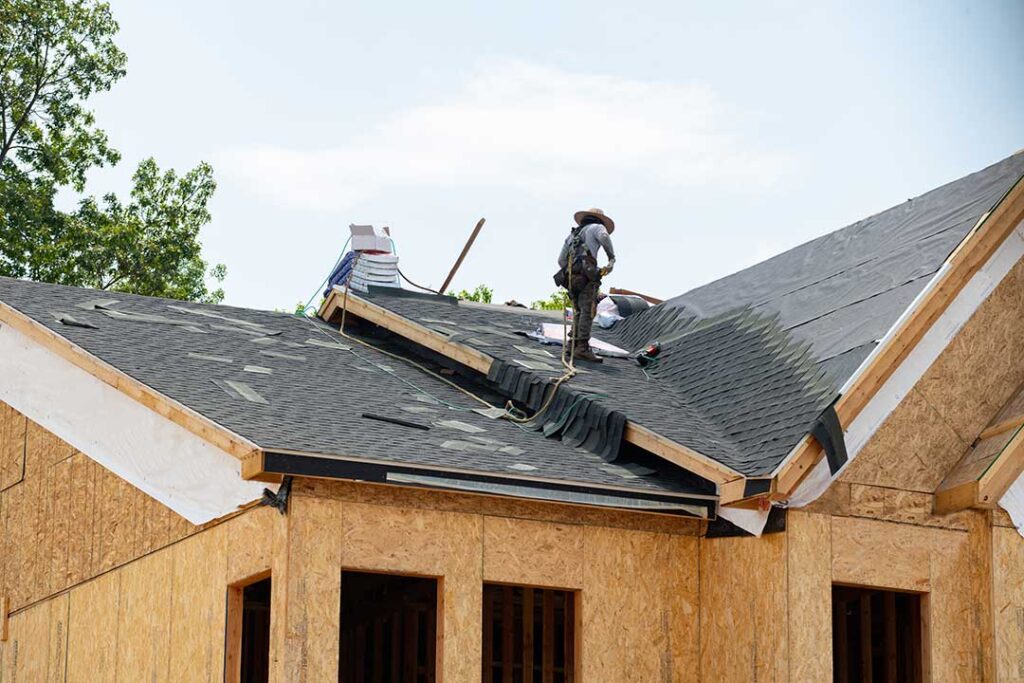
What should Greene, NY homeowners look for first?
Early roof damage is often easier to see from the ground or inside the attic than from the roof surface itself. Missing shingles, damp insulation, daylight through roof boards, and water stains can all signal that a small problem is developing into a larger one.
Routine observation is especially useful in Greene, where roofs must withstand snow, ice, wind, heavy rain, and repeated freeze-thaw cycles. A roof does not need to be visibly collapsing to have a leak or weakened area.
Which exterior signs suggest roof damage?
Several warning signs can be checked safely from the ground with binoculars or from nearby windows. Avoid walking on the roof, especially when it is wet, icy, steep, or covered with debris.
Look for:
- Shingles that are missing, cracked, curled, lifted, or noticeably darker than surrounding shingles
- Exposed underlayment or wood near roof edges, valleys, or areas around roof penetrations
- Granules collecting in gutters or at the base of downspouts
- Sagging lines along the roof plane, ridge, or eaves
- Damaged or loose flashing around chimneys, vent pipes, skylights, and wall intersections
- Metal components that are bent, rusted through, or pulled away from the roof
- Moss or algae that is holding moisture against the roofing surface
- Tree limbs, fallen branches, or piles of leaves resting on the roof
A few loose granules are not always a concern, particularly on a newer roof. A steady buildup of granules, however, may indicate surface wear or shingle deterioration. Granules help protect asphalt shingles from sunlight and weather, so widespread loss can shorten their service life.
How can interior stains reveal an active leak?
Brown, yellow, or gray marks on ceilings and upper walls may indicate roof leakage, but the visible stain is not always directly below the entry point. Water can travel along rafters, roof decking, insulation, or framing before reaching the interior surface.
Check areas below:
- Attic ceilings and roof sheathing
- Valleys where roof sections meet
- Chimneys, plumbing vents, and exhaust vents
- Skylights and other roof openings
- Exterior walls near roof intersections
- Rooms where stains appear after rain or melting snow
A stain that grows after precipitation deserves prompt attention. Peeling paint, bubbling drywall, damp insulation, or a musty odor can indicate that moisture is present even when no active dripping is visible.
A ceiling stain may also come from plumbing, condensation, or an ice dam rather than a failed shingle. The timing of the moisture is useful: a leak that appears only after wind-driven rain may point to flashing or edge damage, while moisture during very cold weather may be related to attic ventilation or ice buildup.
What does an attic inspection reveal?
The attic often provides the clearest early evidence of roof trouble. Use a flashlight and stay on floor framing or installed walkboards. Do not step between joists, because the ceiling below may not support body weight.
Look for:
- Wet or compressed insulation
- Dark stains on rafters or roof sheathing
- Mold-like surface growth caused by persistent moisture
- Rusted nails or fasteners
- Daylight visible through roof boards
- Water trails running down framing
- Frost on the underside of roof decking during cold weather
- Damaged or blocked ventilation openings
Frost in an attic does not necessarily mean the roof is leaking. Warm, moist household air can enter the attic through gaps around light fixtures, plumbing penetrations, attic hatches, or ductwork. That moisture may condense and freeze on cold roof surfaces, then melt later and resemble a leak.
Good attic ventilation and air sealing work together. Ventilation alone cannot correct all moisture problems, and adding insulation without addressing air leakage may trap moisture in the wrong place.
Are gutters and roof edges connected to roof damage?
Yes. Gutters and eaves can provide clues about how water is moving off the roof. Water that spills behind a gutter or pools near the foundation may be associated with clogged drainage, damaged fascia, poor slope, or a roof edge that no longer directs water properly.
Check for:
- Gutter sections pulling away from the fascia
- Sagging or overflowing gutters
- Loose drip-edge metal
- Rot or soft spots in fascia and soffit boards
- Water stains beneath the eaves
- Ice buildup along the lower roof edge
- Downspouts that discharge too close to the foundation
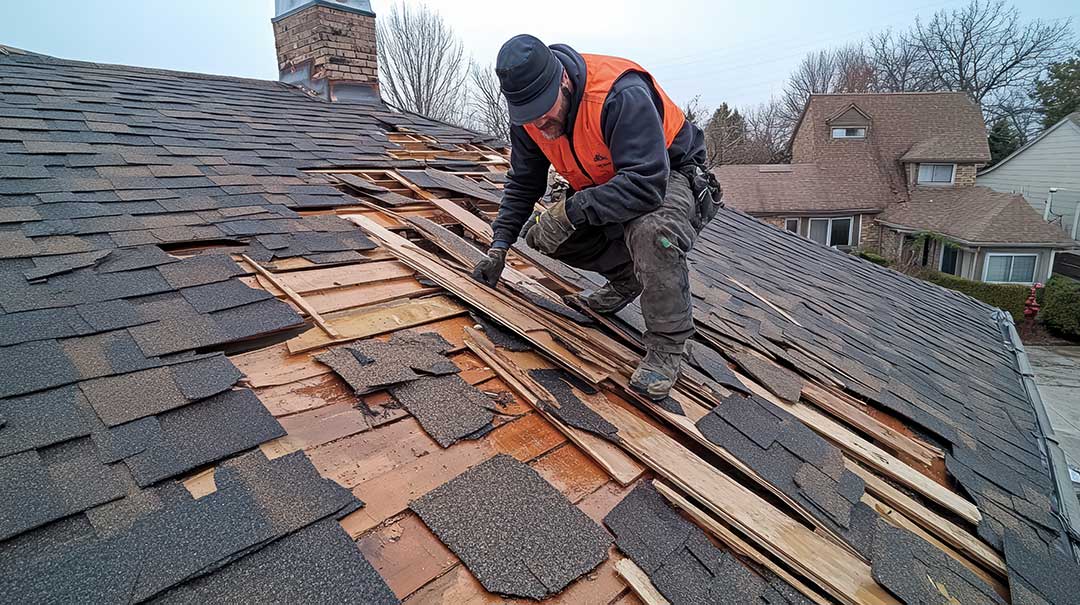
During Greene winters, snow and ice can add substantial weight to roof edges and drainage systems. Ice dams may form when heat escapes into the attic and warms the upper roof surface while the eaves remain cold. Meltwater can then collect behind the ice and move beneath shingles.
Not every ice buildup creates interior damage, but recurring ice dams are a reason to examine attic insulation, ventilation, air leakage, and roof-edge conditions.
What roof damage can strong wind cause?
Wind damage is not always dramatic. Shingles may remain in place but become lifted, creased, or loosened around their adhesive strips. The problem may be difficult to see from the ground until the next rain or wind event.
After a severe storm, look for:
- Shingles lying in the yard or caught in trees
- Uneven rows or raised shingle corners
- Missing ridge caps
- Bent flashing or exposed fasteners
- Damage near roof edges and corners
- Broken branches resting on the roof
- New leaks that appear only during wind-driven rain
Do not assume that a roof is undamaged simply because no shingles are missing. Wind can loosen tabs, separate flashing, or create small openings that admit water later.
How can roof age help interpret warning signs?
Age is useful context, but it does not determine roof condition by itself. A roof exposed to poor ventilation, repeated ice, fallen branches, or installation problems may show damage sooner than a roof in a more sheltered setting.
Older roofs may show:
- Widespread granule loss
- Brittle or cracked shingles
- Repeated repairs in several locations
- Sagging or uneven roof planes
- Deteriorated flashing
- Increasing attic moisture
- Leaks that recur after patching
A newer roof can also develop problems. Storm impact, improper drainage, attic condensation, and damage around penetrations may occur at any age. The pattern and location of the warning signs matter more than the calendar alone.
When is roof damage an urgent safety issue?
Active water entering near electrical fixtures, a sagging ceiling, a large roof opening, structural movement, or a tree impact should be treated as urgent. Keep people away from affected areas and avoid touching wet electrical components.
Roof surfaces become particularly hazardous during rain, snow, ice, and high winds. Residents should not climb onto a damaged or slippery roof to inspect it. A qualified roofing or building professional may be necessary when the condition involves structural instability, difficult access, or a potential electrical hazard.
For less urgent concerns, document the location and timing of stains, photograph visible exterior damage from the ground, and note whether the issue follows rain, snowmelt, or strong wind. Those details can help distinguish between a roof leak, condensation, drainage problem, and ice-related moisture.
How often should a roof be checked?
A practical schedule is to look over the roof from the ground in spring and fall, after major storms, and after unusually heavy snow or ice. Gutters should be observed and cleared safely as needed, since blocked drainage can worsen roof-edge and foundation problems.
Early signs are easier to manage when they are recorded before they spread. A small ceiling stain, a few damaged shingles, or damp attic insulation may reveal a localized issue, while widespread sagging, recurring moisture, or extensive surface wear suggests a more serious condition requiring careful evaluation.
