
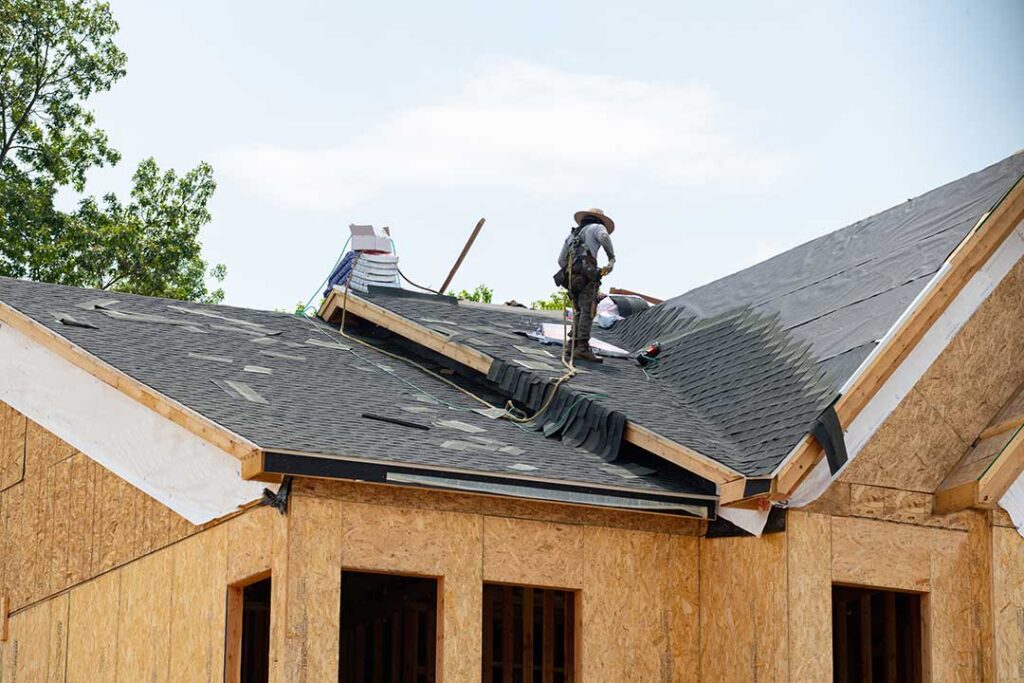
Roof leaks rarely begin as dramatic openings in the roof. More often, water enters through a small weakness, travels along roofing materials or framing, and appears indoors some distance from the original problem. Understanding the usual causes can help residents recognize trouble early and avoid preventable interior damage.
What causes most roof leaks?
The most common causes are damaged roofing materials, failed flashing, clogged drainage paths, aging sealants, and problems around roof openings such as chimneys, vents, and skylights. Weather exposure often reveals a weakness that developed gradually rather than creating the entire problem in a single storm.
In Greene, repeated cycles of snow, ice, rain, wind, and temperature changes can place stress on roofing systems. A roof may appear intact from the ground while vulnerable areas are already allowing moisture beneath the outer surface.
How do damaged shingles allow water inside?
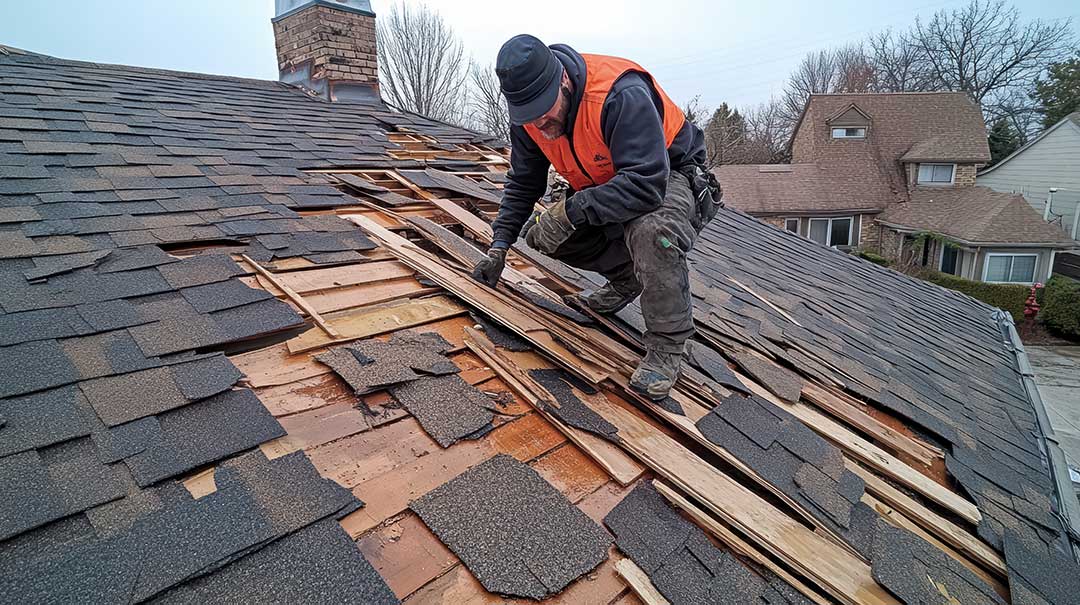
Shingles protect the roof deck by shedding water downhill. Leaks become more likely when shingles are cracked, missing, loose, lifted, or worn thin enough to lose their protective surface.
Common forms of shingle damage include:
- Wind-lifted edges that no longer lie flat
- Cracks caused by aging or repeated temperature changes
- Missing shingles after a storm
- Exposed fasteners
- Granule loss that leaves areas unusually smooth
- Damaged areas around roof edges, ridges, and valleys
A few damaged shingles may not create an immediate ceiling stain. Water can pass beneath nearby materials, remain hidden in the roof assembly, and appear later during heavier rain.
Granules in gutters are not automatically proof of a leak. Some loose granules are expected from newer roofing materials, but a large increase in granule accumulation—especially with visible bald spots on shingles—can indicate surface wear.
Why are flashing failures so common?
Flashing consists of thin pieces of weather-resistant material installed where the roof meets another surface or changes direction. These areas need extra protection because water naturally collects or changes flow there.
Flashing is often found around:
- Chimneys
- Plumbing vents
- Wall intersections
- Roof valleys
- Dormers
- Skylights
- Roof edges and transitions
Leaks may occur when flashing is bent, corroded, improperly overlapped, or separated from the surrounding material. Older repairs may also rely heavily on exposed sealant. Sealant can shrink, crack, or pull away as the roof moves through seasonal temperature changes.
A visible line of caulk is not always a permanent repair. It may block water briefly while leaving the underlying flashing problem unresolved.
Can clogged gutters cause a roof leak?
Yes. Gutters do not usually make the middle of a roof leak, but blocked or poorly draining gutters can contribute to water intrusion at the roof edge, fascia, soffit, and nearby wall.
Leaves, twigs, ice, and compacted debris can slow drainage. Water may then back up beneath the roof edge or overflow against exterior walls. In cold weather, repeated freezing and thawing can worsen the problem by expanding trapped moisture and adding weight to the gutter system.
Downspouts also matter. A gutter may appear clear while water still backs up because the downspout is blocked or discharges too close to the foundation. Maintaining clear drainage paths helps protect both the roof edge and the building envelope.
What is ice damming, and how does it create leaks?
An ice dam forms when snow on a roof melts in a warmer area, flows toward a colder eave, and refreezes. The resulting ridge of ice can prevent later meltwater from draining normally. Water may then move beneath shingles and into the roof assembly.
Ice damming is more likely when a roof has uneven temperatures caused by heat escaping from the living space. Inadequate insulation, air leakage around attic penetrations, and limited ventilation can all contribute.
Important points about ice dams include:
- They can occur even when shingles are in good condition.
- Removing snow from only part of a roof may leave uneven melting patterns.
- Chopping ice with tools can damage shingles and underlying materials.
- Interior staining may appear well after the original ice event.
A leak during winter does not automatically mean the roof needs to be replaced. The cause may involve attic temperature control, drainage, flashing, or a localized roofing defect.
Do chimneys, vents, and skylights create weak points?
Roof penetrations are frequent sources of leaks because they interrupt the continuous roofing surface. Each opening requires carefully fitted flashing and weatherproof connections.
Chimney leaks may result from damaged step flashing, deteriorated mortar, or a problem at the chimney cap. Plumbing vent leaks can develop when the rubber or metal flashing collar ages and cracks. Skylight leaks may involve flashing, damaged seals, or condensation that is mistaken for rainwater.
Water stains around an opening inside the home do not always identify the exact source. Water can travel along rafters, roof decking, insulation, or framing before becoming visible.
How can roof valleys and low-slope areas leak?
A roof valley is the channel where two roof sections meet. It carries a large amount of runoff, so debris, damaged materials, poor installation, or inadequate underlayment can lead to leakage.
Low-slope sections can also be vulnerable because water moves more slowly and may remain on the surface longer. These areas require roofing materials and drainage details appropriate for their slope. A material that performs well on a steep roof may not be suitable for a nearly flat section.
Leaves and pine needles can accumulate in valleys, especially during autumn. If debris conceals damaged roofing or redirects water beneath adjacent materials, leaks may follow.
Can attic condensation look like a roof leak?
Yes. Moisture in an attic does not always come from rain or melting snow. Warm, humid air from bathrooms, kitchens, living areas, or drying laundry can enter the attic through gaps and condense on cold surfaces.
Signs that may suggest condensation rather than a roof opening include:
- Moisture spread across many areas rather than one penetration
- Frost or water droplets on nails and roof sheathing
- Damp insulation without obvious exterior damage
- Musty odors
- Staining that worsens during very cold weather
Bathroom and kitchen exhaust should discharge outdoors through properly connected ducts, not into the attic. Attic ventilation and air sealing must work together; ventilation alone cannot correct substantial indoor air leakage.
What should residents do after noticing a leak?
Place a container beneath active dripping and move furniture or belongings away from the area. If water is near a light fixture, outlet, or electrical wiring, avoid touching the fixture and use the electrical panel only if it can be done safely.
Photograph visible stains, damaged materials, and any exterior conditions that may help identify the timing and location of the leak. Do not climb onto a wet, icy, or snow-covered roof. Roof surfaces can be hazardous even when damage appears minor.
Urgent evaluation is warranted when the ceiling is sagging, water is spreading quickly, insulation is saturated, structural materials appear damaged, or electrical components may be wet. Persistent moisture can lead to mold growth, wood deterioration, peeling finishes, and hidden damage that is more difficult to detect than the original leak.
A ceiling stain may be the final visible sign of a problem that began above it. Locating the actual entry point—not merely covering the interior stain—is the key to understanding and correcting roof leakage.
