

What are the first signs of roof damage?
The earliest signs of roof damage are often subtle: a small ceiling stain, a few loose shingles, damp attic insulation, or an unusual amount of shingle grit in the gutters. Finding these clues early can help prevent water from reaching insulation, framing, ceilings, and interior walls.
For residents of Greene, NY, regular roof checks are especially useful because roofs experience repeated exposure to snow, ice, freezing temperatures, wind, rain, and rapid seasonal changes. Damage does not always appear as an obvious hole or active leak.
A roof inspection from the ground, attic, and interior living areas can reveal problems before they become urgent.
Which exterior changes should be checked from the ground?
Many roof problems can be spotted safely without climbing onto the roof. Use binoculars if needed, and inspect the roofline after major wind, rain, or winter weather.
Look for:
- Shingles that are missing, lifted, curled, cracked, or visibly darker than surrounding shingles
- Uneven areas or sections that appear to sag
- Exposed underlayment, roof decking, or flashing
- Metal flashing around chimneys, vents, skylights, and roof edges that looks bent or separated
- Loose or damaged ridge caps along the highest parts of the roof
- Granules collecting beneath downspouts or in large quantities inside gutters
- Branches, leaves, or other debris that remain trapped on the roof
- Daylight visible beneath the roof edge or around roof penetrations
A few loose granules are normal on a newer roof, especially after installation. A growing layer of granules in the gutters, however, may indicate that shingles are losing their protective surface.
Sagging deserves particular attention. It can point to moisture-damaged decking, weakened framing, excessive weight, or another structural concern. A sagging roof area should not be walked on.
What can gutters and downspouts reveal?
Gutters often provide useful evidence about roof condition. They should be checked during routine exterior maintenance and after severe weather.
Large amounts of shingle granules may collect in gutters as roofing materials age. Rusted fasteners, pieces of flashing, or fragments of shingle material can also indicate deterioration above.
Water stains on the outside of gutters or around downspout connections may result from clogs, overflow, or poor drainage rather than a roof leak. Even so, overflowing water can soak fascia boards, siding, foundation areas, and nearby soil.
Watch for:
- Gutters pulling away from the roof edge
- Water flowing behind the gutter
- Persistent overflow during ordinary rainfall
- Downspouts that discharge too close to the foundation
- Dark streaks or rot on fascia and soffits
- Ice buildup along the eaves during cold weather
Ice dams can develop when heat escapes into the attic and melts snow on the warmer parts of the roof. The water may refreeze near colder eaves, then back up beneath shingles. Repeated ice damming can lead to staining, damp insulation, and concealed wood damage.
What are the interior signs of a roof leak?
Interior evidence may appear far from the point where water entered. Water can travel along rafters, roof decking, insulation, drywall, and electrical pathways before becoming visible.
Common indoor warning signs include:
- Brown, yellow, or gray ceiling stains
- Peeling paint or bubbling drywall
- Damp spots on upper walls
- Musty odors near ceilings, closets, or attic access points
- Wet insulation or darkened roof sheathing
- Drips or moisture after rain, snowmelt, or thawing
- Mold-like growth in areas that repeatedly become damp
A stain that dries does not necessarily mean the problem has ended. A roof opening may leak only during wind-driven rain, melting snow, or a particular wind direction. Marking the edge of a stain with a pencil and date can help show whether it is expanding.
Water near a light fixture, electrical outlet, or wiring should be treated as a safety concern. Avoid touching wet electrical components and use caution until the area can be made safe.
How can an attic inspection help?
The attic is often the first place where a roof leak becomes visible. Inspect it during daylight with a flashlight, but do not step between ceiling joists unless a safe walkway is present.
Look for:
- Dark stains or water trails on the underside of the roof deck
- Damp or compressed insulation
- Rust around nails, fasteners, or metal components
- Wet rafters or discolored trusses
- Small holes or points of daylight
- Frost on nails or roof sheathing during cold weather
- Condensation on vents, pipes, or other surfaces
- Musty odors or signs of mold growth
Not every attic moisture problem comes from a roof leak. Poor ventilation, air leakage from the living space, bathroom exhaust discharged into the attic, and high indoor humidity can also create condensation. Distinguishing between roof leakage and attic moisture buildup may require observing conditions over time.
Bathroom and kitchen exhaust should discharge outdoors rather than into the attic. Warm, moist air released into a cold attic can wet insulation and roof framing even when the shingles are intact.
Do roof leaks always appear directly below the damage?
No. The location of an interior stain may not match the location of the roof opening. Water can move horizontally along decking or framing before entering the ceiling.
For example, a stain near an exterior wall may originate from damaged flashing higher up the roof. A mark near a chimney or vent may result from deteriorated sealant, flashing, or surrounding shingles rather than from the roof surface directly above the room.
This is why patching the visible stain alone usually does not resolve the underlying cause. The source must be traced from the attic and roof system, not only from the room below.
Which problems need prompt attention?
Some roof conditions should not be postponed because they can worsen quickly or create safety hazards.
Give prompt attention to:
- Active dripping during rain or snowmelt
- A ceiling that is bulging or sagging
- A roof section that is visibly collapsing or sagging
- Large areas of missing shingles after wind
- Exposed roof decking
- Water near electrical fixtures
- Heavy tree limbs resting on the roof
- Extensive ice buildup along roof edges
- Strong musty odors combined with visible dampness
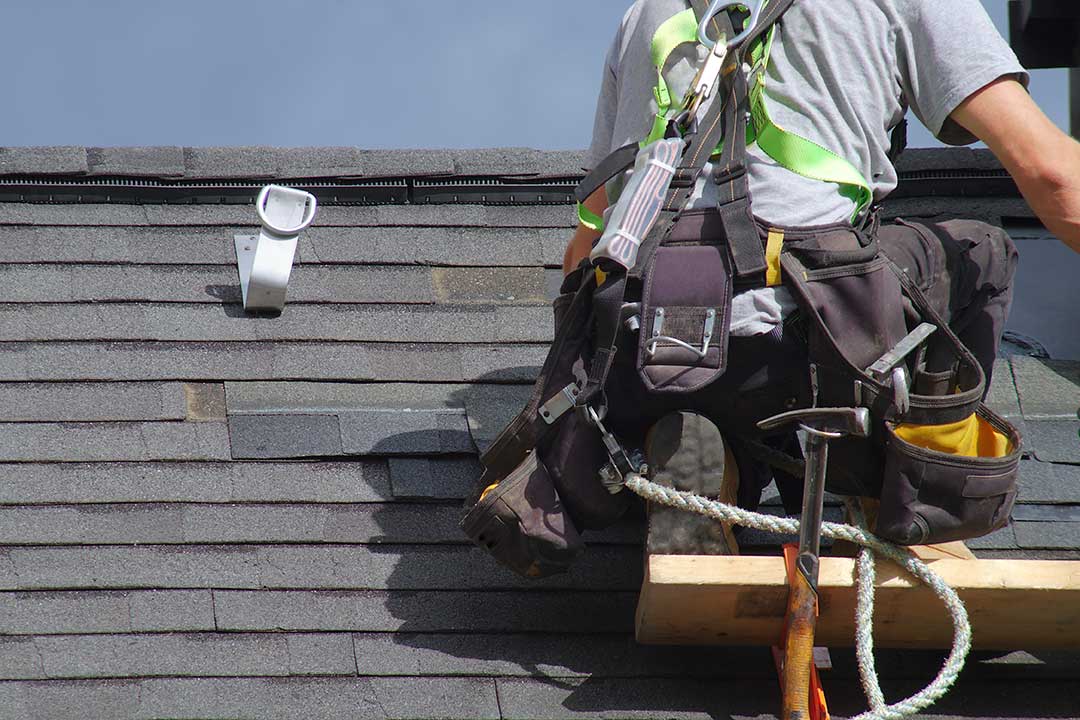
Do not climb onto a roof that is wet, icy, snow-covered, steep, visibly damaged, or structurally questionable. Ladder use is also hazardous on uneven, icy, or soft ground. Roof work may require appropriate fall protection and knowledge of how to avoid damaging shingles, flashing, and roof penetrations.
How often should a roof be checked?
A practical schedule is to inspect the roof from the ground and check the attic at least twice a year, with additional checks after strong wind, heavy snowfall, ice storms, or falling branches. Gutters should be examined when they are cleaned.
Pay closer attention to older roofs, roofs beneath large trees, and areas where snow tends to accumulate. Homes with complex rooflines, additions, skylights, chimneys, or multiple vent openings have more locations where water can enter.
Keeping brief records of stains, gutter debris, storm damage, and repairs can make changes easier to identify. Early warning signs are most useful when they are compared over time rather than viewed as isolated events.
