

Storms can damage a roof without leaving an obvious hole. Wind may loosen shingles, hail can bruise the roofing surface, and fallen branches may weaken the roof deck or flashing. Residents in Greene, NY can begin with a careful ground-level inspection, then look indoors for signs of water entry before deciding whether the roof needs immediate attention.
Is it safe to inspect the roof after a storm?
The safest first step is to inspect from the ground. Do not climb onto a wet, icy, steep, or visibly damaged roof. Wind can leave roofing materials unstable, and hidden damage may make a surface unsafe to walk on.
Stay away from:
- Downed or sagging electrical wires
- Roof sections covered by fallen trees or large branches
- Areas with exposed framing, holes, or severe sagging
- Loose metal, dangling gutters, or hanging shingles
- Roofs that are wet, icy, or still exposed to strong wind
- Damaged chimneys, skylights, or attached structures
Assume that downed wires are energized. Keep people and pets away from the area, and do not touch branches, fences, gutters, or other objects that may be carrying electricity.
A roof inspection involving ladders, steep slopes, or unstable materials should be left to someone trained and equipped for elevated work. A ladder should never be placed on loose soil, snow, ice, damaged gutters, or debris.
What should be checked from the ground?
Walk around the home and look at the roof from several angles. Binoculars or a phone camera with a zoom feature can help identify problems without climbing.
Look for:
- Missing, lifted, curled, or displaced shingles
- Shingles scattered across the yard, driveway, or porch
- Dark patches or exposed areas on an otherwise consistent roof
- Bent, cracked, or missing metal flashing
- Damaged ridge caps along the roof peak
- Loose or detached gutters and downspouts
- Cracked chimney masonry or a shifted chimney cap
- Damaged vent pipes, roof vents, skylights, or satellite mounts
- Tree limbs resting on the roof or caught in gutters
- Sagging roof lines or sections that appear lower than before
Wind damage is not always evenly distributed. A roof may look normal from the street while a more exposed side has lifted shingles or damaged flashing. Check views from the front, back, and both sides of the building when possible.
Do not assume that a few shingles in the yard represent the full extent of the damage. Some roofing materials may remain in place but lose their seal or fastening.
How can indoor damage be found?
Inspect the attic and upper floors as soon as it is safe. Water may enter through a small roof opening and travel along rafters, insulation, wiring, or ceiling materials before appearing directly below the damaged area.
Signs of possible roof leakage include:
- Brown or yellow ceiling stains
- Damp drywall or soft ceiling areas
- Dripping water or active puddles
- Wet insulation in the attic
- Damp rafters or roof sheathing
- Peeling paint or bubbling finishes
- Musty odors that develop after rainfall
- Water around light fixtures, vents, or ceiling fans
Use caution around wet electrical fixtures. Do not touch switches, outlets, or wiring in an area that has been exposed to water. If water is near electrical equipment, keep clear and arrange for the electrical hazard to be addressed safely.
A stain does not always show the exact location of the roof problem. Water may enter higher on the slope and move before it becomes visible indoors.
What kinds of storm damage are easy to miss?
Some of the most overlooked damage is not dramatic from the ground.
Lifted or unsealed shingles
A shingle may still be present but have lifted at the edge. This can allow future rain to reach the underlayment or roof deck. Look for irregular rows, raised corners, or shingles that no longer lie flat.
Hail bruising
Hail damage may appear as small dark marks, shallow depressions, or areas where the protective granules have been knocked away. Fresh granules may collect in gutters or downspout outlets. Do not treat every dark spot as hail damage; age, algae, and normal wear can create similar patterns.
Flashing damage
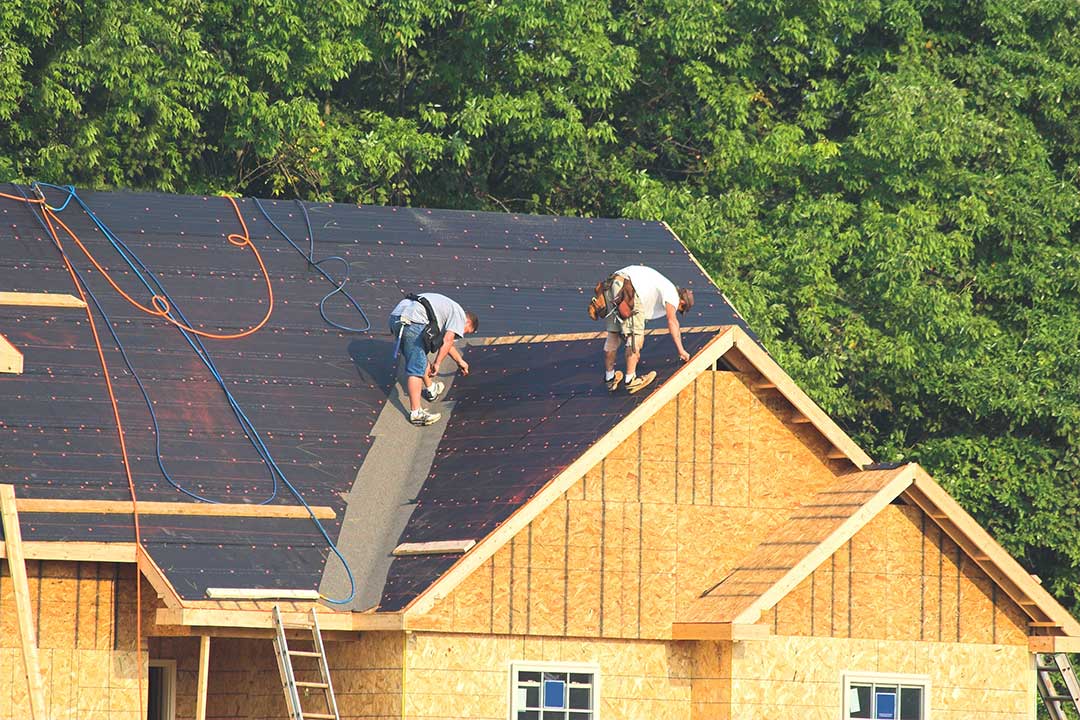
Flashing protects joints around chimneys, walls, valleys, skylights, and roof penetrations. Bent, separated, or missing flashing can cause leaks even when the shingles appear intact.
Gutter and drainage problems
Storm debris can block gutters and downspouts. A detached gutter may also pull against the roof edge or fascia. After the storm, check whether water is draining away from the foundation and whether downspouts remain connected.
Hidden structural damage
A heavy branch or fallen tree can damage decking, rafters, or framing beneath the roof covering. Sagging, cracking, sticking doors, or new gaps around ceilings and walls may indicate movement in the structure.
What should be done if the roof is leaking?
If water is entering, move furniture, electronics, and other belongings away from the area. Place containers under drips if doing so does not require entering an unsafe space. Do not puncture a ceiling bubble; the ceiling material may collapse, and water may be near electrical wiring.
If conditions are safe, photograph the damage from the ground and document interior stains, wet materials, fallen branches, and displaced roofing pieces. Include wide views that show where the damage is located as well as close-up images.
Temporary coverings should not be installed during rain, strong wind, or on a roof that cannot be safely accessed. A loose tarp can create additional hazards and may worsen damage if it pulls on shingles, flashing, or roof edges.
Does a roof need immediate attention?
Some conditions should be treated as urgent:
- A large opening is visible in the roof
- The ceiling is sagging or collapsing
- Water is near electrical wiring or fixtures
- The roof structure is sagging
- A tree or large limb is resting on the building
- Chimney masonry has shifted or is falling
- Roofing materials are hanging over walkways or entrances
- Downed wires are near the home
Keep people out of affected rooms and away from exterior hazards until the area is safe. For less obvious damage, continued monitoring during the next several rainfalls can reveal whether stains grow, new drips appear, or dampness returns.
How should storm damage be documented?
Record the date of the storm, the type of weather observed, and the areas that appear affected. Photograph:
- The entire roof from each accessible ground-level angle
- Missing or displaced materials
- Gutters, downspouts, chimneys, vents, and flashing
- Fallen branches and nearby debris
- Interior stains, damp insulation, and ceiling damage
- Water pooling or drainage changes around the home
Avoid moving damaged materials until they have been documented, unless leaving them in place creates an immediate safety risk. In Greene, seasonal conditions such as freeze-thaw cycles, heavy rain, snow, and strong thunderstorms can turn a small opening into a larger leak if water enters and later freezes.
A careful inspection does not require walking on the roof. Ground-level observation, attic checks, indoor moisture signs, and timely documentation can identify many problems while avoiding the most serious post-storm hazards.
